
Disc Flight Numbers Explained

Disc Golf Flight Numbers
Understanding a disc’s flight characteristics is one of the most important steps in deciding whether it deserves a place in your bag. While conditions like wind, elevation, and even humidity can influence how a disc behaves, the most important factor is how that disc performs for you. The best way to get a sense of that performance before even throwing it is by looking at the flight numbers usually printed right on the disc.
 These numbers, usually four of them, carry a lot of meaning. They help players predict the general flight path and stability of a disc. But to use them effectively, you have to understand what they represent and what they do not. Let’s break it all down.
Flight Numbers Decoded
When someone asks about a disc’s flight, I like to start with the widely used flight rating system and then consider the player’s skill level, arm speed, and throwing style before making a recommendation. The numbers are not exact nor perfect, but they provide a useful framework for comparison.
For this discussion, let’s assume a right-hand backhand (RHBH) throw, since that is the most common reference point when describing disc flights.
Understanding the Four-Digit System
The four-digit system pioneered by Innova is the most widely recognized way to describe a disc’s flight. Other brands have experimented with different formats, but the Innova-style four-number format remains the industry standard.
Those four numbers represent:
- Speed
- Glide
- Turn
- Fade
Each one affects how a disc flies through the air and how it finishes its flight.
Speed
The first number in the series represents speed, and it’s often the most misunderstood. Many players assume a higher speed number means the disc will fly faster or go farther. That’s not exactly the case.
Speed actually describes how much power you need to throw the disc properly. A disc rated at Speed 13, for example, is designed for powerful throws with high velocity. If you don’t throw it hard enough, it will behave more overstable and fade early.
On the other hand, a slower disc, say Speed 7 or 8, will be easier to control for most newer players and can still achieve plenty of distance when thrown properly. For beginners, starting with lower speed drivers and midranges is usually best. You’ll gain better accuracy and learn proper throwing form before moving up to faster discs.
Glide
The second number, glide, tells you how well the disc stays in the air. A higher glide number means the disc tends to float longer and carry farther down the fairway.
Glide is a beginner’s best friend. If you are just starting out, a disc with lots of glide can help you add easy distance without extra power. Discs like the Leopard or the Sphinx are great examples. They hang in the air and give you satisfying carry.
More advanced players sometimes prefer discs with less glide. That may sound counterintuitive, but lower glide can make it easier to control where the disc lands, especially in windy conditions or when accuracy matters more than distance.
Turn
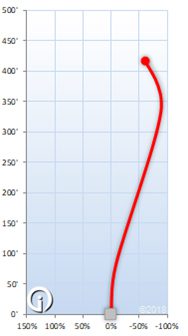
Next up is turn, also known as high-speed stability. This number indicates how the disc behaves during the fastest part of its flight, right after the initial release.
Turn values typically range from +1 to -5. Negative numbers mean the disc will want to turn to the right for a RHBH thrower, which makes it understable. Positive or zero values indicate the disc resists turning, making it more stable or overstable.
Understable discs, with values like -3 or -4, are great for beginners because they’re easier to throw straight and get more distance with slower arm speeds. They’re also useful for turnover shots. More overstable discs are better for players with higher arm speed or shots that need to hold a steady line in wind.
Fade
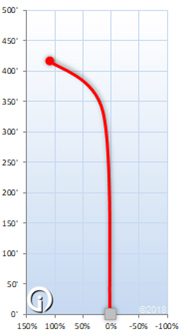
High fade numbers (like 4 or 5) mean the disc will finish with a stronger left curve for a RHBH thrower. Low fade (0 or 1) means it will land more straight and gentle.
If you’re looking for predictable finishes that cut through wind or skip off the ground, choose a disc with more fade. If you want a straighter finish, go for something with less fade. Fade is what gives many overstable discs their trademark “hook” at the end, while understable discs tend to stay straighter or even drift right.
Infinite Discs Flight Ratings
While manufacturer flight numbers provide a useful baseline, they’re ultimately an estimate based on how the disc should fly under ideal conditions. In reality, how a disc flies varies from player to player.
That’s where the Infinite Discs Flight Rating system comes in. Infinite Discs developed an alternative rating method that pulls directly from player reviews. Instead of relying solely on manufacturer data, the Infinite system aggregates real-world feedback to produce an average set of flight numbers that better represent how discs actually perform for different types of players.
You can filter reviews by skill level or driving distance, which makes it easier to find information relevant to your game.
Example: The Roman
Let’s take a look at the Infinite Discs Roman as an example. On its product page you’ll see two sets of flight numbers: the manufacturer’s rating and the Infinite flight rating, based on hundreds of user reviews. You’ll notice slight differences between the two. That’s not a mistake, it’s simply the result of real players reporting how the disc flies in a variety of conditions.

Scroll further down, and you’ll find even more data: average throw distances, player comments, and reviews. You can choose to read opinions only from players at your skill level or those who throw a similar distance. That kind of filtering is incredibly helpful for narrowing down what will work best in your bag.
Looking Ahead
Still, the four-digit flight number system has become a cornerstone of disc golf, and it’s not going anywhere anytime soon. It’s simple, familiar, and helps players speak a common language when comparing discs.
But as technology and data collection improve, systems like Infinite’s are pushing that idea forward. By combining the simplicity of the original rating system with the insights of player feedback, disc golfers now have a clearer, more realistic picture of disc performance than ever before.
For now, the best approach is to use both. Study the manufacturer’s flight numbers to understand a disc’s intended flight, then use community-based ratings to confirm how it performs in the real world.
Together, they’re a powerful tool for helping you choose the right disc, and for understanding why it flies the way it does.
Ted Hegemann

Ted is the Chief Writer at Infinite Discs. He is responsible for the State of Disc Golf Survey articles and most of the "best discs" posts. Ted runs all kinds of local disc golf leagues and tournaments and tournaments in Northern Utah.
Great explanation! Flight numbers, with the exception of the first number, which is based primarily on wing width are subjective to each player. Arm speed, angle, spin, and even your environment (e.g. high altitude) will change the last three numbers for each player.
Does the way you set flight numbers differ at all from the way Innova does flight numbers? There was Q&A video with Dave Dunipace where he said that you can’t compare flight numbers outside of the same speed class, so glide/turn/fade don’t really mean anything in a lot of cases. Example, 7/4/-1/3 eagle numbers are gibberish if compared to 10/4/-1/3 orc numbers are gibberish if compared to 12/5/-1/3 destroyer numbers. All are -1/3, but apparently they are only -1/3 relative to the other discs at the same speed.
It’s too bad these numbers are assigned based on the disc mold while disregarding other important factors such as the plastic the disc is made of. Old timers know (and newbies like me eventually figure out) that flight numbers aren’t sacrosanct, and that your heavy Champion Leopard will fly much differently than your lightweight DX Leopard.