
Disc Golf Throwing Styles
To a non-disc golfer, our sport looks pretty simple. You pick up a disc, throw it toward the basket, repeat until you get the disc in the basket. Once you start playing regularly, you realize the game has a little more nuance. Different holes, obstacles, wind conditions, distances, and shot shapes are more easily accomplished using different throwing styles. The more techniques you learn, the more options you have on the course. Whether you are brand new to disc golf or looking to expand your shot selection, understanding the popular throwing styles is one of the best ways to improve your game.
Below is a look into the most common throwing styles in disc golf. We’ll discuss what they are, when to use them, and what makes each one unique.
Backhand
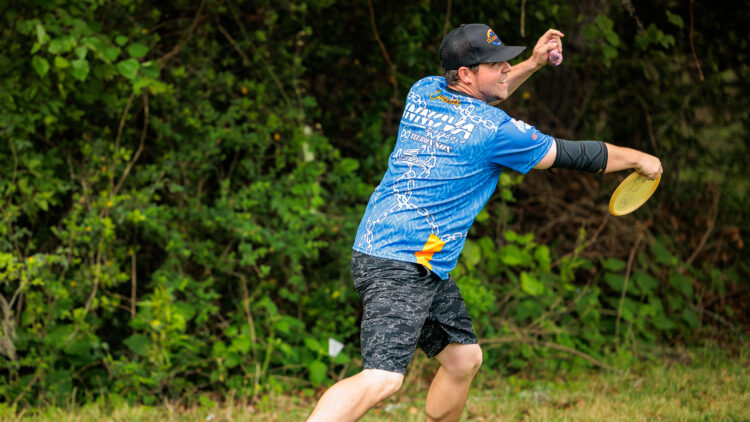
The backhand is the throw most players learn first. It is powerful and takes advantage of many different muscles. If you have ever thrown a traditional Frisbee, you already understand the basic motion: reach back, rotate your hips and shoulders, and pull the disc forward across your body.
Why it is useful: The backhand generates excellent distance because it allows for a long reach back and strong rotational power. It is the throwing style that brings the most muscles into play
When to use it:
- Long tee shots
- Controlled fairway drives
What to practice: Focus on timing instead of power. Smooth acceleration, proper form, and weight transfer will add more distance than just throwing as hard as you can. Once your timing is fairly consistent, you can add more power
Forehand (Sidearm)
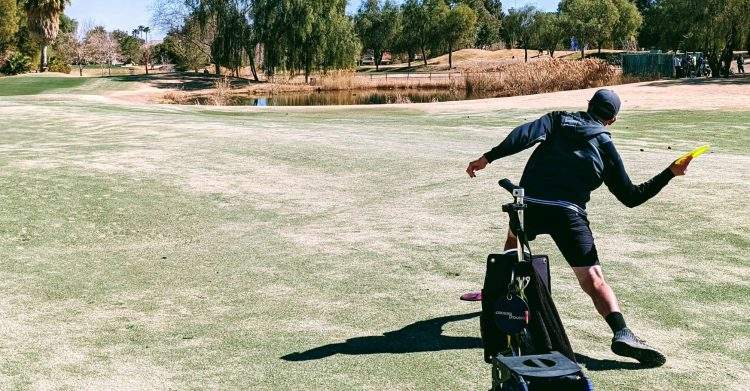
The forehand, often called a sidearm or flick shot, is thrown with the palm facing up and the disc flicked forward using wrist snap and elbow extension. It is the go to shot for many players because and perfect for shaping lines that need to finish in the opposite direction of a backhand. Plus, you can keep an eye on your target the entire
Why it is useful: Forehand shots naturally fade in the opposite direction of a backhand shot. That can be crucial if there is a right-hand corner late in the flight. It is also easier to throw forehand from awkward stances, such as when you are pinned behind a tree or stuck in rough terrain.
When to use it:
- Sharp dogleg right holes for right handed players
- Skip shots that need to flare hard at the end
What to practice: Work on clean wrist snap and keeping the disc on a flat plane. Many players struggle with wobble early on, but that usually disappears as your mechanics improve.
Hyzer and Anhyzer

 Hyzer and anhyzer are not separate throwing styles, they are angles you apply to any throw. They are so fundamental to disc golf that they deserve their own spotlight.
Hyzer: The disc is released with the outside edge angled downward. Anhyzer: The disc is released with the outside edge angled upward.
These angles dramatically change the disc’s flight path. A hyzer will typically produce a smooth, reliable fade. It can also minimize skipping. Throwing an understable disc on a hyzer angle helps the disc flip to flat and fly a long way.
An anhyzer angle causes the disc to drift to the right before finishing to the left.
Why they are useful: Mastering angle control opens your options for any hole shape. Once you understand how different discs behave on different angles, you can hit lines around trees, achieve shots down tunnels, and land closer to your intended target.
When to use them:
- Hyzer: predictable fades, spike hyzers, headwinds
- Anhyzer: turnovers, right hand turns, tailwinds
What to practice: Throw a variety of discs on multiple angles and see how the flight changes. This lets you know what disc and angle is needed for a particular hole.
The Roller
A roller is a throw designed to land on its edge and roll along the ground. It is fun to watch and can deliver some super-long throws.
Why it is useful: Rollers can achieve massive distance on flat ground, especially in calm conditions. They are also great for navigating low ceilings or fairways thick with trees where an air shot would be too risky.
When to use it:
- Long, open fairways
- Low ceilings where you cannot throw high
- Hardpan or short grass surfaces
What to practice: Start with understable discs. Release them on a steep anhyzer angle and let the disc’s natural turn carry it to the ground. Over time, you will learn how to control the angle, speed, and landing point to match the fairway and come down on the correct angle.
Overhand Throws (Tomahawk and Thumber)
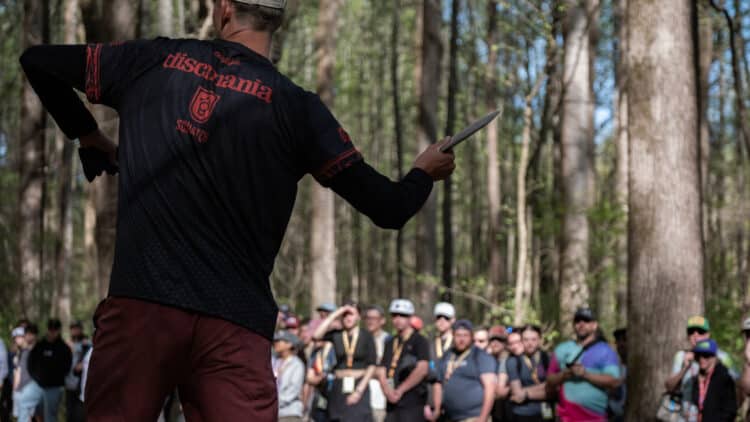
Overhand throws look more like baseball or football motions than traditional disc golf throws. The two main types are the tomahawk and the thumber.
- Tomahawk: Thrown like an overhand baseball pitch with the disc’s top facing to the left and your fingers on the rim.
- Thumber: Thrown with your thumb inside the rim and the disc’s top facing right.
Both shots fly in a vertical arc and then pan out horizontally before fading.
Why they are useful: Overhand throws are excellent for getting over tall obstacles or escaping from dense rough. They also produce very predictable movement once you understand how they pan and fade.
When to use them:
- Over trees or bushes
- Tight vertical gaps
- Emergency scramble shots
- Holes that require a steep, controlled descent
What to practice: Experiment with different discs. Overstable discs produce sharper, faster pans, while understable discs create longer, slower arcs. Pay attention to how quickly the disc turns and where it lands.
The Jump Putt and Step Putt
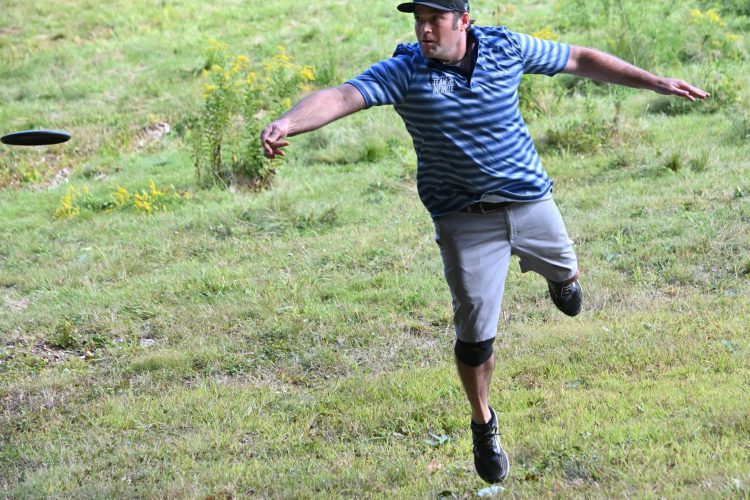
Putting styles vary widely, but jump putts and step putts are two techniques used outside Circle 1 to add extra power while staying within the rules.
Why they are useful: These techniques allow you to generate forward momentum and extend your putting range without switching to a full throw.
When to use them:
- Circle 2 putts
- Long bids where you still want a chance to score
- Approaches that require touch but not a full throw
What to practice: Focus on balance and timing. Your supporting foot must leave the ground only after the disc is released to stay within the rules. Smooth, controlled motion is more important than power.
Building a Complete Throwing Toolkit
The best disc golfers are not always the ones who throw the farthest. They are the players who can adapt. Every course and every lie presents a new puzzle. The more throwing styles you have in your toolkit, the more solutions you can create.
Start with the basics, backhand and forehand. Add angle control with hyzers and anhyzers. Then experiment with rollers, overhands, and specialty putts. Over time, you will develop a personal style that feels natural, confident, and uniquely yours, and your scorecard will start to show the difference.