
Fairway Driver vs. Midrange

Fairway Driver vs. Midrange: What’s the Difference in Disc Golf?
If you’ve been playing disc golf for a while, you’ve probably noticed there’s a wide variety of discs, each with its own purpose, flight path, and feel. Among the most common are fairway drivers and midrange discs. Both are essential tools in your bag, but they serve different roles on the course. Understanding when, and why, to use each one can make a huge difference in your scores and consistency.
What Is a Fairway Driver?
A fairway driver is designed to bridge the gap between midrange discs and distance drivers. These discs have thinner rims and sharper edges than mids, allowing them to cut through the air more efficiently and fly farther. However, they’re not quite as demanding to throw as full-blown distance drivers.
Fairway drivers typically have a speed rating between 6 and 9. That means they require a bit more arm speed than a midrange, but most players, beginners included, can throw them effectively. They’re great for controlled distance shots, tunnel shots, and accurate drives where precision matters more than raw power.
When you need something that will fly farther than your midrange but still land accurately, reach for your fairway driver.
What Is a Midrange Disc?
Midrange discs are the workhorses of disc golf. They’re designed for shorter, more controlled throws, usually in the 200–300 foot range for most players. With a speed rating between 4 and 6, they don’t require as much arm speed to fly straight. Their rounded rims and wider profiles make them easier to grip and more predictable at lower speeds.
Midrange discs are perfect for approach shots, shorter drives, or when you need to hit a tight line through trees. They tend to have a flatter glide and slower fade than drivers, giving you more control and accuracy, especially on technical fairways.
If you’re facing a shot where distance isn’t the priority but control is, your midrange is your best friend.
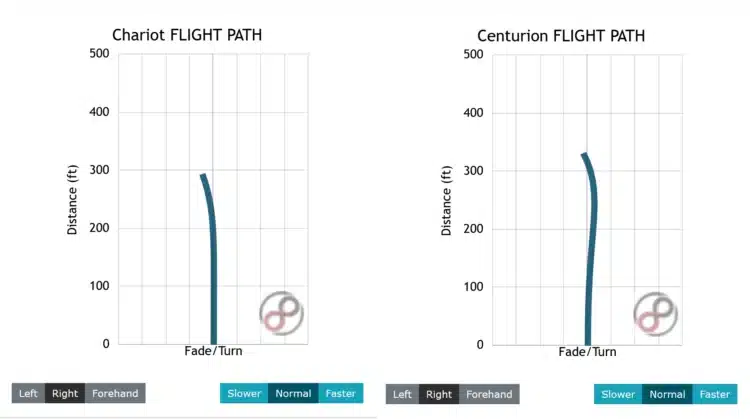
Key Differences Between Fairway Drivers and Midranges
On paper, the difference between a fairway driver and a midrange might not seem huge—just a couple of numbers in the flight ratings. But in practice, those small changes make a big difference. Let’s break down what really sets them apart:
1. Rim Width and Shape
One of the most obvious differences is the rim. Fairway drivers have thinner, sharper rims designed to reduce drag and increase speed. Midranges have wider, more rounded rims, giving them a comfortable grip and more consistent release at lower speeds.
This rim design affects how the disc cuts through the air. The sharp edge of a fairway driver helps it maintain velocity and penetrate headwinds better, while the blunt edge of a midrange provides more lift and stability for slower throws.

2. Speed and Distance Potential
Fairway drivers simply fly farther. They’re meant for tee shots and long fairway drives where you want more carry and glide. Midranges, on the other hand, are built for accuracy and control rather than max distance.
For example, if your midrange tops out around 250 feet, a fairway driver might easily push that to 300–330 feet with similar effort. That extra distance can make a big difference when approaching longer holes.
3. Accuracy and Forgiveness
Midrange discs are generally more forgiving of form flaws. Because they fly slower and have more stable flight patterns, they don’t exaggerate your mistakes as much as faster discs do. A slightly off-angle release won’t punish you nearly as hard as it might with a fairway driver.
Fairway drivers are still relatively forgiving compared to distance drivers, but they demand a cleaner release. If your angle control or wrist timing is off, you’ll notice more turn or fade than you expected.
4. Shot Types and Situations
Fairway drivers shine on longer holes or when you need a disc that can hold a specific line for an extended flight. They’re excellent for hyzer flips, S-curves, and controlled drives. You’ll often see advanced players using fairways off the tee when accuracy is more important than distance.
Midranges excel on approach shots, touch throws, and technical courses with tight fairways. They’re ideal when you want your disc to fly straight with minimal fade, or when you need to land softly near the basket.
5. Wind Speed
Because of their shape and speed, fairway drivers handle wind better than most midranges. If you’re throwing into a headwind, a stable or overstable fairway driver will give you more consistency and prevent the disc from flipping. Midranges tend to be more affected by wind, especially in gusty conditions.

When to Throw Each Type
Choosing between a fairway driver and a midrange depends on distance, line, and confidence. Here are some general guidelines:
- Throw a fairway driver when you need extra distance but still want control.
- Throw a midrange when accuracy and placement matter more than distance.
- Use fairways off the tee on narrow fairways or long par 3s.
- Use mids for upshots, shorter holes, or when you need the disc to sit down quickly after landing.
As you gain experience, you’ll find overlap between the two. Many players can throw a midrange almost as far as a fairway, especially if they have good form. The key is knowing your own limits and playing to your strengths.
Popular Fairway Drivers and Midranges
There are countless great options in both categories, but here are some fan favorites:
Popular Fairway Drivers
- Innova Teebird – A staple in many player’s bags.
- Discmania FD – Straight-flying and beginner-friendly.
- Dynamic Discs Escape – Great glide and distance potential.
Popular Midrange Discs
- Innova Roc3 – A classic, stable midrange trusted by pros.
- Discraft Buzzz – Straight, reliable, and one of the most popular discs ever made.
- Latitude 64 Fuse – Easy to throw with a smooth, neutral flight.

Final Thoughts: Building Your Bag
Both fairway drivers and midrange discs are must-haves in any disc golfer’s bag. The real difference comes down to how much control or distance you need on a given shot. Fairways are great for precision drives and longer lines, while mids shine in close-quarters play and placement shots.
For beginners, mastering a midrange is often the best first step. It teaches you form, angle control, and how discs react to different release points. Once you’ve built that foundation, adding a fairway driver will open up your distance game without sacrificing accuracy.
So next time you’re lining up a shot and wondering which disc to grab, think about your goal: Are you trying to get there, or just get close? If it’s the former, grab a fairway driver. If it’s the latter, your midrange has your back.
Either way, both discs are essential, and learning when to use each one will make you a more confident, consistent, and versatile player on the course.