
The Two-Meter Rule Explained

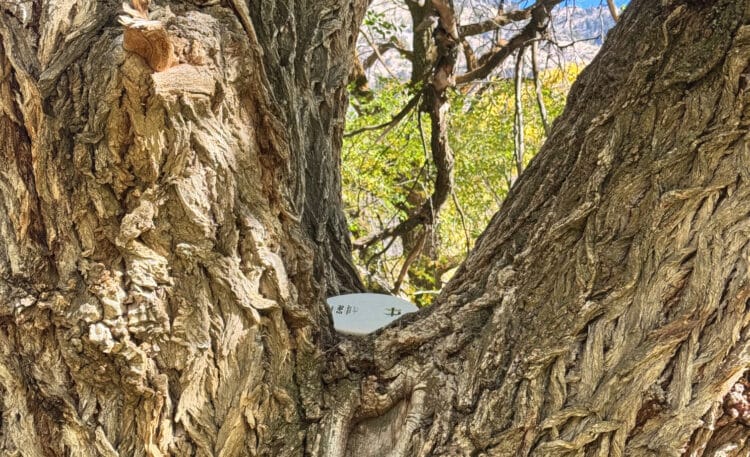
A disc golf disc stuck in a tree

Disc golf has grown rapidly in popularity, and with that growth comes a closer look at the rules that shape competitive play. One rule stand out among all other rules because it is optional. That rule is the two-meter rule. While it may seem straightforward, its optional status and the way it impacts players make it one of the more controversial topics in disc golf today.

How the Two-Meter Rule Works

The two-meter rule applies when a disc comes to rest at least two meters above the in-bounds playing surface, most often stuck in a tree. If the rule is in effect, the player receives a one-stroke penalty and must mark their lie directly beneath the disc. The rule is listed under section 805.02 of the Professional Disc Golf Association (PDGA) rulebook.

Importantly, this rule is not automatically enforced. Tournament directors decide whether it applies, and they may choose to enforce it across the entire course, on specific holes, or even on certain objects. If the disc is supported by the target basket, the rule does not apply.
A disc in a treeWhy Players Disagree About the Rule

Many disc golfers argue that the two-meter rule feels unfair because it punishes players twice. Not only is the disc stuck in a possibly undesirable position, but the player also receives a penalty stroke. Since disc golf already involves a degree of luck when discs hit trees, adding a penalty can feel excessive.

Another source of frustration is inconsistency. Because tournament directors have discretion, players may encounter the rule in one event but not in another. This lack of uniformity leads to confusion and debate about whether the rule should exist at all.

Measurement is also a sticking point. Determining whether a disc is truly two meters above the ground is often subjective, as few players carry measuring tools. This can spark disagreements among cardmates and slow down play.

Arguments in Favor of the Rule

Supporters of the two-meter rule believe it adds an element of risk management to the game. Players must weigh the decision to throw high shots in wooded areas, knowing that a disc stuck in a tree could cost them a stroke. In this way, the rule encourages smarter shot selection and rewards accuracy.

Additionally, the rule can prevent unsafe or impractical lies. Without it, players might attempt to climb trees or play from dangerous positions (I’ve seen that happen once. The disc wasn’t very high in the tree, and taking a lie in the tree gave them an advantage). By requiring the lie to be placed directly below the disc, the rule simplifies play and reduces risk.

The PDGA logoThe Future of the Two-Meter Rule

The PDGA currently lists the two-meter rule as optional, leaving the decision of whether or not to use it up to tournament directors. Some players hope for its removal from the rulebook entirely, while others believe it should be standardized across all events. Until a consensus is reached, the debate will continue, and players should always check with the tournament director before play begins.

Whether you love it or hate it, the two-meter rule is part of disc golf’s current rulebook. Understanding how it works and why it divides opinion will help you navigate tournaments more confidently and avoid unnecessary penalties.

For official details, visit the PDGA rulebook entry on the two-meter rule.

What is a Mando in Disc Golf?

Disc golf mando sign with text, 'What is a disc golf mando?'

When I first started playing disc golf, I got to a hole on a course in northern Utah which had a sign on it that was new to me. The sign said ‘Mando’ and had an arrow pointing left of the tree it was attached to.

I looked to the left and saw a wooded fairway that was tight with lots of trees. To the right  there were no obstacles. I didn’t know what the sign meant; it looked Spanish to me. So, I took aim to the right and let my disc fly… over a sidewalk and near a playground and parking lot. I’ve since learned about the ‘mando’, and although it does mean ‘command’ in Spanish, its name’s origin has a different meaning.

Mando are important to the game of disc golf. Among other things, they ensure that discs are going in a certain direction on certain holes, while protecting other people and property. In this blog we’ll learn about what mandos are, why we have them, and how they work. Let’s learn about the mando!

Mando arrow pointing left

What is a Mando?

In the sport of disc golf, a mando is short for ‘mandatory’. In practice, that means that it is mandatory that you throw your disc on only one side of the obstacle or pole that the mando sign is attached to. If you don’t throw on that side of the mando, you get penalized.

A majority of the mandos that you see on a course are left or right mandos. That means you are required to go either left or right of a pole, tree, or whatever the arrow is attached to or rules indicate are the mando feature. If there are two arrows present, it is called a double mando. Typically, your disc has to travel between two mando arrows (or more specifically, between two objects that the arrows are attached to). There are also triple mandos, which are two side mandos and something across the top which limits the height that you can throw your disc.

disc golf triple mando

In rare occasions, such as unsanctioned tournaments, you’ll see a quad mando. This is basically a rectangle shape that you have to be able to throw your disc through. I’ve only seen quad mandos at casual, funsy tournaments.

The most common indicators of a mando are arrows pointing either left or right. Sometimes they will have the word ‘mando’ on the sign, though not always. They might also be marked with a ribbon or tape to indicate the mando object. If tape or ribbon is used, there should be some indication on a tee sign or course rules which directions you need to throw in order to successfully execute the mando. A successful throw is called ‘making the mando’. An unsuccessful throw is a ‘missed mando’

Why Are Mandos Used In Disc Golf?

While mandos should be used sparingly in a course design (in my opinion), there are several reasons why a course designer might decide to include a mando on a hole. First is safety. The mando sign I referred to at the beginning of the blog was used to keep discs away from the playground, parking lot, and walking path. Keeping discs away from those areas makes the hole safer and reduces the chance of a bystander getting hit. Plus, it makes the hole more challenging and fun by forcing players to attack a wooded fairway. Which is the second reason someone might use a mando.

While the idea of throwing discs down a wide-open fairway might appeal to some people, most of us enjoy the challenge of having obstacles that we need to negotiate in order to progress down the fairway. Those obstacles make disc golf much more fun, challenging, and satisfying when successful. Course designer know this, and might add a mando or two in order to prevent people from taking an easier route.

Mando arrow pointing right

There is one more reason designers might include a mando: course flow. A mando is often used in disc golf to direct the flow of play. It guides players along a specific path and preventing errant throws from interfering with, or landing in, other areas of the course. Some courses have areas like a swamp, thick bushes, or other natural or man-made features. These may be challenging, but would cause delays with disc retrieval from unintended areas. Mandos can help create a more enjoyable and efficient experience for everyone on the course.

Mando Rules and Penalties

Now that you know a little about what mandos are and when they are used, let’s look at the PDGA rules that govern mandos and how to play them. The section in the official rules is not very long, and worth a read if you want to brush up on the current requirements. They complete rules are found HERE.  I’ll summarize the rules in this blog, but if you plan to play in a sanctioned tournament you should look up the official rules to make sure you understand and follow them.

two custom disc golf mando signs

PDGA 804.01 Mandatory Routes

1. A mando restricts the path that a disc may take in order to legally progress down the fairway toward the basket.

2. At the mando, there is an imaginary vertical plane that that borders one or more objects that are indicated by the mando or mandos. (see image)

3. If a disc crosses that imaginary plane, whether in the air or on the ground, either forward or backward (if a roller crosses on the correct side of the mando, but curls around and crosses the plane), it is considered a missed mando and the player receives a one-stroke penalty. The lie for the next shot depends on whether or not there is a drop zone on the hole.

If there is a drop zone, the player may proceed to the drop zone with the penalty throw (for example, if they missed the mando on their first throw, they get the stroke for the throw, plus the penalty stroke, so their throw from the drop zone will be their third stroke). The player also has the option, as always, of abandoning the throw and re-throwing from their last lie. In the previous example, they would then be throwing their third throw from the previous lie, which would be the tee pad. The rules of the mando would still be in play.

Disc golf mando drop zone

4. If a players disc lands just short of the imaginary plane, but hasn’t crossed yet, the player may must still pass the mando on the correct side to avoid a penalty. It is not legal to lean through and release the disc beyond the plane, since the back of their mini is on the other side of the plane.

Mando Strategy

It is often times best to avoid a penalty by not aiming anywhere near the mando. Other times it might be strategic to lay up near the mando, then take a more powerful throw on your next shot. That is especially true on narrow double mandos.

Conclusion

In this blog we’ve learned about mandos in disc golf, why we have them, and the different types. We also looked at the rules of play for mandos. There are many courses with no mandos, but others where they are necessary or desired. It’s good to know why they are there and how to play them.

Best of luck with the mandos you play!