How to Putt: Disc Golf Putting Techniques

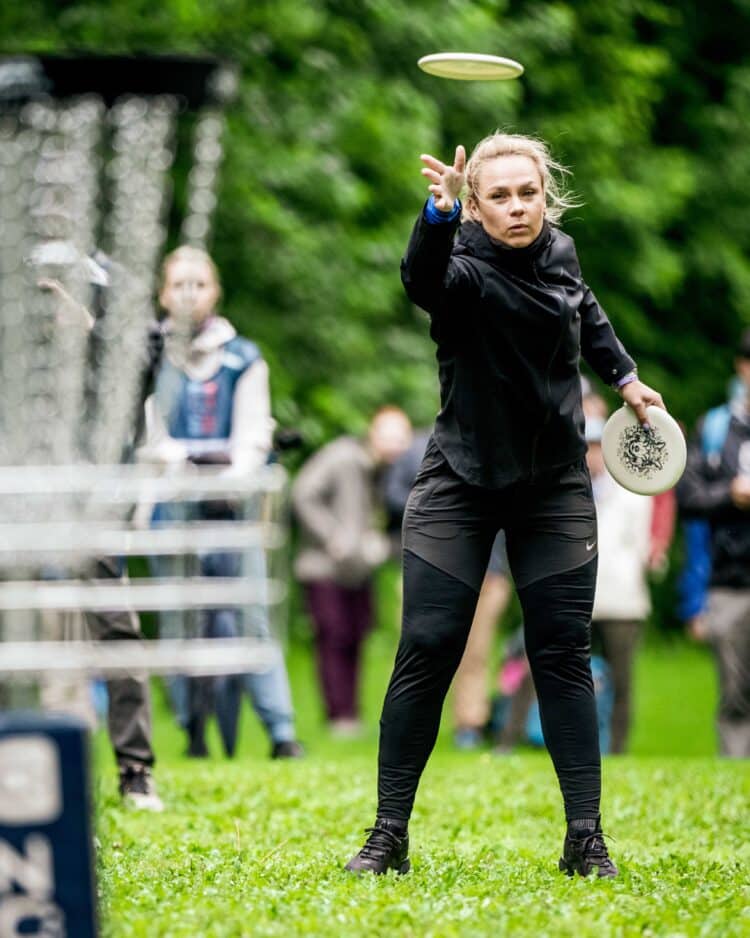
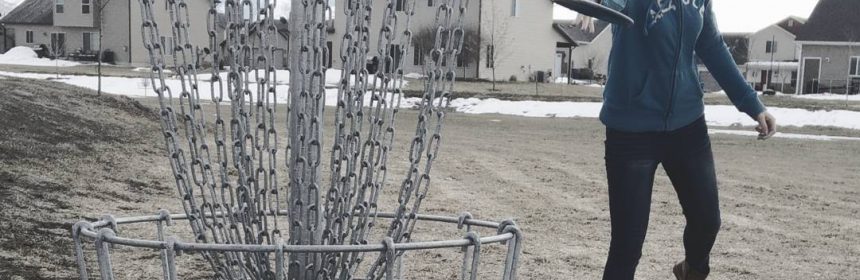
A professional disc golfer putting

Unless you park a drive or throw in a long shot from the fairway, you will be putting on nearly every hole. Sometimes those putts are simple drop ins from a few feet away. Other times you need to get the disc into the basket from much farther out. In this blog we will explore the most common disc golf putting techniques and stances that players use to get the disc into the chains.

Although there are many different techniques used throughout the disc golf world, this blog focuses on two of the most common stances and two primary putting styles, along with other, more unusual methods that players use when the situation demands it. These techniques cover the majority of putts you will see on the course and can help you build a more versatile short game.

Putting Stances

STRADDLE

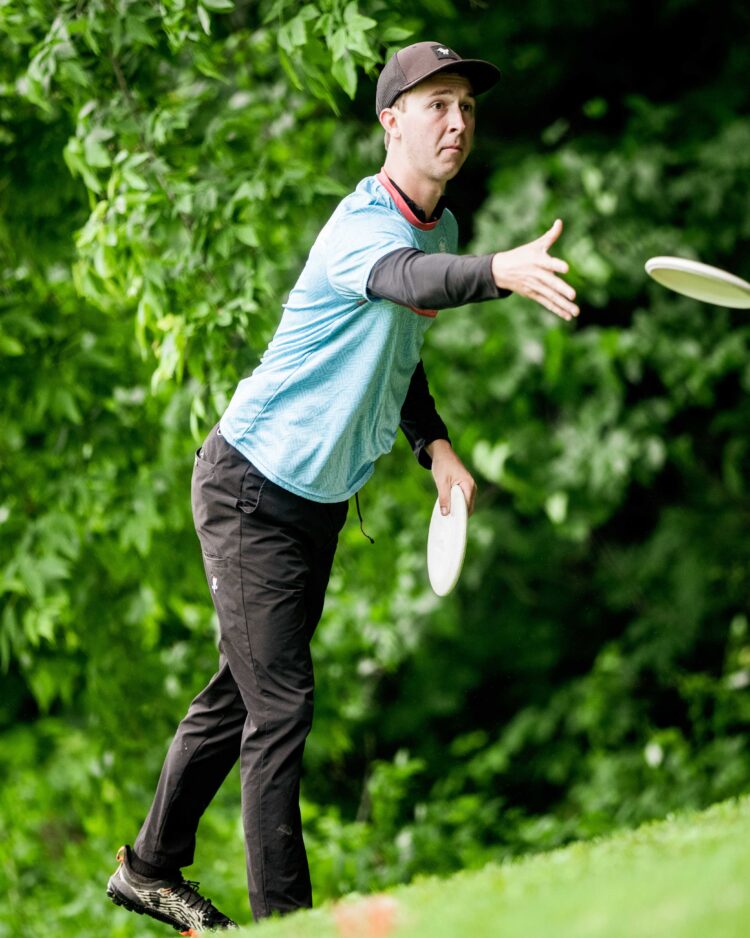
A disc golfer putting with a straddle stance

The straddle stance is used by many players either as needed or as their primary putting stance. Pros like Nate Sexton and Kevin Jones rely on it regularly. By facing the basket with your feet parallel and spread apart, you are more stable and can easily putt around obstacles.

The straddle stance goes well with a push putt, although spin putts also work. You can generate extra power by using a jump putt from this stance, or stay on the ground and rely on your legs and arms for momentum.

STAGGER

The stagger stance is the most common stance in disc golf. It is a position that allows you to generate power from your legs, hips, shoulders, arms, and wrist. You place one foot in front of the other with your forward foot the same as your dominant hand. Most of your weight begins on your back foot and shifts forward as you release.

Your back leg often lifts into the air to counterbalance your body, which adds distance and stability. This stance uses a lot of muscle groups, but when mastered it produces powerful and consistent putts. Jennifer Allen is known for having one of the highest back leg kicks in the sport.

Types of Putts

SPIN

The spin putt emphasizes creating heavy rotation on the disc. You bring the disc close to your body and snap it toward the basket using your elbow and wrist. This motion produces a fast, spinning putt that can cut through wind and reach longer distances.

The downside is that more moving parts mean more chances for inconsistency. However, the spin putt works well in both straddle and stagger stances and is especially useful in windy conditions.

PUSH

The push putt focuses on lofting the disc with minimal spin. The disc slowly floats toward the basket, which reduces the chance of having to make a long comeback putt. The higher arc can help you clear obstacles and the softer impact with the chains reduces spit outs.

The tradeoff is reduced distance and more influence from the wind. Push putts require consistency and proper technique in order to be effective.

Disc Golf Putting Techniques

TURBO PUTT

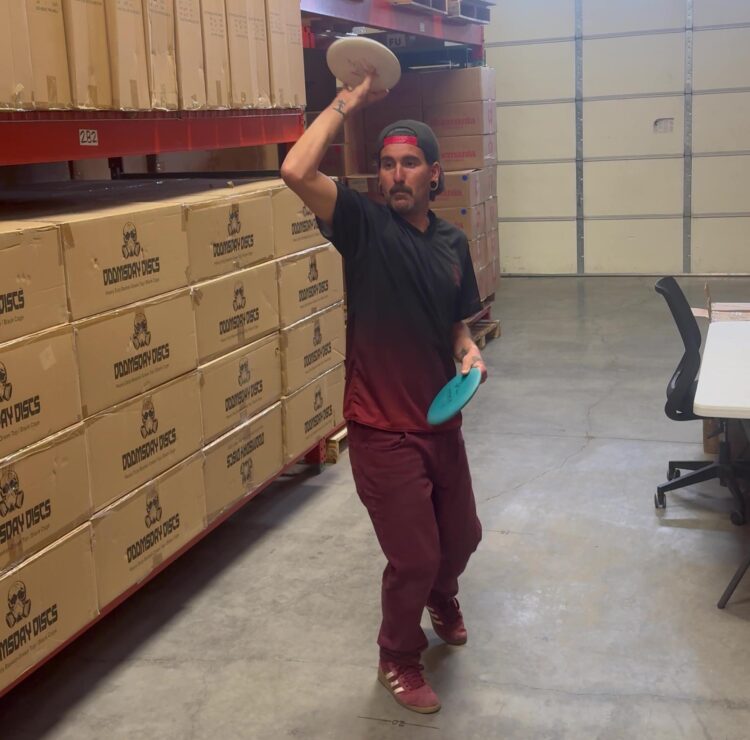
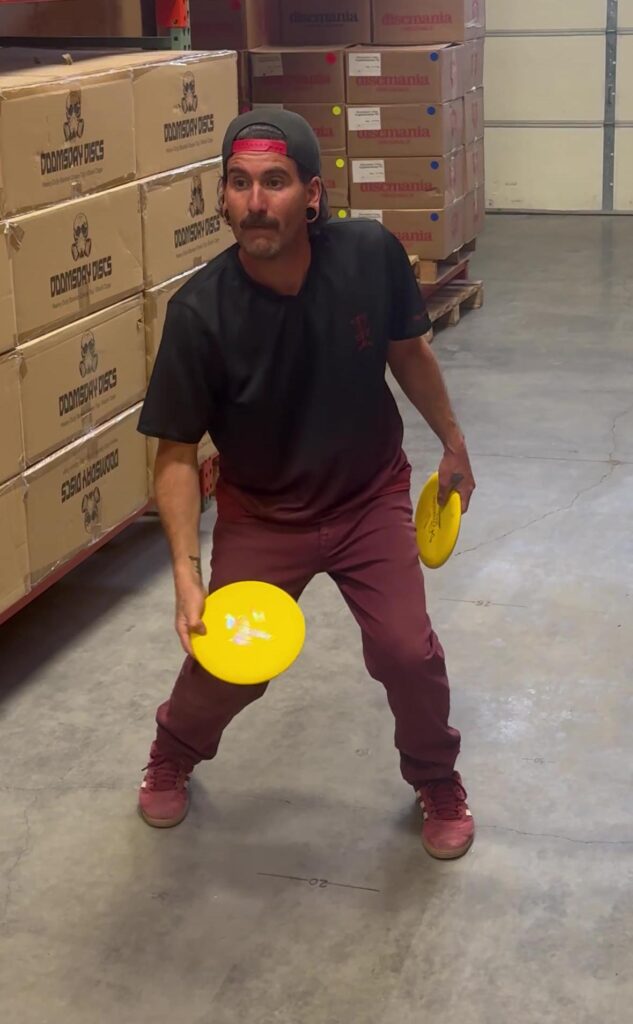
a turbo putt

The turbo putt, often called a pizza putt, is performed by holding the disc flat with your thumb underneath the putter and your fingers wrapped around the outer rim. You push the disc forward and add heavy spin by snapping your wrist. When executed well, this motion creates enough rotation to reach longer putts with surprising accuracy.

Although the turbo putt can generate impressive spin, it is most commonly used for short putts on elevated baskets or when you need to get over obstacles such as bushes. It is entertaining to watch a skilled turbo putter, but it is a little more rare to see.

BASKETBALL PUTT

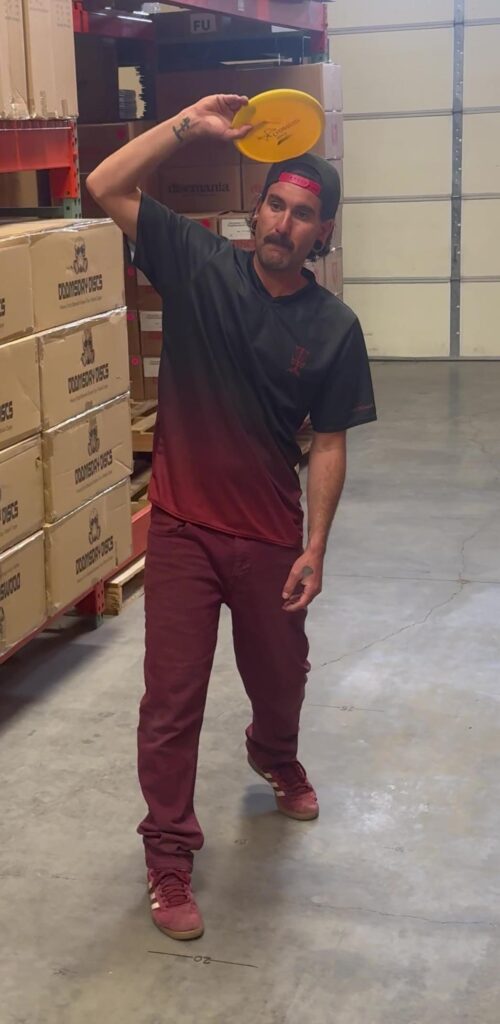
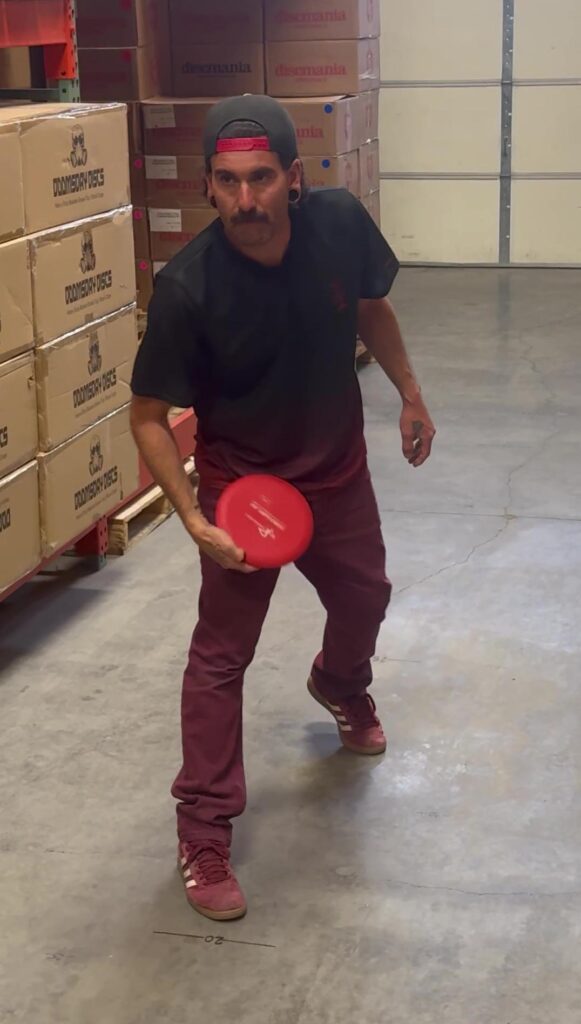
basketball putting technique

The basketball putt mimics the motion of shooting a basketball. You hold the disc upside down at an angle and flick your wrist upward, putting the disc in a flipping arc toward the basket. While this putt is rarely seen in competition, a few pros such as Ricky Wysocki have used it on video.

A variation of this technique involves flipping the disc so it rotates slowly without much spin, allowing it to drop into the chains on the flight plate or bottom. Jennifer Allen has used this method for short putts, especially on elevated targets.

SCOOBER

the scoober putt

The scoober, popularized in Ultimate Frisbee and seen in disc golf videos featuring Brodie Smith, is thrown with the disc upside down at an angle. It uses a short elbow motion and a quick wrist flick in a reverse forehand style. The disc floats and then drops sharply, which reduces the chance of a long comeback putt if you miss.

Although the scoober can help you navigate obstacles or tight angles, it requires skill and practice. Players with Ultimate experience may find it easier to throw successfully, but most disc golfers will have better success with more traditional putting techniques.

KNEELING

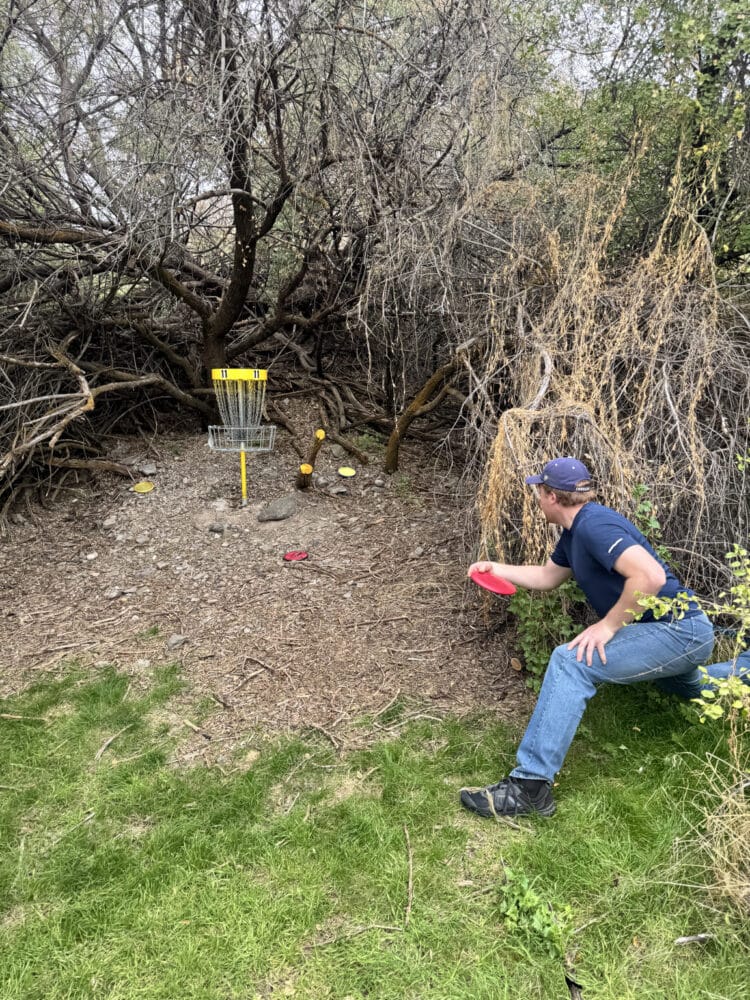
a disc golfer executing a kneeling putt

A kneeling putt is typically used when obstacles force you into a wide stance or when you need to get under a low ceiling. Dropping to one knee can give you more lateral reach than a standard straddle and may offer better stability. Many players carry a foam mini to cushion the knee during these shots.

This technique is especially useful when you need maximum stretch around an obstacle or when bending down for a low ceiling putt would compromise your balance. Practicing kneeling putts helps you understand how the disc needs to be released to achieve the correct angle and distance.

STEP PUTT

The step putt is a common technique used to generate extra power from outside the 10 meter circle. Because stepping when you putt inside the circle is a foot fault, this technique is only legal from longer distances. To use a step putt, you begin stepping toward the basket and release the disc before your foot touches the ground.

Timing is critical because releasing too late results in a foot fault and releasing too early reduces power. Although the step putt can add distance, it introduces more movement and requires consistent mechanics to be effective. If you want the ability to use is properly, you should practice the technique to make sure your timing is right.

JUMP PUTT

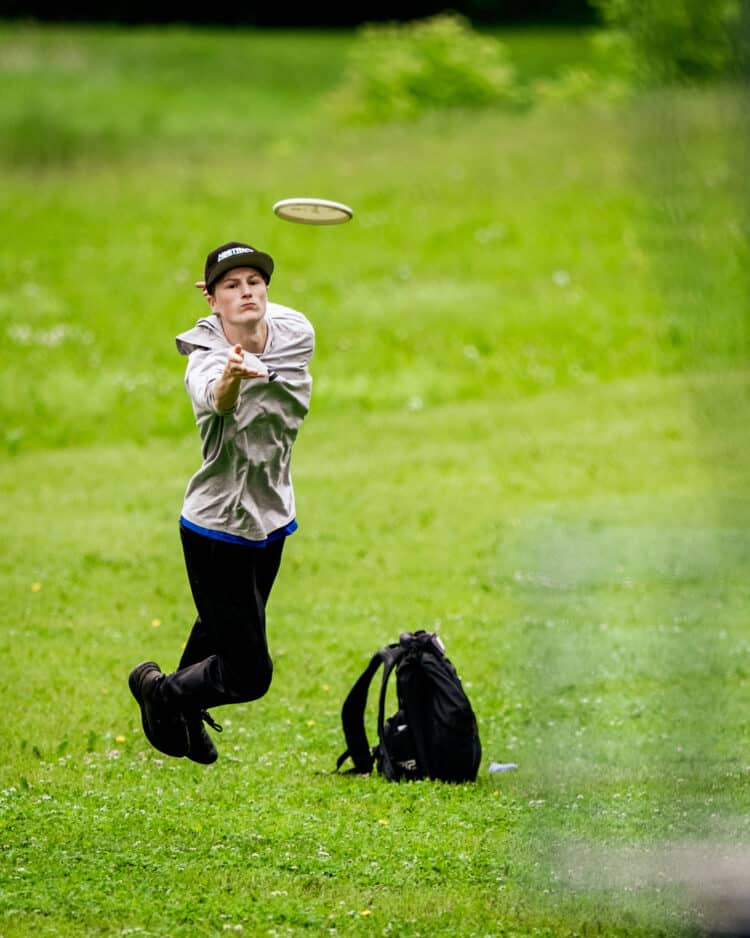
A disc golfer using a jump putt

The jump putt is the more powerful sibling of the step putt. Instead of stepping forward, you jump toward the basket with both feet and release the disc just before you leave the ground. This motion transfers more energy into the putt and can significantly increase your distance.

Like the step putt, the jump putt must be used outside the 10 meter circle. It requires precise timing but can come in handy if you have a long putt.

Summary

No matter which putting technique you prefer, the key to success is practice. Repetition is the key to confident and successful putts. Once you develop a reliable form, you can adapt to different situations and use different techniques when needed. Spend a few minutes each session practicing new methods so you are prepared for anything the course throws at you.

Regardless of the putting style you use, to get the best prices and the largest selection of putters on earth, visit Infinite Discs.

Get out hucking and throw what you love!


How to Putt: Disc Golf Putting Techniques
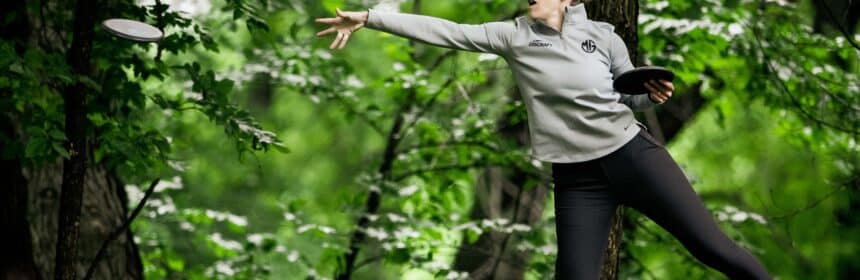
a man putting disc golf

Unless you get an ace or a throw-in from the fairway, you’re going to putt on nearly every hole. Sometimes those putts are drop ins from a few feet away. Other times you have to work for them by letting the disc fly from great distances. How you choose to putt is up to you, but in this blog we will discuss different disc golf putting techniques and styles that disc golfer use to get the disc to the basket.

Although we will list a lot of techniques that are used in the disc golf world, we are going to focus on two different stances, and two different putting styles. These represent a bulk of the putts that you will see on any given day, and are tried and true techniques. Let’s start with some putting techniques that are a tad more unorthodox. Some of these unusual styles are used out of desperation or because you are in a situation with few choices, rather than using them on a regular basis.

Disc Golf Putting Techniques

TURBO PUTT
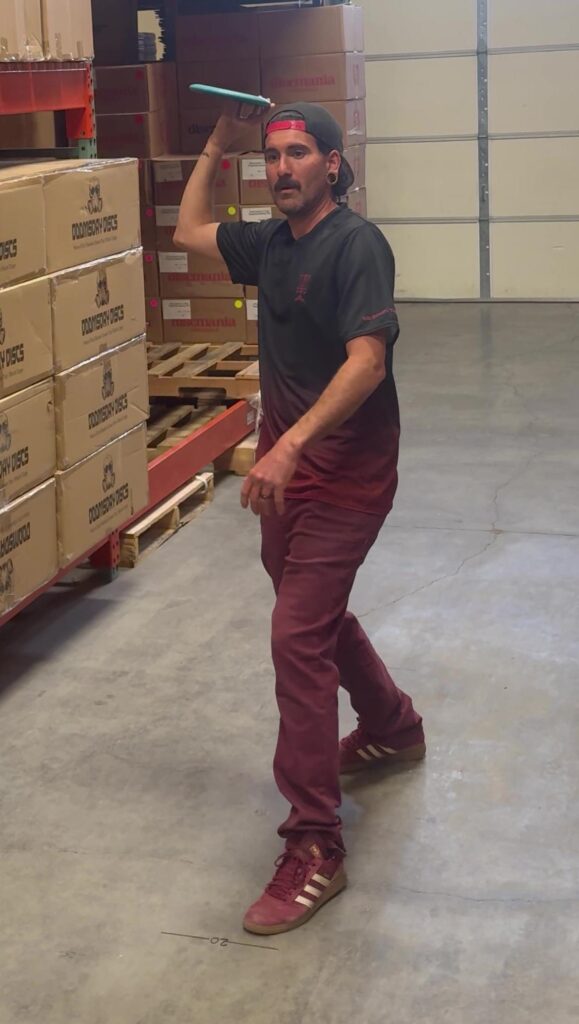
a turbo putt

The turbo putt is commonly called a pizza putt. It is accomplished by holding the disc flat with your thumb under the putter and your fingers around the outer rim. The motion is made by pushing the disc forward, then adding a ton of spin by snapping your wrist. That motion, when mastered, can give the disc enough spin to hit long putts.

Although the turbo can create a lot of spin, it is usually used for shorter putts on an elevated basket, or putting over a obstacles such as low bushes. It is fun to watch a good Turbo putter, but the technique is usually reserved for close putts or out of necessity.

BASKETBALL PUTT

This novelty putt sort of mimics a shot with a basketball. It is accomplished by holding the disc upside-down at an angle, then flicking your wrist like shooting a basketball. That motion gives the discs some spin and it flies in an arc to the basket. Although I have never seen this putt used, there is video of a few pros (like Ricky Wysocki) use that technique.

basketball putting technique

Another variation of this shot is to flip the disc so it doesn’t spin, but rather rotates slowly, then hits the chains on the full flight plate or bottom. Jennifer Allen has used this technique for short putts, usually on elevated baskets.

SCOOBER

Seen in tournament videos of Brodie Smith, the scoober is a method of throwing Ultimate discs in order to avoid defenders and progress downfield. It is thrown with the disc upside down and at an angle, so the disc will float toward the basket. It is just a short motion with the elbow and a flick of the wrist in a sort of reverse-forehand action. One of the great things about this putt is that the disc drops out of the sky, so if you miss, you won’t have a long comeback putt. Brody posted an instructional video on YouTube HERE

the scoober putt

Although the scoober could be used in a situation where you have an obstruction that you need to get around or over, most people lack the skill to pull it off. Unless you practice that putt, or have a lot of Ultimate experience, you will likely be more successful with another type of putt. If you have the skill to pull it off, you might save yourself a few strokes. And you will definitely impress your card mates!

KNEELING

A kneeling putt is another technique that is typically reserved for specific situations. If you are attempting a wide straddle putt, try dropping to one knee instead. You can usually kneel a little wider than just straddling. Plus, you might be more stable balancing on one knee (carry a foam mini to use as a cushion!).

There are a couple situations where a kneeling putt might be the best option: If you are behind an object and need to maximize your stretch to give yourself the most lateral distance possible. Or, if you have a very low ceiling that you need to get under, and don’t want to be bending down to attempt to putt. I recommend practicing these two scenarios so you can see how you need release to disc to get the direction and distance you need from those stances.

STEP

Although the step putt is fairly common in disc golf, the exact execution of the technique can vary from person to person, and depends on the situation. It is used to get a little more distance/power from a putt. The step putt can only be used outside of 10 meters from the basket, otherwise a foot fault could be called.

To execute a step putt, begin stepping toward the basket and make sure to release the disc before your foot hits the ground. Timing is important to maximize the power and ensure you don’t hit the ground before you release and get a foot fault. Although step putt can give you more power, it introduces more movement into your putts and requires more skill to properly execute.

JUMP

The big brother to a step putt is the jump putt. Instead of stepping forward, you jump toward the basket with both feet. As you are leaving the ground you release the disc, to optimize the power you transfer into it. It takes accurate timing, but can add a significant amount of distance to your putts.

Putting Stances

Now let’s look at the most popular putting stances, and talk about how to use them.

STRADDLE

Straddle Putt

While some of us use the straddle when needed, others make it their go-to stance. Think Nate Sexton or Kevin Jones. By using it as your regular stance, you’ll be much more comfortable if you are forced to straddle around an obstacle.

The straddle is typically used with a push put, although a spin putt works as well. Facing the basket with your feet parallel to each other, you can get extra power by implementing a jump putt out of your straddle stance. Or just stay planted on the ground and get your power from your legs and arms.

STAGGER

a stagger putt

The stance that you see most people putt from is the stagger stance. Although there are a lot of moving parts to a stagger stance, it can generate a lot of power. It is an athletic stance that allows you to get power from your legs, hips, shoulders, arms and wrists. You can use your back leg to push off and counterbalance your body.

The stagger stance is executed by placing one foot in front of the other, with the lead foot the same as your dominant hand (right foot for right-handed players). Most of your weight is on your back foot to start, then the weight is transferred to your front as you release. Your back leg then rises into the air to counterbalance your body, giving you more distance. If you want to see a gymnast try this technique and get the highest back-leg kick of anyone, check out a video with Jennifer Allen!

SPIN

Although both the spin and push putts each include some spinning and some pushing, the difference is the emphasis. In the case of the spin putt, the emphasis is to create a lot of spin on your disc. This is accomplished by bringing the disc near your body and snapping it toward the basket. That motion creates a lot of spin and is useful for many different disc golf scenarios.

When you use your elbow and wrist to create a lot of spin on your disc, it allows you to get longer distances from your putts. It also allows you to have a higher success rate in a windy situation by cutting through the wind. However, this putting technique also has some disadvantages.

Whenever you introduce additional moving parts into an equation, you have to rely on consistency among all of those parts. Any variations and your chances of a successful putt diminishes. That is the down side to spin putts. On the plus side, it can be used in either a straddle or stagger stance.

PUSH

The push putt has its emphasis on lofting the disc into the air with minimal spin. The disc floats to the basket with much less power. This softer approach means that missed putts won’t have as long of comeback putts. The arc of the putt can be useful in getting over obstacles. Plus, they are also less likely to spit out or bounce out since they don’t have as much speed.

That lack of speed can also be a downside, since you can’t get as much distance. Another disadvantage is that in windy conditions, the push putt can be difficult to properly execute, since your disc will be affected by the wind.

Summary

No matter your desired putting technique, the bottom line is to practice it enough to be effective. If you aren’t confident with your technique, it doesn’t really matter how you stand nor how you putt. Whichever style fits your game, get good at it through repetition. I also recommend spending a few minutes each putting session trying out other techniques, in case you have to use one of them out of necessity.

Get out hucking and throw what you love!
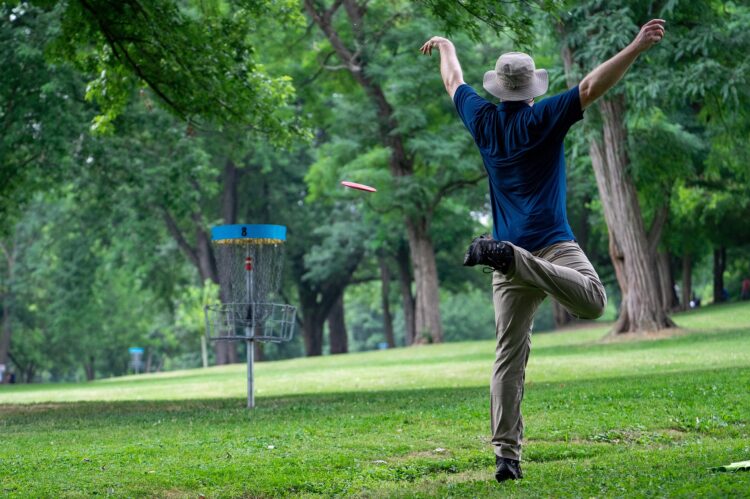
 

Putting Styles Disc Golfers Use

Play Disc Golf

Putting Style Used

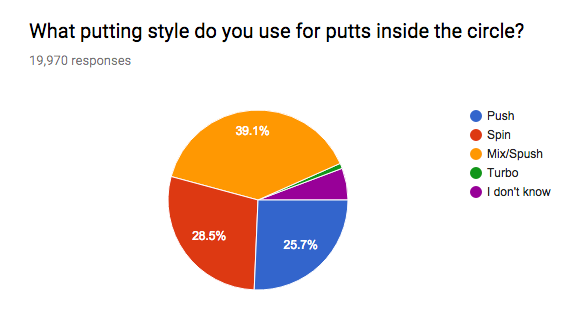
With the exception of the “Turbo Putt,” the different putting styles are pretty evenly distributed among disc golfers. 28.5% of respondents said they use the “spin putt” while 25.7% said they push putt. 39.1% putt using techniques that combine elements of both the spin and the push putt. Less than 1% of putters regularly Turbo Putt from inside the circle, so if you’re among this minority, congratulations! You are in the 1%.

Putting Stance Used

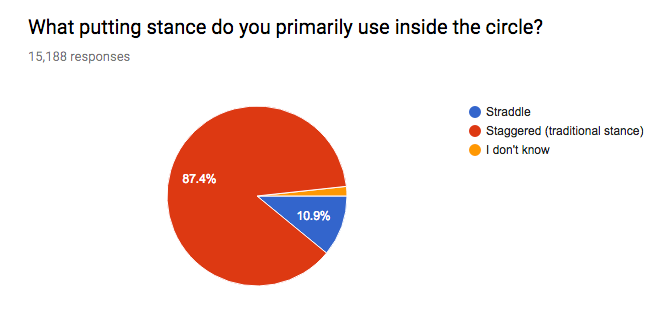
When it comes to putting stance, almost all disc golfers use the traditional staggered approach. Only 10.9% of surveyed disc golfers use a straddle putt.

The Controversial Jump Putt

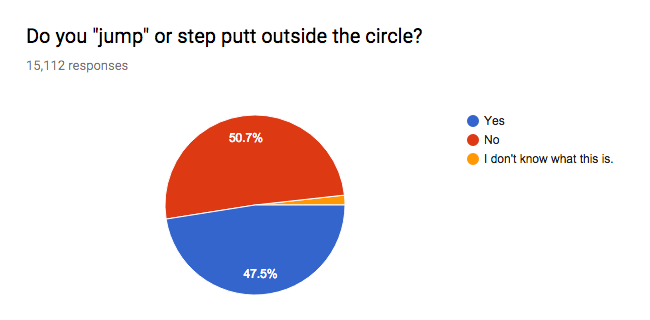
One of the more controversial disc golf calls is the “jump” or step putt. Those who don’t jump putt feel it is an unfair advantage. Those of us who do jump putt think the 10 meter rule is fantastic as it makes it easier to make long putts. Slightly more than half of those surveyed jump putt while 47.5% said that they do not jump putt outside the circle.