
Best Disc Golf Retrievers
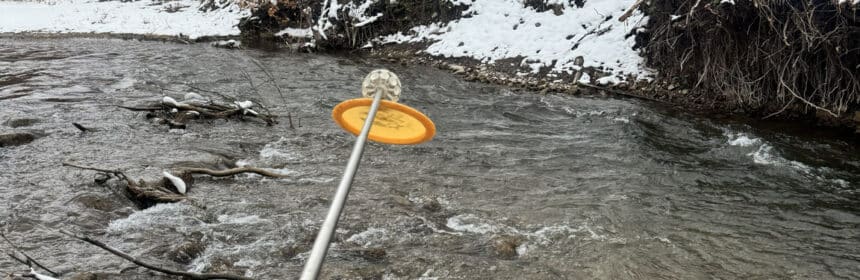
If you’ve been playing disc golf very long at all you’ve likely had the unfortunate experience of discovering your disc in a tree, in a body of water, or somewhere out of reach. It can be disheartening to see your disc, but not be able to get it back! Fortunately, there are products to minimize the chances of leaving a disc behind.
Disc Golf Retrievers
Having a disc golf retriever can help you get a disc that is stuck in a tree, over a fence, in a pond, or in a bush full of thorns. There isn’t a guarantee that you’ll get your disc back, even with a retriever, but your odd go way up. Ask around and you’ll how many discs people have recovered for themselves or their friends using a retriever of choice.
In this blog we will talk about the different retrievers available and mention their strengths and weaknesses. That will help you narrow your search for the best disc golf retriever for you and the courses you play. We’ll divide them into two categories: Extendable pole retrievers and rope retrievers.
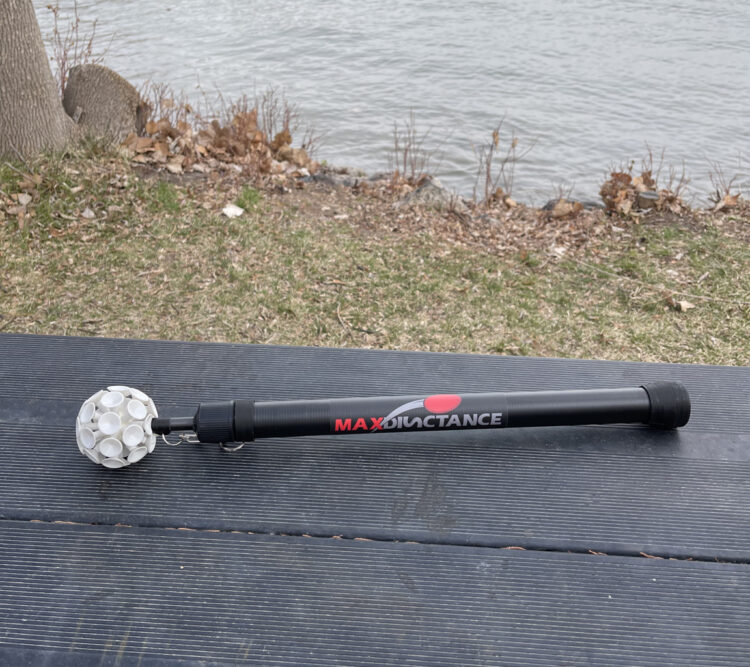
Pole or extension devices
In many situations it is advantageous to have a long pole to increase the distance you can reach. I disc in a tree is a great example. This type of retriever comes in a variety of sizes: from compact 6-foot polls, to massive 30-foot carbon fiber poles. The smaller options would be easier to carry. The larger ones would give you amazing reach.
Pole retrievers come with a variety of retrieval tips. There are hooks for pulling, dragging, or dislodging your discs. Some have suction cups that stick to the disc. And others have a loop that surrounds the disc. Each of the tips has its advantages and disadvantages.
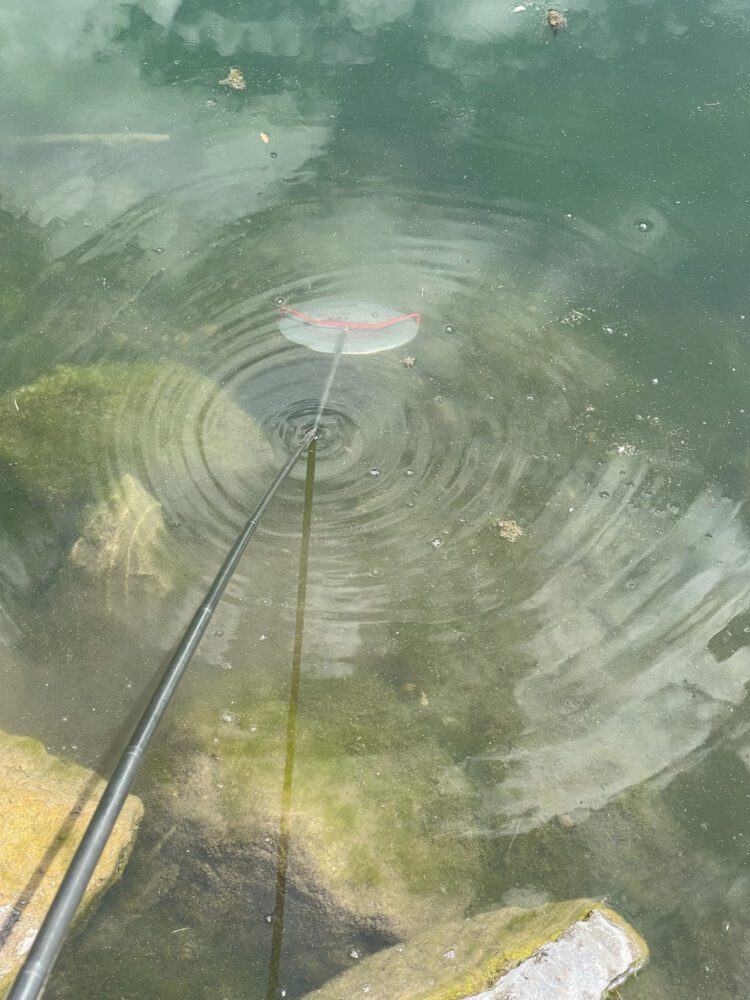
The suction cups work well in water. If the water is still, like a pond or lake, it is easier to suction and retrieve the disc. In moving water, like a river or stream, it can be challenging to both get the retriever attached to the disc, and get the disc up and out of the river. Often the disc will become dislodged and float farther downstream before coming to rest (IF it does come to rest).
I’ve retrieved discs in pretty fast-moving rivers, so I know it can sometimes be done. I’ve also seen many failed attempts. Still, it is better to have the option to make the attempt.
- The suction cup works amazing in water. Preferably standing water, but it can also be used in rivers with a varying degree of success.
- Hooks are useful in trees and can also be used to scoot your disc toward the shore when retrieving in water. They are a good universal tip.
- Metal loops are great for securing the disc to the retriever, but they can be cumbersome in trees. In moving water it might be difficult to ‘catch’ the disc.
Rope Retriever Devices
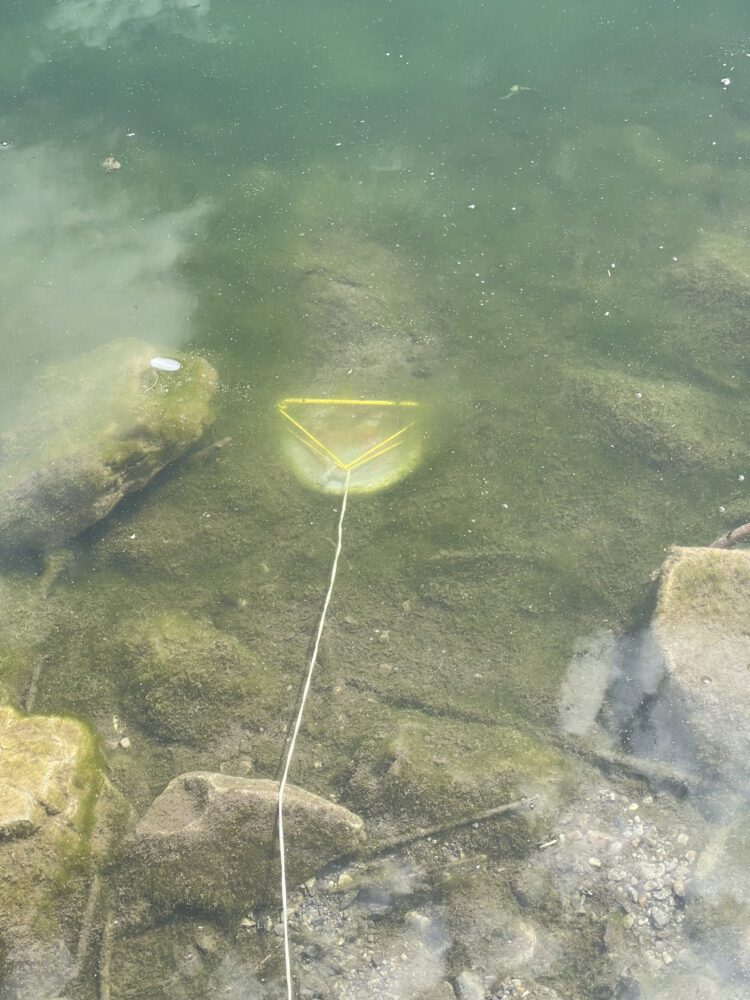
This type of retriever is used by throwing it out in the water, then pulling it back to you using the attached rope. The idea is to drag the retriever across the disc to ‘catch’ it and pull it back to you. It can be challenging to drag the retriever exactly over the disc, and may take several attempts.
Rope retrievers are mainly used for water hazards, like rivers or ponds. They can reach farther than pole retrievers, especially if you add to the rope that comes with the retriever. Pro tip: The retriever comes with rope that is wrapped around the folded retriever. I added more, and use a kite string spool to wrap all the rope around. That way I just unwind as much as I need.
I’ve used this type of retriever to rescue many discs from a watery grave. Sometimes it takes several tries before I can drag the retriever across the disc. Other times I’ve nabbed them rather quickly. (One time, I couldn’t even see the disc. I just got a good spot on where it went in the water, then successfully retrieved it in just a couple tries.)
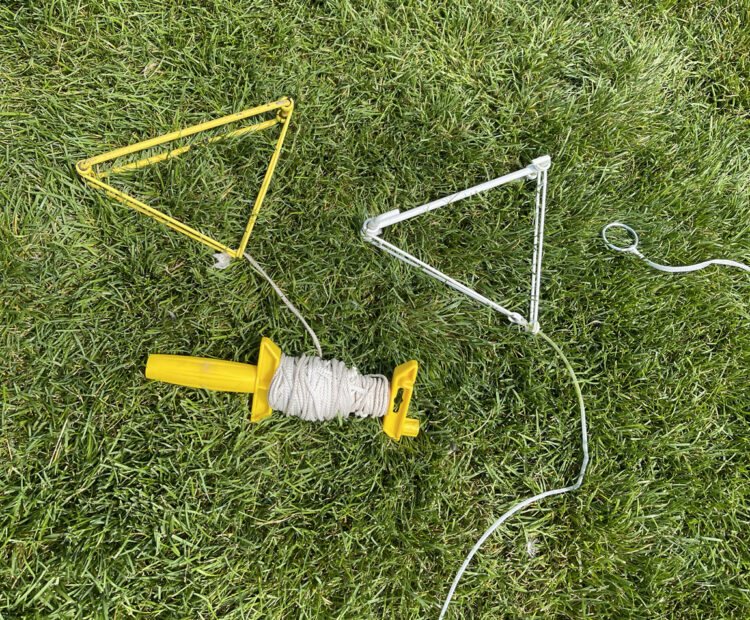
The challenge that arises from rope retrievers is when there are rocks at the bottom of the pond. That makes it challenging or impossible to allow the retriever to get under the disc to ‘capture’ it. Plus, the rocks might snag the retriever so you can’t pull it back in. I’ve never had that problem, but it is a possibility.
Best Disc Golf Retrievers
With those pros and cons for each retriever in mind, let’s look at your best retriever options.
Best Pole Extension Disc Retriever
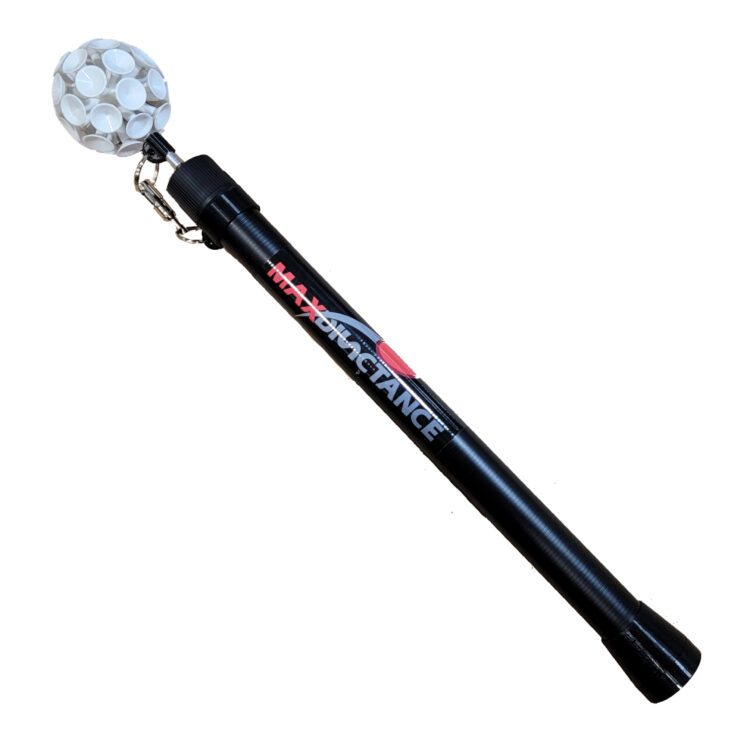
The first time I used a Max Stick suction cup retriever, I loved how it performed. I had a disc in a river and the Max Stick had no problem holding on to my disc and lifting it out of the water. I’ve retrieved several discs from pond as well. While the suction cups shine in water, using the retriever in trees is hit and miss. Getting the ball to stick to your disc can be challenging. And maneuvering your disc through the branches doesn’t always work. That is especially true in bushes, where the disc can become unstuck and fall to a place where you don’t have room to stick the suction cups to the disc.
I think the ideal retriever would be the suction cups with a retractable or detachable hook. That would be the best of both worlds. Even so, the Max Stick is great in water and pretty good in trees. It comes in several different pole sizes, including a massive 30-foot model. You also have the option of buying the suction cup head to screw on to your existing retriever. Check out this popular retriever in the link below.
NOTE: We frequently sell out of the Max retrievers. Check back later if we don’t have the retriever you’re looking for.
Best Rope Retriever Winner
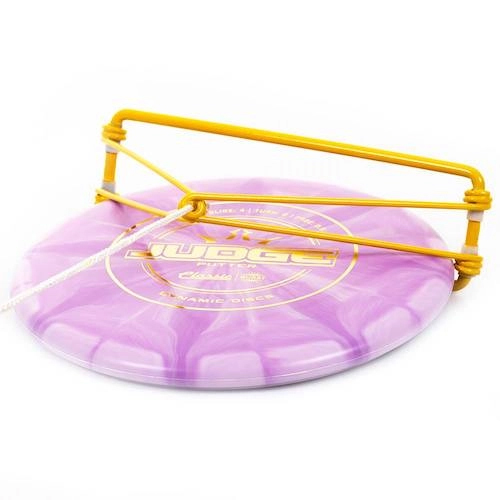
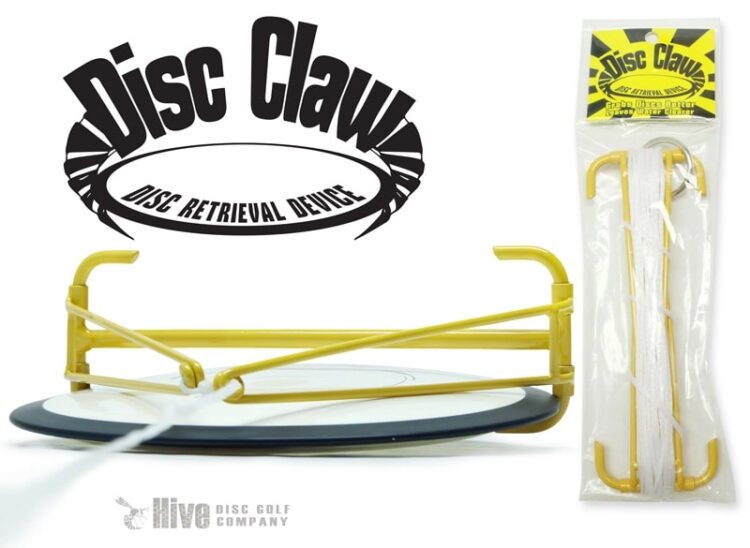
The Disc Claw and the Golden Retriever are both excellent choices for ponds that don’t have large rocks or branches. The enemies of either of those retrievers are rocks and branches, which can make a disc irretrievable and could possibly snag the retriever. If the pond has silt, sand, mud, or moss and you stand a good chance of getting your disc back. As mentioned above, extra rope and a something besides the retriever itself to wrap the rope around will make owning either of these a better option.
Winner? I’m going to call this a tie. The Claw had a few more snags on rocks that the Golden Retriever. However, as the Claw advertises, it kicks up less silt than the Golden Retriever. That keeps your disc visible for more attempts at retrieving it, should that be necessary. Plus, the Claw is a couple bucks cheaper.
Honorable Mentions
Wrist Rocket – Best Retriever for High Trees
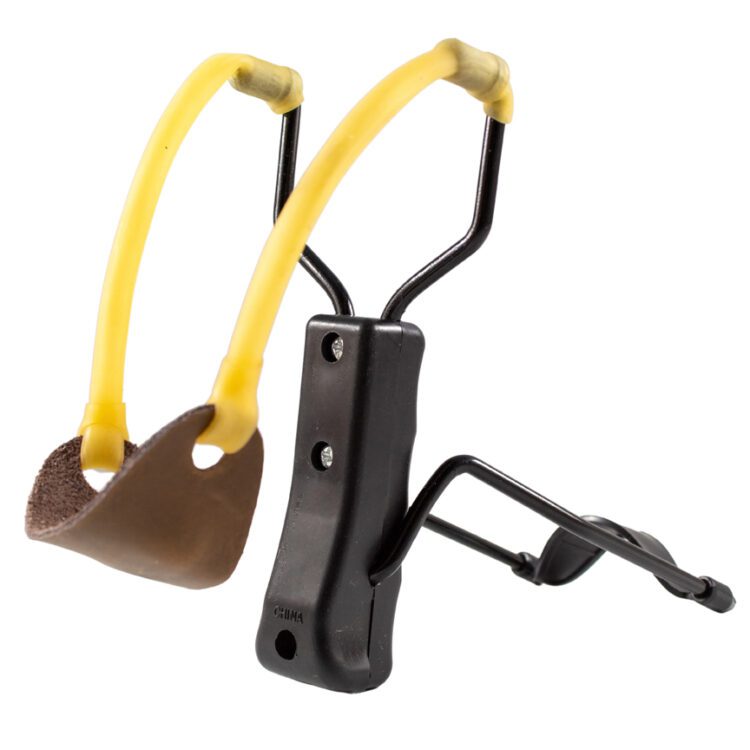
I might have laughed at the suggestion of using a wrist rocket to retrieve a disc. But, then I tried one. It only took a couple shots and I was able to dislodge a disc that was out of reach of my telescopic retriever. Since then, I’ve managed to knock several more discs out of trees. Sometimes it takes quite a few shots. Other times I get them pretty fast. Either way, the wrist rocket has become a staple in my bag.
Driver Diver
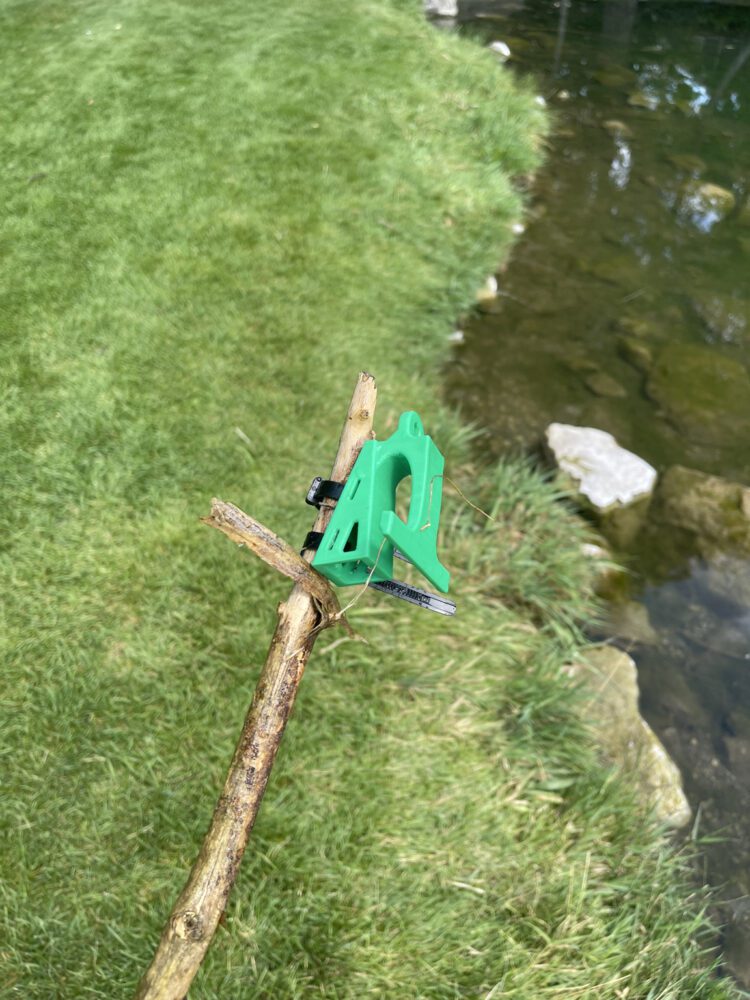
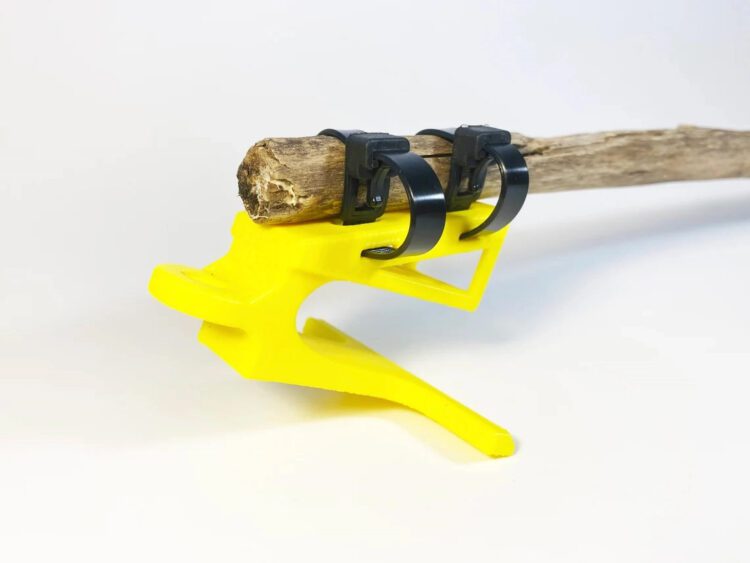
This little piece of plastic is a handy device that doesn’t take up much space. You attach the gadget to a stick with reusable zip ties and the stick becomes your retriever. Perfect for courses with a few smaller bodies of water and trees. You can store it in your bag until needed. Just make sure you don’t leave it in a hot car, because it can warp. Mine did, so I took a heat gun to it and that fixed the warp.
Conclusion
There isn’t one retriever that is best for every situation. You can minimize the chances of not being able to retrieve your disc by getting a couple different types. Although I carry an extendable retriever with me at all times, I also have a wrist rocket with me. If I’m using a cart and there are water hazards, I’ll also take along a Golden Retriever. If I’m not using a cart, I’ll leave the Golden in my car and go back later to try to get the disc, if needed. It’s worth the effort and increases my chances of going home with all my discs.
Check out our entire retriever inventory here.
Ted Hegemann

Ted is the Chief Writer at Infinite Discs. He is responsible for the State of Disc Golf Survey articles and most of the "best discs" posts. Ted runs all kinds of local disc golf leagues and tournaments and tournaments in Northern Utah.
I have an m retriever, which works pretty well. It can extend to a substantial distance.