I always hate to see summer come to and end, with colder temperatures hinting of the winter to come. One thing I DO look forward to in the fall is the release of the new Halloween disc golf stamps! I like creative designs, new takes on old Halloween ideas, and even a hint of darkness in a stamp.
This year’s collection of discs did not disappoint! Let’s look at some of the fun designs that hit the shelves this year.
Discraft
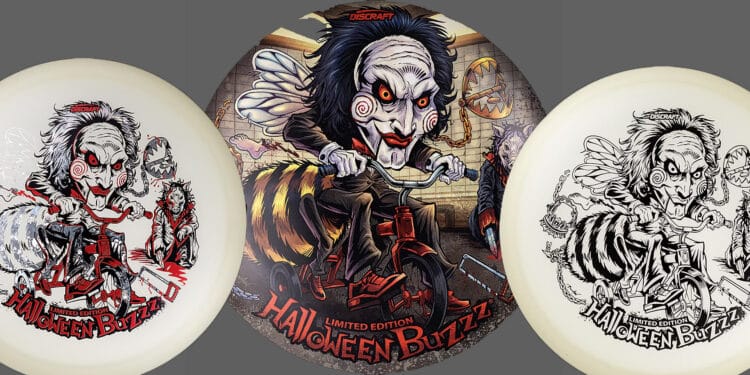
Discraft has a tradition of featuring the villains of horror-movie fame with their annual Buzzz discs. This year, the honor goes to the Saw series and features Jigsaw, the masked miscreant who wants to know if YOU want to play a game. A word of caution: losing the game can be fatal!
Like years past, the Jigsaw adorned Buzzz’s come in three stamp types. There is the stunning SuperColor mold, complete with detailed depictions of Saw movie scenes. There are also triple-foil and single-foil options.
MVP
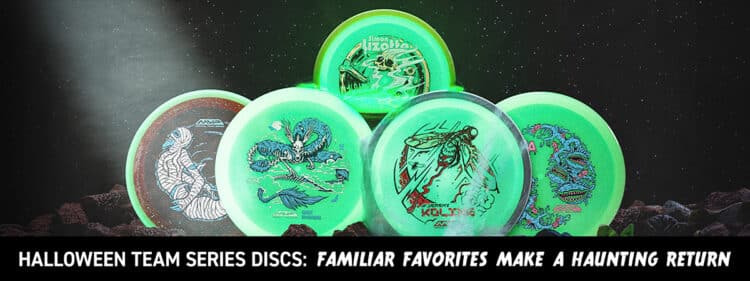
Having a tradition of their own, MVP released their Halloween Tour series, representing some of their top pros. From the mummified ‘bendy James’ stamp, to the Silva Saarinen Little Shop inspired stamp, you will find a variety of molds and stamps with Halloween vibes. I like the Simon Lizotte skeleton-filled witch’s brew!
Prodigy
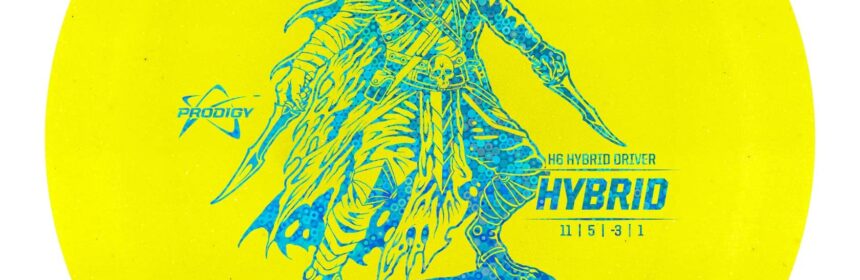
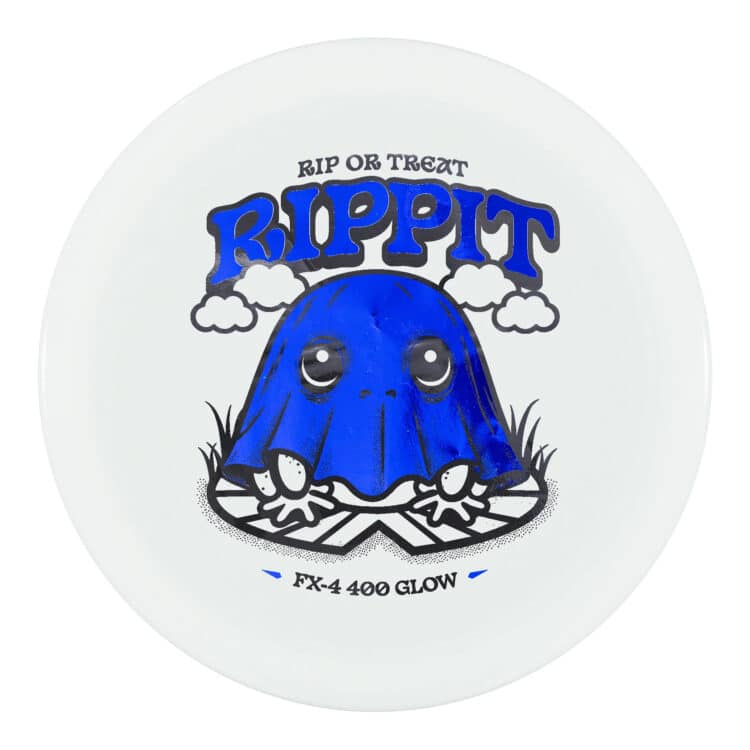
Prodigy has a couple stamps that might be the treat you are looking for this Halloween. In addition to the RIPpit ghost stamp, they also have a beastly ghoul ready to haunt your opponents! Choose from the H6 or FX-4 molds.
Several brands have molds featuring a happy ‘skellies’, Fred, Janet, and Fido. Robby shows off the stamps in this Facebook short:
About 18 miles north of downtown Detroit lies the city of Sterling Heights, MI. Several NFL, NHL, and MLB players were either born in
Sterling or attended school there. If you visit Sterling Heights you
might want to spend some time at the Sterling Heights Nature Center to
walk through its natural habitats. Looking for action-filled
activities? Check out The Full Throttle Adrenaline Park! Sterling is
home to the Michigan Lottery Amphitheatre (in case you want to take in a
concert). Sterling Heights is also home to a new disc golf brand, Ballisdisc.
Bobby (left) and Chris (Right), founders of Ballisdisc
Family Business
When your hobby is disc golf and the family business where you work
just happens to be a plastic injection molding company, it wouldn’t be
surprising that you think about making your own line of discs. That is
what happened to brothers-in-law Chris and Bobby (Chris married Bobby’s
sister).
After deciding to put their knowledge of injection molding toward their
love of disc golf, the pair formed a company and began working toward
the day they could produce their own discs. That was in February 2023.
In October 2024, Ballisdisc’s first mold was PDGA approved. The
Creedmoor OS would be there first release. The ‘OS’ stand for
‘overstable’, and how this disc lives up to that name! Ballisdisc gives
the flight rating as 9, 3, 0, 7! You read that right: it has a fade of seven!
After the mold was approved, there was still a lot of work to do. The
two founders had their regular responsibilities at the family business
and had to work on the disc in their spare time. They also had to work
around the regular production schedule for the injection machines. All
of that combined to delay the introduction of the Creedmoor OS until
earlier this year.
About the Creedmoor
This would be a good time to discuss the naming convention for
Ballisdisc’s molds, and the name of their company. If you are into guns
at all, you already recognized the name Creedmoor and probably figured
out the reason for the name of the brand.
For those who don’t know, Creedmoor is a type of gun cartridge typically
used for long-range shooting competitions. The name Ballisdisc is a
variation of the name for the science of projectile motion, ‘ballistic’.
In this case the projectile would be bullets. Chris and Bobby both
consider themselves gun enthusiasts and enjoy hitting the range. The
names they chose for their molds and company are a nod to their passion.
Latest Release
Their second mold was just released and it has a similar, gun-related
name: the ACP. Those initials stand for Automatic Colt Pistol, and it is
another type of cartridge. To see a blog explaining the history of the
ACP and its evolution, check out this blog.
The Ballisdisc ACP is an overstable putt and approach disc. Ballistic
rates the flight as 3, 3, 0, 2. It is available in their FMJ (Full Metal
Jacket) line of plastic, which includes a glow option.
Future releases for Ballisdisc include a fairway driver and midrange. As
of now the plan is the make them overstable. However, the will
eventually add understable discs to their lineup.
The Future of the Brand
Another way Chris and Bobby are looking to the future is with
sponsorship. Although they don’t currently have any sponsored players,
they are planning on offering team spots for next year. That will be a
good way to help spread the word about Ballisdisc and their molds. Check
out their website and social media to find out the latest on team
updates.
Chris and Bobby are excited about their place in the disc golf
world. They are already in a position to make their own discs. They can
also manufacture any additional needed machinery. The pair have already made their
own custom stamp machine from scratch! Having those abilities gives them
a lot of excitement and optimism about the future!
New Plastics
In addition to the aforementioned upcoming molds, Ballisdisc will be
experimenting with plastic blends and adding different colors to their
molds. They are also going to offer branded apparel in the future. Chris and Bobby are off to a good start and it will be fun to see where their disc golf journey takes them!
Chris is the tech and social media extraordinaire and Bobby designs and machines the discs and molds.
When you shop for a new disc, you likely prioritize finding a weight range that you like. If a disc is too heavy for you, get the distance you want. Too light of a disc and it may be too flippy to be useful. The weight of a disc affects its speed, stability and the way it will fly. In this blog we will discuss how the weight of a disc affects the flight of the disc as well as your disc purchases.
Disc Speed and Distance
There is a solid relationship between how fast a disc is thrown to how far the disc will travel. The faster the throw, the greater the potential to get more distance. There is an exception to this ‘rule’, which we will talk about, but there is a good general relationship between speed and distance.
According to Best Disc Golf Discs’ YouTube Channel, for every mile per hour of disc speed, there is an average increase of about seven feet in distance. Theoretically, an easy way to get more arm speed is to throw a lighter disc. Research shows that throwing a lighter disc can lead to increase in throw speed. As an example, throwing a disc that is 20 grams lighter can result in an increase in speed of 6.5 MPH. That would mean an increase in distance of over 45 feet!
Light Discs = Big Distance
Moving beyond theory and into practice, we have a perfect example of using lighter discs to gain distance. In 2016, David Wiggins Jr threw an R-Pro Innova Boss 1,108.92 feet. According to the Guiness Book of World Records, the Boss weighed 154g. There was a ripping tailwind that contributed to Wiggins crushing the former record by a couple hundred feet.
The former distance record was set the day before by Simon Lizotte. Lizotte was the first person to throw a disc over 900 feet (903.9 feet). The disc he used was a 157g Innova Blizzard Boss. Although angle control and massive tailwinds played a part in both records, so did the lighter discs used.
Disc Stability Also Matters
We’ve established that lighter-weight discs can get you more speed and possibly more distance. Now let’s discuss the flight numbers of the disc and how weight affects those numbers, specifically the stability of the disc (the third and fourth numbers in the four number flight rating).
Because a lighter disc can be thrown faster, it has a tendency to turn to the right more at the fastest part of the throw. How much it turns depends on how fast you throw the disc and what speed rating the disc has.
If you are an advanced player that buys overstable discs that can handle your power, throwing lighter discs might give you nice S-turns that translates to longer throws. If you already throw molds that have a good amount of turn, lighter versions of those molds might be too flippy to handle.
If you are a newer player who struggles to throw 280 feet, lighter discs might be just what you need to get a good flight and break that 300-foot barrier.
Light Discs in the Wind
As a general rule, the lighter the disc, the more it will be affected by the wind. That isn’t always a bad thing. While a headwind will make a disc more flippy and prone to turn (maybe even too much turn), a tailwind will tone down the turn, and likely give you more distance (refer to the record-setting throws above).
Cross winds can also affect lighter discs more than heavier discs. They will either push a disc farther in the direction of the wind, or drop the disc faster, depending on the angle of the disc and the direction of the wind.
Choosing Your Disc Weights
The bottom line in selecting a disc is that it flies good for you at your skill level. If your discs are turning to much for you, you may need faster, heavier, or more overstable discs. If every disc you throw is a meat hook, look for slower, lighter, and more understable discs. Here are a few guidelines for disc selection:
Putter or Midrange Discs
Since putters and midrange discs are typically used for control shots rather than long distance, getting max weight is fine. They won’t be affected by the wind as much as lighter discs, which will help with accuracy. Midrange discs can also be heavier than max putters due to their larger diameter.
If you want a little more distance out of your putter or midrange, you could get a lighter disc. Many midrange discs and putters come in 160’s weight. Lighter discs make it easier to make take longer putts, although they would be affected by the wind a little more.
Fairway and Distance Drivers
The max weight for most fairway and distance drivers is 175g. The lightest discs can dip below 130g. The disc weight that would work best for you depends on your skill level and the flight you are looking for.
Newer Players
Newer players typically lack the skill to throw a driver very fast, which means it won’t go very far. Lighter discs are easier to get faster throws with, and should be the focus for beginners. Look for molds in the 150g range (or possibly even lighter discs), and ones that have a little more turn (-2 to -4). As your skills improve and you can throw faster, you will see more turn in your flights. That would be a good time to look for slightly heavier discs, say around 165-170g.
They would also have the option to look for molds with higher speeds with the same weight, which will mean they will turn less since they require a faster throw. The advantage of getting heavier disc at the lower speed is that the wind won’t affect it as much. A good way to save a few bucks while you are experimenting with discs is to look for sales, misprints, and factory seconds.
Advanced Players
More advanced players can throw faster speeds and often need max weight (and overstable) discs to keep the it from turning and crashing to the ground. Even so, they could still benefit from keeping a lighter driver in their bag for times when they are throwing in a tailwind or up a steep hill.
Many players will have several discs of same mold in their bag, all with different weights, plastic types, or levels of wear. Then they can get a variety of shot shapes with the same familiar feel of the disc.
Other Things That Affect Distance
In this discussion of the weight/distance relationship theory, we are assuming that all other variables that come into play are the same every throw, so we can isolate the role that weight plays. In practice, many other factors come into play when we throw. Grip, nose angle, wobble, and spin all affect the flight shape and distance of a disc. However, for this discussion we just wanted to focus on the role that weight plays in our throws, so we will imagine that everything else is perfect and consistent.
How Are the Weights Listed on a Disc?
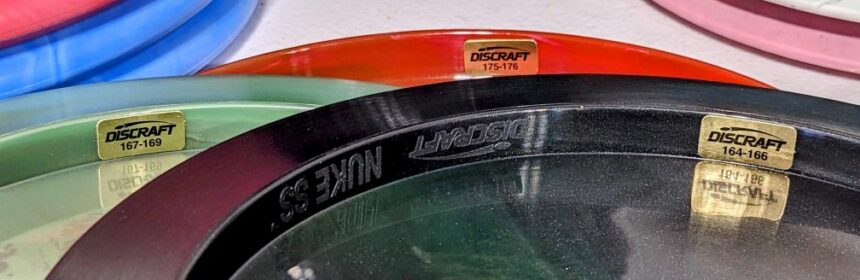
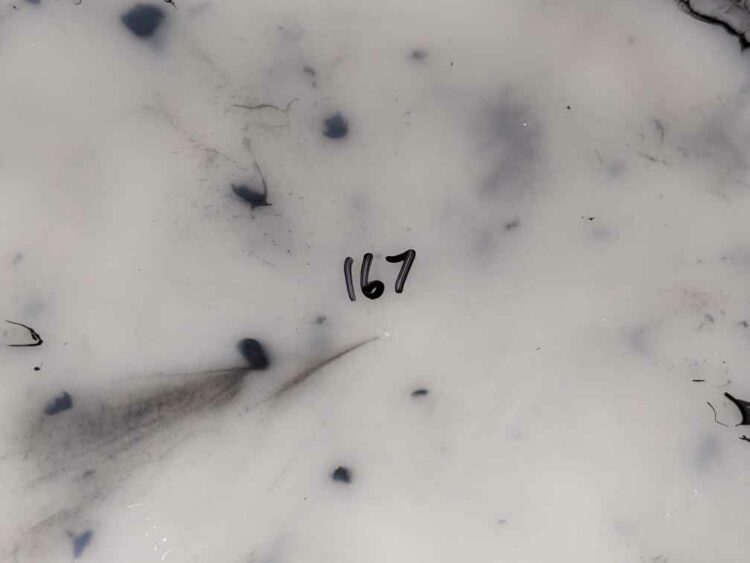
Different brands indicate the weight of their discs in different ways. Some give the exact weight listed on their scale when they weigh them individually. This can be done with ink or with laser etching. Other brands just list a range of weights, even though they are still weighed individually. So, how does Infinite Discs approach the manufacturer’s declared weight?
Long ago, Infinite adopted a policy of trusting the manufacturer to put the correct weight (or weight range) on the disc. They have a vested interest in giving the most accurate weight as possible. Infinite simply lists what ever wight the manufacturer indicates on the disc. If there is a weight range on the disc (like Discraft does) we list the lowest weight in the range. If the manufacturer lists 173-175g on a disc, we go with 173g on our listing. We do that because our system doesn’t allow us to post a range.
We have considered weighing the discs and posting the weight by the picture of the disc, but there are drawbacks to that. Different scales sometimes give different readings for the same disc. Our scales might not agree the manufacturer’s scale, nor with a customer’s scale, which might result in some upset customers! Instead, we post the weight from the manufacturer.
What if We Post the Wrong Weight?
We try to be as accurate as possible when we post the weight of a disc. We even double check before we ship out discs to make sure the weight, color, and mold are the same as what is listed on our website. Even with those guardrails in place, we may end up mislabeling a disc weight. If that happens, we’re happy to help the best we can. Just know that we genuinely try our best to get the disc listed.
We hope that this information has been helpful in understand a little bit more about disc weights and how they affect flight. We hope you better understand how brands mark the weight of their discs, and how we at Infinite Discs work with those brands and trust in those manufacturers to indicate the weight of their discs so that our buyers can make an informed purchasing decision.
Disc golf has many unique words that beginners will hear during a round. Words like hyzer, flippy, and mando are examples of words that new players will be introduced to, and have to learn. When it comes to the flight of a disc, two important disc golf terms are ‘overstable’ and ‘understable’. These terms are commonly used to describe how a disc flies through the air. Let’s define those terms and learn how they are used.
Disc Stability
When we describe the flight of our discs, we are referring to how the disc behaves at the fastest part of the flight, the beginning, the middle part of the flight, and what it does as it slows down. We can then know the stability of the disc. To describe to others how our disc flies, we use the terms overstable, understable, and stable. In this blog we will define those terms and talk about how they might not make your description clear.
Let’s start with ‘understable’.
Understable Discs
The term understable refers to a disc that moves to the right, on a RHBH throw, at the fastest part of the flight. That movement to the right is known as ‘turn’ in disc golf. Typically, if a disc has a lot of turn, it won’t have as much ‘fade’ at the end. Fade is a word used to describe how the disc behaves as it slows down, and refers to how much a disc moves to the left at the end of its flight. A disc with a lot of turn typically doesn’t have a lot of fade.
The term overstable references the movement of the disc to the left at the end of the flight. The more overstable a disc, the more movement to the left, and the more fade it has. If a disc has a lot of fade, it usually doesn’t have much turn. In fact, it might not have any turn. Those discs are great for headwind shots, since they resist turning and give a consistent flight.
The term stable can have a couple different meanings, depending on how it is being used. It is commonly used to describe a disc with a straight flight. It can also be used to mean less extreme in stability. For example, I’ve heard someone say that their disc is too flippy, and they need something a little more stable. I’ve also heard people say their disc is too beefy, and they want something more stable. Both comments are saying that the person has something that is too extreme, and they want something less extreme.
We’ve covered what overstable, understable, and stable mean, so now we can look at how to tell which discs fall into each category. We can learn a disc’s stability by finding out its flight numbers, which give us a quick way to understand how it’s designed to fly. Often times the flight numbers are stamped on the disc. If not, you can go to www.infinitediscs.com to look up the flight numbers.
Keep in mind, flight numbers are not an exact science. Weight, plastic type, and players skill level all affect how the disc will fly. The numbers give you a general idea of how the disc will fly, then you can use them to determine how it will fly for you. If you are a beginner, for example, most discs will be overstable to you. A disc that is very understable might be what you will throw until your skill improves.
Disc Flight Number Examples
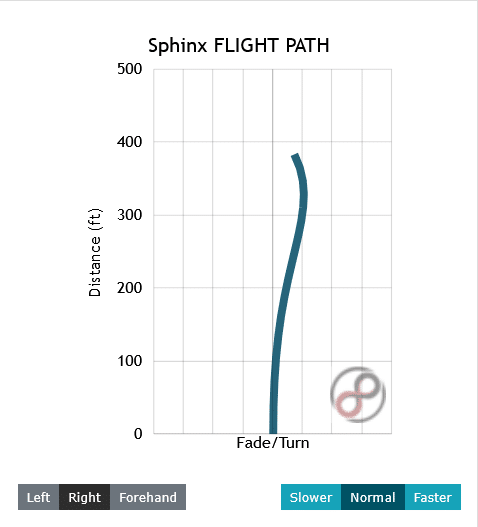
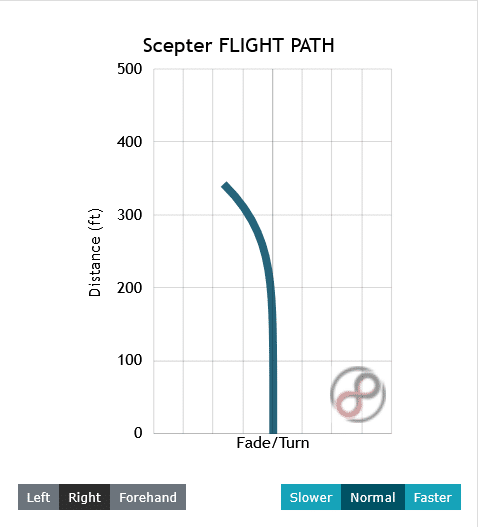
Let’s take a look at a couple examples of overstable, stable, and understable discs. We’ll start with two speed 9 discs, the Sphinx and the Scepter.
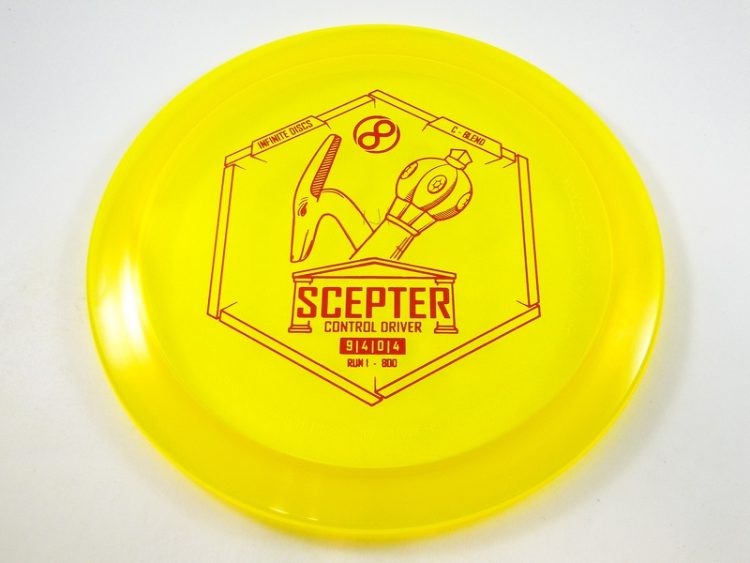
Overstable Scepter
The flight numbers for the Scepter are 9, 4, 0, 4.
The 9 represents the relative speed that the disc needs to be thrown in order for it to fly like the rest of the numbers indicate.
The first 4 indicates the amount of glide. The Scepter isn’t the disc of choice if you want to throw a long way.
The 0 is the turn. A 0 means the Scepter will fight a headwind, or handle the torque of a forehand.
The second four is the amount of fade the disc has as it slows down. Four is a lot of fade, and the disc is very overstable.
The combination of low glide, no turn, and high fade indicate that the Scepter is an overstable disc.
Understable Sphinx
The flight numbers for the Sphinx are 9, 6, -3, 1.
Again, the 9 is the relative throwing speed.
The 6 is a high glide number. The Sphinx can be thrown a long way.
The -3 means the disc has a lot of turn. It may be too much turn for better players or for headwind shots. The Sphinx is an understable disc.
A mild 1 for the fade means the Sphinx will not fade hard to the left at the end of its flight.
The high glide, high amount of turn, and low fade lets you know the Sphinx is an understable disc.
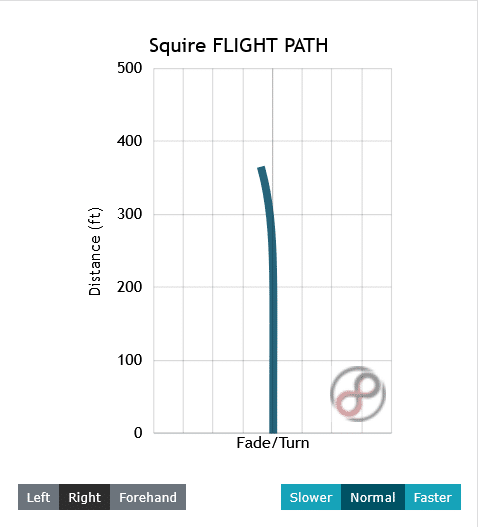
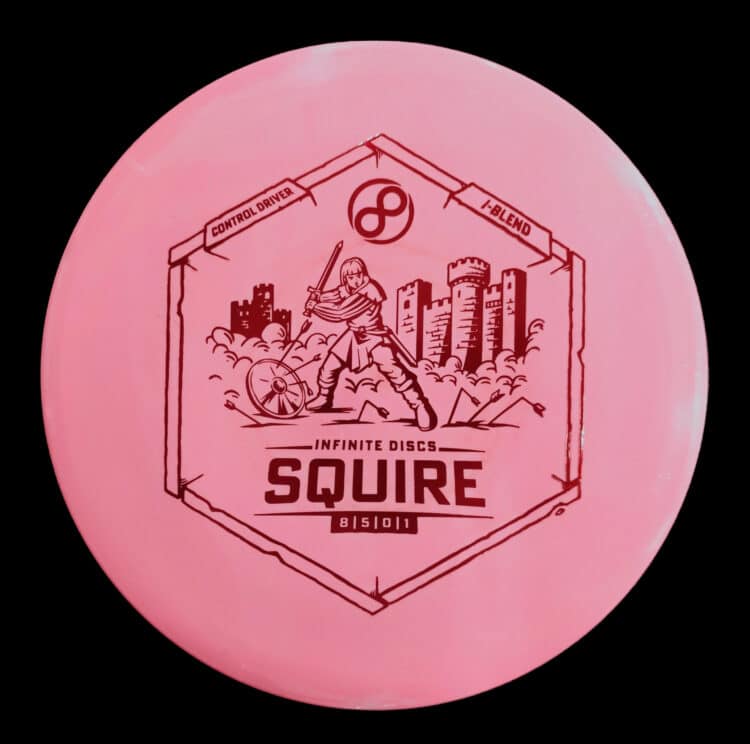
Like the Sphinx, the Squire has a high glide of 6.
The 0 indicates no turning.
The 1 means the fade is not substantial.
The Squire has little turn and fade, and is a straight-flying, stable driver.
Getting a Visual Description of Stability
Conner made a video about stability that will let you see examples of overstable and understable discs and flights. It will be helpful for visual learners. Check it out here:
Conclusion
We hope this blog helped you learn more about disc golf terminology. Knowing what unique words are used in disc golf will help you feel more confident about talking with other disc golfers, as well as understanding what people mean when they use those term.
There are many terms in disc golf that a new player might not understand when they first start playing. word like ‘overstable’, ‘hyzer’, and ‘flippy’ are used in regular conversations on the course. Another term, and one that we will discuss in this blog, is ‘mando’.
It is important to know what a mando is and how to play a hole that has one. It is also good to know WHY mandos are used, so we can know why it is important to play them correctly. So, let’s learn what a mando is in disc golf!
What is a Mando?
The word mando is an abbreviation of the word ‘mandatory’. In other words, it is mandatory that you throw your disc a certain way on certain holes. You are required to throw on the correct side of an obstacle. If you see a mando sign that is pointing left and attached to a tree, then your disc must fly to the left of the tree. If not, you get a penalty stroke.
Most of the mandos that you’ll see are pointing either left or right. However, sometimes you’ll see a mando that points down. In that instance, you need to throw below whatever object the mando is attached to. Occasionally, as pictured below, you see a triple mando. That means you go between the left and right arrows, and below the top.
Rare Mando
In rare occasions, usually unsanctioned tournaments or events, you’ll see a quad mando. This is basically a rectangle shape that you have to be able to throw your disc through. I’ve only seen quad mandos at casual tournaments.
Sometimes mandos will have the word ‘mando’ on the sign, though not always. They might also be marked with a ribbon or tape to indicate the mando object. If tape or ribbon is used, there should be some indication on the tee sign or in the course rules which directions you need to throw in order to successfully execute the mando. A successful throw is called ‘making the mando’. An unsuccessful throw is a ‘missed mando’
Why Are Mandos Used In Disc Golf?
While mandos should be used sparingly in a course design (in my opinion), there are several reasons why a course designer might decide to include a mando on a hole.
One reason is safety. By forcing players to throw in a certain direction, course designers keep discs from flying over or near playgrounds, parking lots, walking paths, or other players. That makes the course safer and reduces the chances of someone getting hit or property damage from occurring.
Another reason is to make a course more challenging. Designers might intend for people to throw down a difficult, narrow tunnel. If you have the skill and power to throw over the tunnel and land on a green or fairway, it takes the challenge out of the hole. By adding a few mandos, the hole becomes more of a test, and rewards the accurate throw.
One reason designers might include a mando is course flow. Some courses have areas of the course where there are thick bushes or swampy areas, and throwing into those areas would cause delays while people look for their disc. That becomes especially important during a tournament.
A mando might also prevent people from throwing onto another fairway. That might be a safety issue AND a course flow issue. And might be another reason you see a mando on a particular hole.
Mando Rules and Penalties
Now that you know a little about what mandos are and when they are used, let’s look at the PDGA rules that govern mandos and how to play them. The section in the official rules is not very long, and worth a read if you want to brush up on the current requirements. They complete rules are found HERE. I’ll summarize the rules in this blog, but if you plan to play in a sanctioned tournament you should look up the official rules to make sure you understand and follow them.
PDGA 804.01 Mandatory Routes
A mandatory route restricts the path the disc may take in the process of playing a hole.
The restricted plane is a vertical plane marked by one or more objects or other markers which define the edges of the space.
If part of a thrown disc clearly enters into a restricted plane, the player receives one penalty throw. The lie for the next throw is the drop zone for that mandatory. If no drop zone has been designated, the lie for the next throw is the previous lie.
If the thrown disc is released on the other side of the restricted plane compared to the rear edge of the marker disc, the player has missed the mandatory. The next lie and penalty are the same as 804.01.C.
Mando Strategy
It is often times best to avoid a penalty by not aiming anywhere near the mando. Other times it might be strategic to lay up near the mando, then take a more powerful throw on your next shot. That is especially true on narrow double mandos.
Conclusion
In this blog we’ve learned about mandos in disc golf, why we have them, and the different types. We also looked at the rules of play for mandos. There are many courses with no mandos, but others where they are necessary or desired. It’s good to know why they are there and how to play them.
Best of luck, and may you make all of your mandos!
We don’t sell mandos at Infinite, but we have the best selection of discs and accessories on earth. Check out our newest discs HERE.
If you’ve watched professional disc golf tournaments recently, you might have seen some nasty spit outs for Isaac Robinson. A spit out is when you hit chains with your putt, but the disc still manages to pop out of the basket. It seemed to be happening a lot to Isaac, but in reality, it happens to all of us at some point. What if there was a way to make a disc so the chances of a spit out were greatly reduced? Latitude 64 might just have the answer.
A couple months ago, Latitude 64 released a new type of plastic as part of Project ChainGrip. They used a patent-pending technique to create a disc with a regular stiff flight plate and a grippy, tacky outer rim. The combination was called ChainGrip. The goal was to improve your chances of having the disc stay in the basket, while giving you a clean, consistent disc release.
20,000-Putt Mission
With the release of the ChainGrip prototypes, Latitude 64 set a goal to get feedback from users comparing the success rate of the new plastic combination with regular putters. They wanted to evaluate 10,000 putts with a regular disc and 10,000 putts with the ChainGrip putters to see how they compare. Latitude wanted to know if the feel and release of the disc, as well as the ability to stay in the chains, was better or worse. Although Latitude hasn’t released the data yet, they say the results have been positive.
New Release
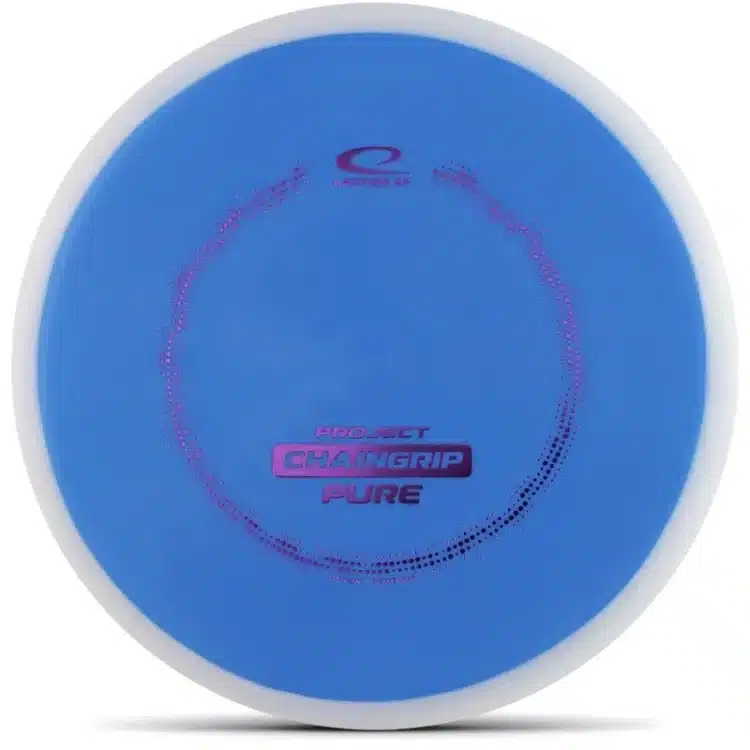
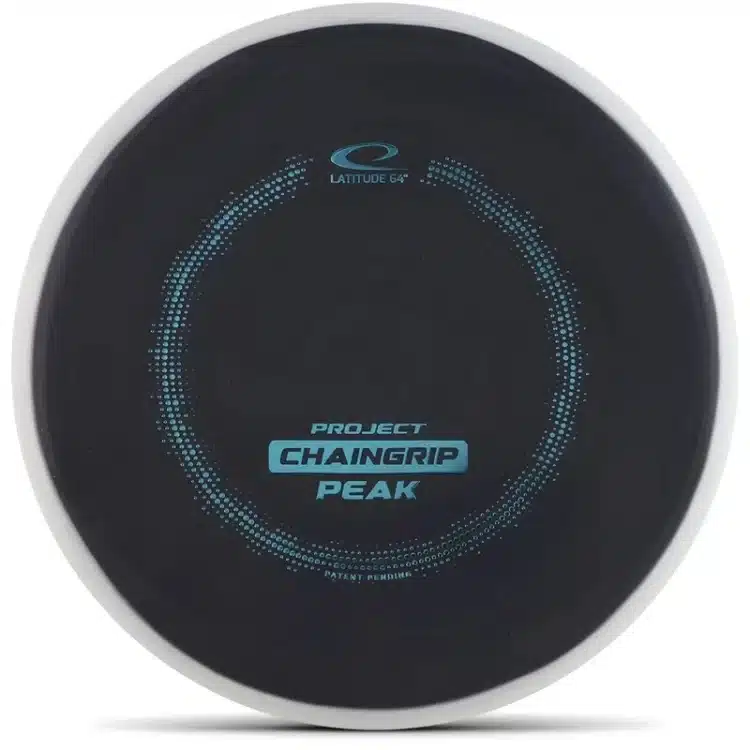
The feedback has been so positive that Latitude will be releasing two molds in the ChainGrip plastic to everyone. The Pure and the Peak, two popular putters from Latitude 64 will be available on August 13.
The Pure is a straight-flying putt/approach disc that performs just as well off the tee as on the green. It has a minimal amount of turn and just a little fade, making it easily shapable and reliable.
The Peak is similar in flight to the Pure. The Peak is beaded and has a low profile. Approach or putt with confidence with the ChainGrip Peak.
If you are just starting to play disc golf and you don’t get any coaching to help you buy discs, you might end up with discs that are way outside of your skill level. That has happened to lots of disc golfers. And resulted in a lot of disappointment and bad habits.
To an outsider, one disc isn’t much different than another disc. They might not know about flight numbers and what they mean, and wouldn’t be able to tell you which ones would be better for beginners.
This post focuses on molds that support beginners in developing proper form and confidence. We’ll talk about flight numbers and show you which numbers would be better for your skill level, and which ones to avoid for now.
Understanding Disc Flight Numbers
Disc golf uses a four-number flight rating system. While far from perfect, it’s the most useful benchmark we have. Here is what each digit tells you and why it matters:
Speed: Indicates how fast you must throw the disc for it to fly correctly. High-speed discs must be thrown a lot faster than slower-speed discs. Attempting to throw high-speed discs without the proper skill can result in poor form and poor habits. Beginners should stick with speeds between 1 and 5. You can get slightly faster discs if you can find them in lighter weights (under 160g), but your focus should be on slower speed discs.
Glide: Describes how long the disc stays in the air. Higher glide numbers help beginners maximize distance with less power. Look for a glide of 5 or more.
Turn: Measures how much the disc will veer to the right (for a right-handed, backhand player) when thrown with speed. Beginners benefit from discs with turn ratings between –1 and –4. If your disc starts turning too much early in flight, consider a faster or more stable mold (less turn).
Fade: Reflects how much the disc will curve to the left at the end of its flight. Lower fade values are easier for beginners to manage, since their throws don’t have the speed of an experienced player.
What About Disc Weight
Although the flight numbers on a disc might tell you if it is good or bad for beginners, the weight of a disc can also make a big difference. Lighter disc golf discs are often better for beginners because they require less power to throw effectively, making it easier to get more distance with less effort.
Heavier discs can be harder to control for new players since they require faster arm speed to achieve a full flight, often resulting in short or inaccurate throws. A lighter disc is also more forgiving, as it tends to glide longer and stay in the air, giving beginners more time to see how their throw affects the disc’s flight. This added distance and control can help new players build confidence while developing proper form.
Best Disc Golf Discs for Beginners
With the information about weight, disc speed, and flight numbers in mind, let’s take a look at some of the best discs for beginners. This list is taken from Infinite Discs reviews and disc popularity.
Gateway Voodoo Another straight putter, the Gateway Voodoo has an interesting feel. It is soft and very grippy. The Voodoo comes in a variety of plastic types.
Innova Nova The Nova has a straight flight, with no turn or fade. It just goes where you want. The Nova is an overmold disc.
Yikun Yan With a little more glide than most mids, the Yan is a deep-rim, straight disc that will hold any line you put it on. It is a great choice for picking up some distance with little effort.
Viking Cosmos A great option for beginners who want a disc with a little more distance potential is the Viking Cosmos. Its flight is just what a beginner will need to expanding their game.
Latitude 64 River The River is a popular disc that has lots of glide, and enough turn and fade to make it a versatile mold. It is also one of the highest rated fairway drivers on the market!
Viking Rune This low-profile putt and approach disc is deadly straight! It has a bit of glide to help off the tee. Or you can putt with confidence with this beaded putter.
Latitude 64 Jade The Jade is part of the beginner Gem line, along with the Ruby, Sapphire, Diamond, and Amber. They are available in lighter weights and all have flight numbers that are beginner-friendly.
Divergent Discs Leviathan The extra turn in the Leviathan contributes to its popularity among newer players. You’ll pick up extra distance while you hone your form.
Infinite Discs Alpaca The Alpaca is a popular disc with pros and beginners alike. You’ll find a straight flight off the tee pad and a great feel for putts inside the circle.
Latitude 64 Diamond You will definitely want to consider the Diamond when you move up to a driver. As mentioned before with the Jade, the Diamond was made with beginners in mind. Grab a 150-class Diamond for beginners, then move up to a heavier version as you improve your skill.
If you look at each of the discs listed, you’ll find they all fit the description above of what makes a great beginner disc. None of them are high-speed discs. None of them have crazy fade. They are all stable to understable discs. They are just what you should look for as you start your disc golf Journey!
Below is a link to the complete list of the best beginner discs. Check it out to see which of the molds might be on sale!
Throughout this series, we’ve been breaking down the top disc golf discs for 2026. We started with putters, moved into midranges, and then stepped up to the faster discs with fairway and distance drivers. Now, it’s time for the big finale: bringing all the winners together to see which mold truly stands above the rest.
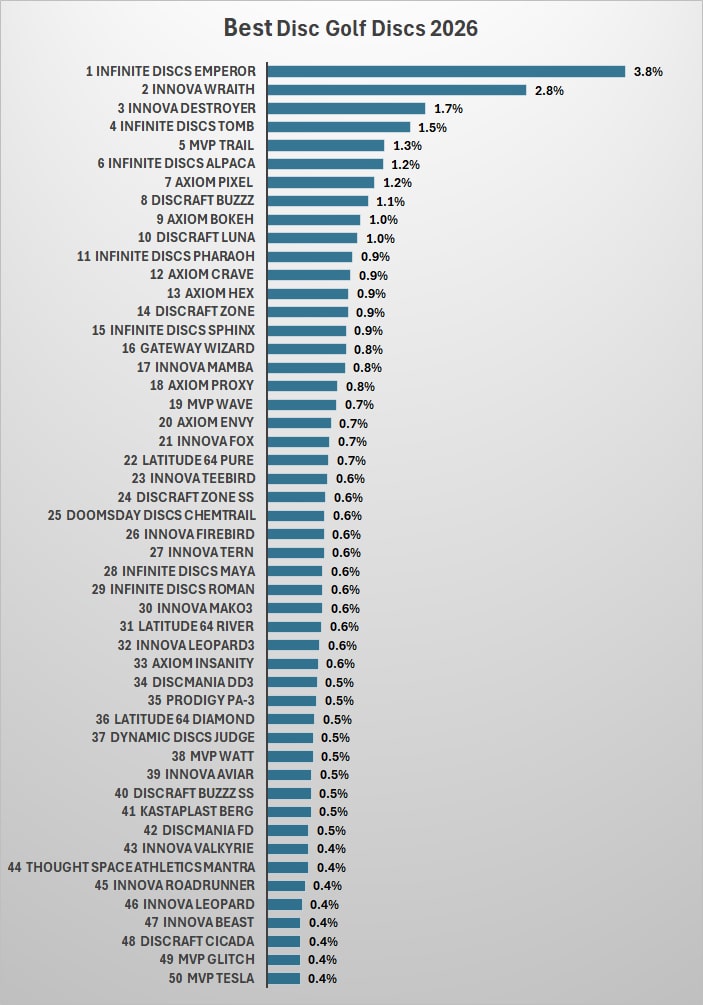
The top two molds have been around, and popular, for decades. The Innova Wraith and the Discraft Buzzz have been best sellers since the early 2000’s. In third place is the slightly newer Infinite Discs Emperor. The Emperor is known for being a bomber of a driver, with many open-bag Infinite pros choosing it as their high-speed driver of choice.
The Pixel went from first place in 2024 to 7th for 2025. 2023’s winner, the MVP Glitch, finished 44th place
Let’s check out the top sellers for 2026:
The Infinite Discs Emperor is off to a good start for 2026, moving up a couple spots from last year to take the lead. The ever-present Innova Wraith dropped one spot to second. The final podium member is another perennial winner
Check out the complete list of the best selling discs at Infinite Discs:
Innova once again leads the pack. The number in the top 50 dropped from 14 last year, to 11 for the first half of 2026. MVP made a leap from three to eight molds. Discraft stayed the same, while Infinite Discs had one fewer molds in the top 50.
Most Popular Disc Types
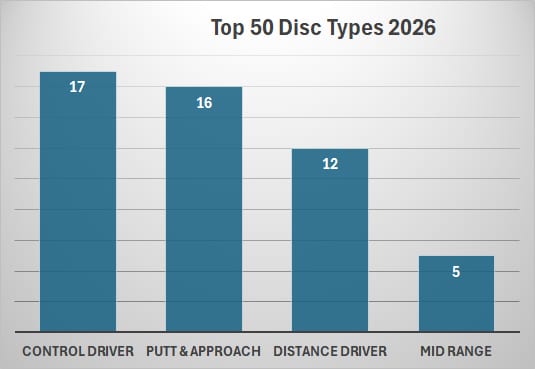
Last year there were more putt and approach discs in the top 50 than any other type of disc. This year control drivers, or fairway drivers, take the lead. In the top 10, distance drivers tied with putt and approach discs for the most. In fact, there is only one control driver in the top 10: the Bokeh However, expand to the top 50 and control drivers surpass any other type.
Highest Rated Disc Golf Discs
The Infinite Discs rewards program includes incentives to give reviews about discs and accessories that we offer. We show the results of those ratings on every product page. The rating system allows customers to rate a disc/product on a scale from one to five stars, as well as give brief reviews about the item. This valuable feedback gives seeking customers insights to what their fellow disc golfers think about the disc/product.
Infinite discs has pages which show the highest rated discs on a single page, to give you an overview of the top rated discs. Bookmark these pages and refer to them next time you are shopping, to help guide your purchases.
We love gathering data and we want to hear from you. Try to decide which disc you rely on more than any other disc in your bag. Since your disc choice depends on the situation, you are welcome to list your favorite mold for each disc type (Putter, mid, etc.)