Throughout this series, we’ve been breaking down the top disc golf discs for 2026. We started with putters, moved into midranges, and then stepped up to the faster discs with fairway and distance drivers. Now, it’s time for the big finale: bringing all the winners together to see which mold truly stands above the rest.
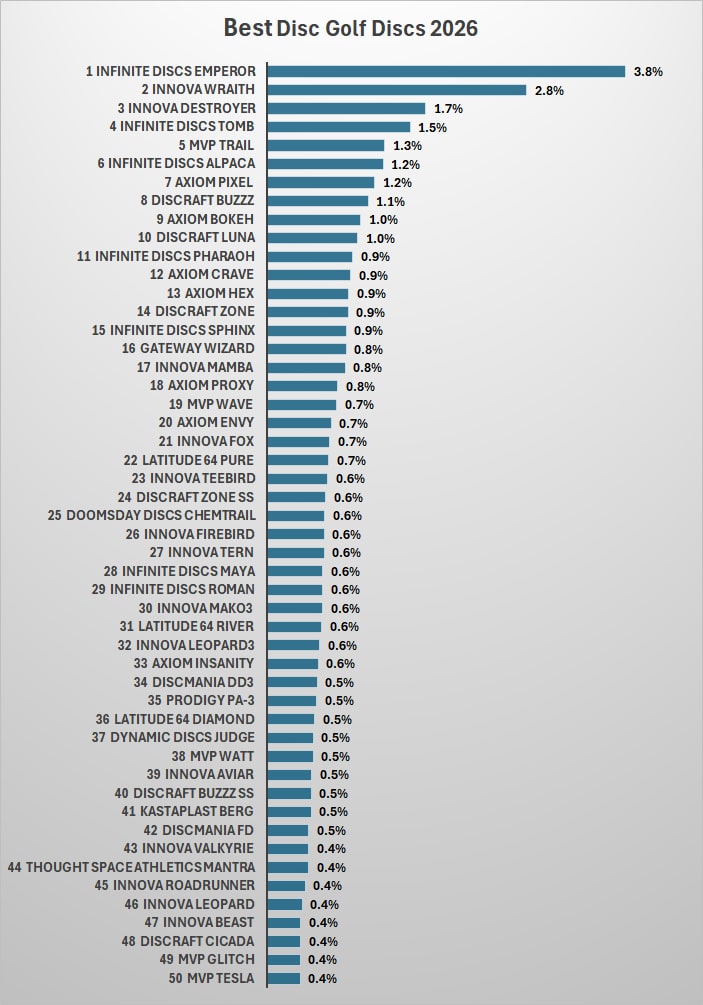
The top two molds have been around, and popular, for decades. The Innova Wraith and the Discraft Buzzz have been best sellers since the early 2000’s. In third place is the slightly newer Infinite Discs Emperor. The Emperor is known for being a bomber of a driver, with many open-bag Infinite pros choosing it as their high-speed driver of choice.
The Pixel went from first place in 2024 to 7th for 2025. 2023’s winner, the MVP Glitch, finished 44th place
Let’s check out the top sellers for 2026:
The Infinite Discs Emperor is off to a good start for 2026, moving up a couple spots from last year to take the lead. The ever-present Innova Wraith dropped one spot to second. The final podium member is another perennial winner
Check out the complete list of the best selling discs at Infinite Discs:
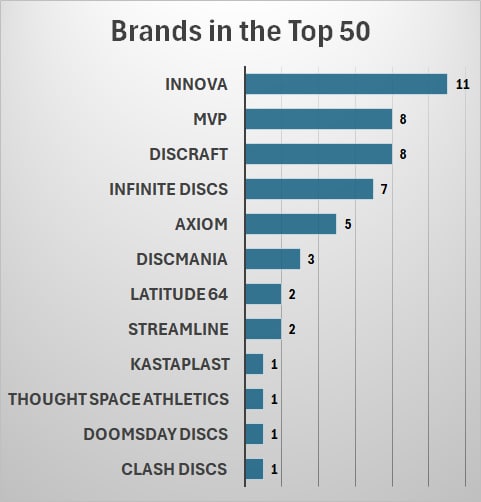
Innova once again leads the pack. The number in the top 50 dropped from 14 last year, to 11 for the first half of 2026. MVP made a leap from three to eight molds. Discraft stayed the same, while Infinite Discs had one fewer molds in the top 50.
Most Popular Disc Types
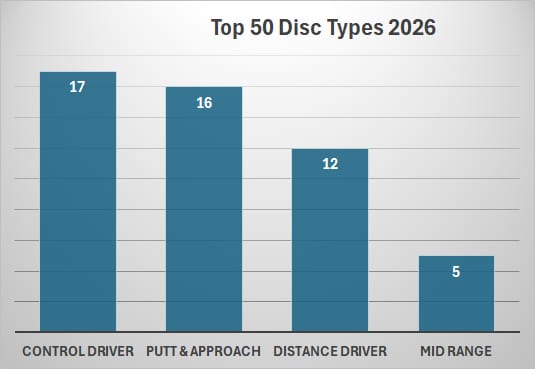
Last year there were more putt and approach discs in the top 50 than any other type of disc. This year control drivers, or fairway drivers, take the lead. In the top 10, distance drivers tied with putt and approach discs for the most. In fact, there is only one control driver in the top 10: the Bokeh However, expand to the top 50 and control drivers surpass any other type.
Highest Rated Disc Golf Discs
The Infinite Discs rewards program includes incentives to give reviews about discs and accessories that we offer. We show the results of those ratings on every product page. The rating system allows customers to rate a disc/product on a scale from one to five stars, as well as give brief reviews about the item. This valuable feedback gives seeking customers insights to what their fellow disc golfers think about the disc/product.
Infinite discs has pages which show the highest rated discs on a single page, to give you an overview of the top rated discs. Bookmark these pages and refer to them next time you are shopping, to help guide your purchases.
We love gathering data and we want to hear from you. Try to decide which disc you rely on more than any other disc in your bag. Since your disc choice depends on the situation, you are welcome to list your favorite mold for each disc type (Putter, mid, etc.)
Every year we like to look at the best sellers and the highest rated disc golf molds to see what it hot. We present this information in a series of blogs. This week we are once again looking at a mid-year look at the best disc golf distance drivers of 2026. We’ve covered the top putters, midrange discs, and fairway drivers. Now we’ll discuss the best distance drivers for the first half of 2026.
Best Distance Drivers
Distance drivers are a fun type of disc to throw. Typically, when we reach for our distance drivers we are trying to throw it as far as possible. Since they are in the air longer than other types of discs, we get to see them turn and fade in an aerial ballet.
Although a certain skill is required to throw high-speed discs properly, newer players can ‘cheat’ the system by picking up lighter discs that let them throw faster. That lets them throw higher speed discs than they normally would be able to throw.
Distance drivers are usually in the speed 10 and above range. They range in stability from very flippy to ultra-beefy. If disc golfers can get a long throw with their drivers, it will set them up for an easier approach or even a putt.
To compare the changes from last year, let’s first look at the best distance drivers for 2025.
The MVP Trail made a jump from 8th to 3rd place. I suspect it will have a place in the top ten for years. With a slight turn and a gentle fade the speed ten mold can be thrown well by people of all skill levels. Another MVP disc, the Wave, also moved up a bit. It went from 13th to 7th. The Wave has more turn (-2) than most of the molds in the top 10. Only the Innova Mamba (-5) and the Maya (-3) have more turn.
Besides the aforementioned Trail and Wave, the rest of the top 10 remain the same molds, only in different order. It’s a pretty tall order to break in to the top 10. In order to do that a mold would have to unseat some very popular discs.
How popular are the top molds? The sales of the top five discs on the list represent nearly 1 in every three distance drivers sold!
The Destroyer slipped off the podium for the first time in a while. I don’t think it will continue to slip. It has such a desirable flight and is available in a nearly every plastic type. Who knows, maybe if there are enough new molds that hit the disc golf scene, they can brute force the Destroyer off the charts. But, I doubt it.
Best Disc Golf Distance Drivers 2026
Four out of five of the top distance driver molds were the same as in 2025, but, the order and the percentage of sales changed for all of them. The Emperor moved back to first place, with a hefty increase in percentage of sales, with over 12% of all distance driver sales. The Wraith slipped in standing, but didn’t change much percentage.
The Destroyer made it back on the podium, selling slightly better than in 2025. The MVP Trail returned again to the top five, while the Pharaoh booted the Mamba. Although, the Mamba merely slipped to sixth place.
Brands With the Most Molds in the Top 50 2025
It isn’t a surprise to see Innova and Discraft with the most molds in the top 50. They are two of the oldest companies in disc golf and have more distance drivers than some brands have total molds.
Innova and Discraft may be the biggest in the business, but there are always a few smaller brands that manage to land in the top 50. This year Thought Space Athletics, Clash, and Doomsday Discs had at least one mold on the list. As more new brands roll out their offerings there might be more competition for those spots on the top 50. However, it is tough to unseat the big companies in the sport.
Now let’s look at the number of molds in the top 50 for 2026.
Innova remains king of the top 50. That includes a list of well-known, popular molds: Destroyer, Wraith, Mamba, Tern, Skryke, and Katana have been popular for a decade or more. Their discs in the top 50 also includes a newer mold, the Gorgon. It was PDGA approved in May of 2024.
MVP and Discraft tied for second place at eight molds each. That moves Infinite off the podium with only seven molds in the top 50. The top three brands add up to over half of the molds in the top 50!
Highest Rated Disc Golf Distance Drivers
Shopping on the Infinite Discs website comes with a major advantage: you can browse authentic player reviews and check disc ratings before making a purchase. As more disc golfers share their experiences, those ratings become a valuable snapshot of how the community feels about each mold. The review system also connects with the Infinite Rewards program, where you can earn points for submitting reviews or making purchases. If you haven’t checked out Infinite Rewards yet, it’s definitely worth exploring (click HERE). Your feedback not only earns rewards but also helps expand our growing collection of disc reviews.
We are going to look at some of the highest rated distance drivers and see which molds are on top. For our ratings system, we weight molds that have more reviews heavier than those with fewer reviews. We’re going to tweak our weighing system soon. With that in minds, let’s start with the highest rated distance drivers.
Highest Rated Distance Drivers
The Destroyer is a perennial best seller, and it seems logical that it would be among the highest rated. And you can’t discuss the Destroyer without mentioning its little brother, the Wraith, which took second place. Taking third is the Infinite Discs Pharaoh finished as the third highest-rated distance driver overall.
For this category, you won’t find many molds in the top 50. These are utility discs that have a definite place in many people’s bags, but aren’t going to be sought after by the masses. They are high-speed AND beefy. They are not beginner discs, but it is still interesting to see who is on top in the category.
Taking first place is the speed 11 Infinite Discs Slab. The Slab has a flat top and is perfect for people with big arms. Experience players can utilize the overstability with forehands, headwind shots, or spike hyzers. As a utility disc, it can be used for carving tight corners to avoid obstacles. Check it out and see why people love the Slab.
Taking second place is the Discraft Force. Loved by pros and ams alike, the Force is a speed 12 beefcake that is available in premium and base plastics. Taking third place is one of the beefiest molds in the Dynamic Discs lineup, the Enforcer.
The Innova Destroyer is a perennial best seller and is also the highest rated distance driver. And how can we mention the Destroyer without mentioning its little brother, the Wraith. Since the Wraith has a similar flight to the Destroyer, but a tad slower, it is easy to see why people like it. Taking third is the Infinite Discs Emperor. It is one of the best selling drivers in the Infinite line.
I glad to see the Infinite Discs Pharaoh taking first place, since some of my longest throws have been with a lighter Pharaoh. It has a good amount of turn to give it a nice S-curve, and a reliable fade. It is a bomber mold!
The second highest rated disc is the Beast. It has a similar flight to the Pharaoh and is a little slower speed. It has been part of Innova since 2002. Taking third place is the glidey Shryke. It is a speed 13 disc that can deliver some long drives.
This category favors intermediate-level players. Since distance drivers have higher speed levels than other categories, many molds are beyond the ability of less experienced players. Discs that are understable help them get a straight flight. These are the highest rated of the understable drivers.
The Innova Tern has been a popular mold for a long time. As mentioned, newer players can appreciate the flippy flight numbers, while more experienced players can use the Tern for huge flex shots. Plus, it has a lot of glide to aid in long shots.
The second highest rated Infinite Discs Maya hasn’t been around as long as the Tern, but it has a huge fan base. The speed 12 mold is a tad more understable than the Tern, but not nearly as flippy as the third place Innova Mamba.
Many people reach for the Mamba as an easy roller disc. It is so understable that even newer players can find a little turn in their throw.
I’ve heard disc golfers say that the most difficult throw in disc golf is to throw a straight flight. Although course designers have a lot of obstacles that force us to shape our shots, they will also include holes where players have to negotiate straight, narrow tunnels. Those are the times that it is nice to have a straight-flying disc.
Why is Throwing Straight so Difficult?
When a disc moves through the air at high speed, the physics of its shape and rotation typically cause it to curve instead of flying in a perfectly straight line. A wider rimmed disc (higher speed discs) are typically even more difficult to throw straight.
In this blog we will define what we consider to be a straight flyer. Then we can look at the most popular straight-flying discs.
What Does ‘Straight-Flying’ Mean?
We are going to define a straight-flying disc as one with little or no turn (the drift to the right during the high-speed part of the flight, with a right-handed backhand shot), and little or no fade (drift to the left as it slows down). That should give you a fairly straight flight. You could also achieve a straight flight with a more understable (more turn) disc that you release on a hyzer angle. Then the disc can achieve a flight called ‘flip to flat’. It rotates until it is flying flat (horizontally), and it holds that line until it slows down.
Other discs have a turn and fade that makes the disc end up as if it were thrown straight. Although that flight would not be effective in a narrow tunnel, it still gives is virtually a straight disc.
Infinite Discs Reviews
Our website gives users an opportunity to leave reviews for discs and accessories. Those reviews have valuable information that can help you as you search for a new disc. We also reward reviewers with points that can be redeemed for story credit! More information about our rewards program HERE
One of the categories that people indicate when reviewing a disc is how the disc flies for them. Is it overstable? Understable? Straight? We can then use those indicators to see which discs are the straightest fliers. Below are the results.
Straightest Disc Golf Putters
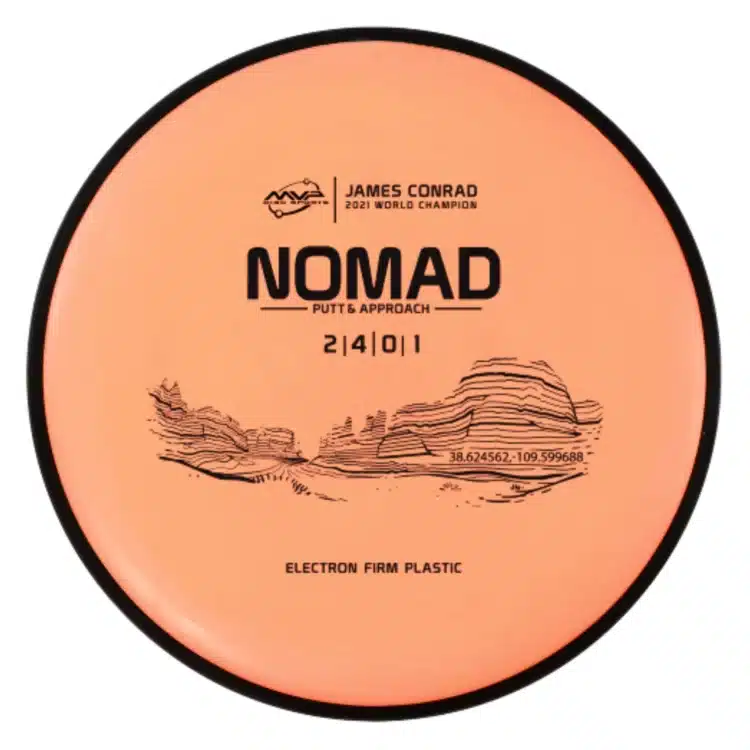
MVP Nomad
The Nomad is a beaded putter in the James Conrad line. It has a straight flight with some torque resistance for power throws. The stamp is part of the line that includes some of James’ favorite places to travel. This one features Arches National Park here in Utah.
Discmania Logic
Viking Rune
Infinite Discs Cohort
Innova Firefly
Westside Swan
Dynamic Discs Marshal
Lone Star Discs Penny Putter
Discmania P1
Prodigy P Model US
Straightest Flying Midranges
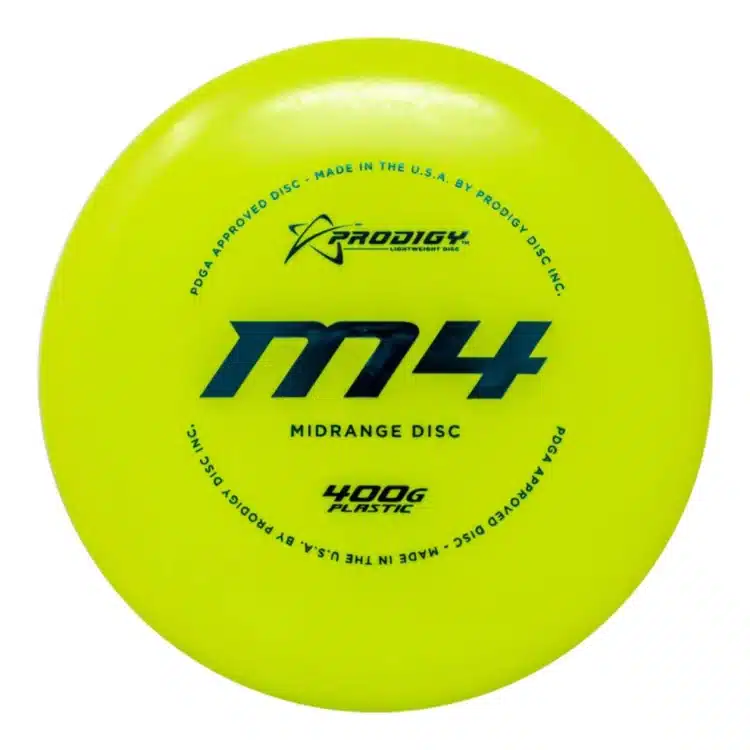
Prodigy M4
The M4 features flight numbers you would expect on a straight-flying disc. It has a little turn and a gentle fade. The M4 would be a good choice for people of all skill levels.
Alfa Discs Apollo
Discmania MD1
Latitude 64 Core
Kastaplast Gote
Innova Mako
Innova Atlas
Innova Mako3
Infinite Discs Chariot
Westside Warship
Straightest Fairway Drivers
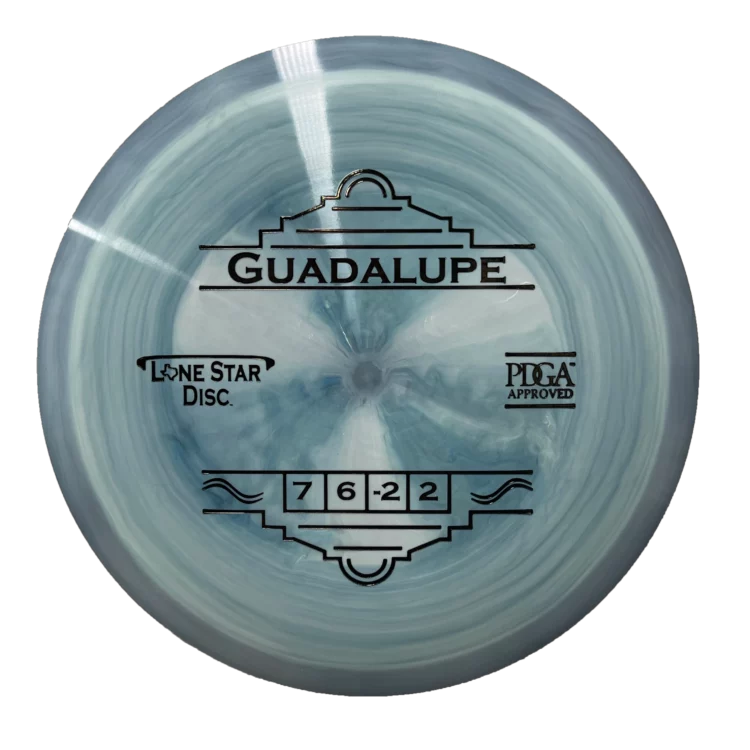
Lone Star Disc Guadalupe
The Guadalupe is a shapable disc that people are undoubtedly hyzer-flipping in order to fly straight. It has more turn and fade than some of the discs on the list.
Millenium Orion LS
Millenium JLS
Legacy Discs Patriot
Discraft Zombee
Discraft Passion
Lone Star Disc Lariat
Discmania Essence
Innova TL
Axiom Crave
Straightest Distance Drivers
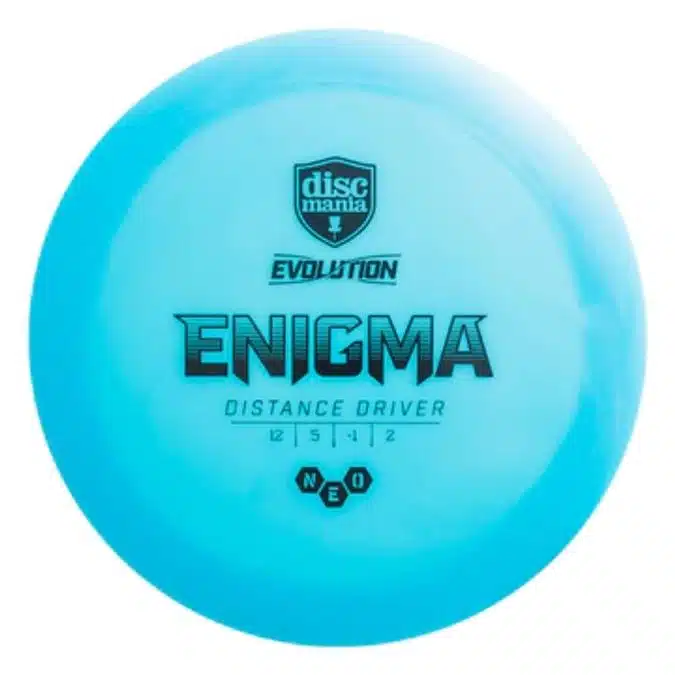
Discmania Enigma
The Evolution Enigma is part of the Evolution line of discs. It is the first distance driver in the line. The Enigma can be used as a hyzer-flip disc for tunnels and long bomber shots.
Westside Sword
Westside Northman
Gateway Apache
Innova Colossus
MVP Inertia
Streamline Trace
Dynamic Discs Trespass
Axiom Tenacity
Axiom Vanish
Conclusion
Some of the drivers on the list have flight numbers that don’t seem like I would consider them straight-flying discs. Others, like the putters and mids are a lot easier to see, since they have straight flight numbers. My straight putt/approach disc, an R-Pro Dart, didn’t make the list. Neither did my straight driver, a Centurion. How about yours? What are your go-to discs for holding a straight line? Let us know in the comments!
To Clint Easterly (aka BlitzDG), there is no confusion when it comes to understanding why people come to his YouTube channel.
Distance and Power.
People want more of it, and Easterly, a proud member of the Infinite Team, wants to get you there.
And with a max disc speed in the mid-80’s and a goal to break 80 mph from a standstill, Easterly has clearly figured some things out.
What’s even more surprising is that he’s done all this starting in his mid 30’s and he’s only been at it for 3 and a half years. Normally, that’s not a recipe for athletic success.
Does it hurt that he’s built like a brick house and has a keen interest in his own fitness?
Certainly not. In fact, keeping fit is part of the distance equation.
But that’s only part of it. And Easterly, who is also a self-taught “student” of biomechanics, has sifted through a lot of disc golf tutorials and has managed to mostly separate the wheat from the chaff.
What he brings to his loyal viewers, is not only a curated list of the best drills to get you the distance you crave, but also the creativity and understanding to devise his own drills and fill in some gaps.
Along the way he is bucking some disc golf conventions, building community, and providing some much needed inspiration to the people in his orbit.
So, let’s get you a healthy dose of all of it as well. Let’s go behind the curtain with Clint to see what he’s about. Then, let’s point you in the right direction so you can unlock some of his teachings and add some distance to your own game too!
Clint Easterly and Infinite – A Perfect Match
Some might call Clint’s pairing with Infinite mutually beneficial. Others would probably say it’s a perfect match.
Long before Easterly ever joined up with Infinite Discs he had a deep appreciation for their discs, and one disc in particular.
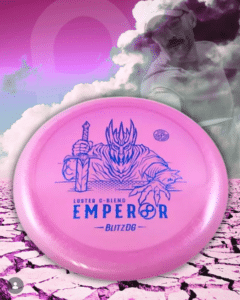
“I’ve always loved Infinite Discs. I truly think they’re great. And, to me, the Luster C-Blend Emperor is the best distance driver in disc golf.”
Important Note: We have timed up the release of this post with Clint’s next drop of signature discs! Given they only lasted days last time, we can’t guarantee they’ll be there, but be sure to check out Clint’s Signature Pro Page to get your hands on his signature disc!
Easterly doesn’t deal in hyperbole and he speaks his mind. He won’t push a product he doesn’t believe in.
“I don’t like peddling crap,” he tells me.
So, you can imagine, years later, after he had moved up the Infinite ranks, how elated he was to get his own signature stamp on that very disc he had found to be better than all others.
It was a momentous occasion for him. A powerful indicator that he was doing something right.
There was only one problem, if that’s what you want to call it.
They sold out in the first few days.
And this puts a spotlight on another ingredient to Easterly’s growth and success…
Building Disc Golf Community
Clint builds community.
It comes naturally to him.
Easterly genuinely cares about the people that come to his channel, take his private coaching, or somehow come into his world by other means.
He wants you to succeed. He knows that there are no quick fixes in disc golf. You can’t just watch his, or others’ videos once and expect to see immediate results.
You need to stick with it and put in the time. And for many, in our harried lives, being self motivated to do a drill for a month isn’t so easy.
Clint knows this and is there to provide encouragement. Whether it’s finding the positives in what his students are doing and pushing them to keep going, or answering (nearly) every comment/question he gets on his channel, he’s there to support you.
So, you can imagine the response that happens when a guy like that puts out a signature disc and the community has a chance to return the favor.
A thousand discs get swept up in a matter of days.
Community and inspiration are nice and all, but it doesn’t amount to much if you don’t know what you’re talking about. We all know how much information is out there. If you want to separate yourself, you have to know what you’re doing.
Let’s take a look at some of his ideas and see what he’s telling people so that you/they can get more distance on your throws.
Distance Technique: What’s Real and What’s Myth?
Being relatively new to the sport, and having a natural interest in form and mechanics, has helped Clint to lend a fresh set of eyeballs to some of disc golf’s conventional wisdom.
One of the major concepts that he has taken on is the idea that our distance comes from our legs.
If you think about it, that seems to be the case, or at least the thinking, in almost every athletic endeavor. Our legs are far more powerful than our upper body and so these must be the source of most of our power.
In disc golf, Clint begs to differ.
And while he doesn’t refute that some of our power comes from our base, he’s saying that a lot more of it comes from our upper body than you think.
In essence, it all boils down to timing and coordination.
If you can sync up and string together this series of upper body movements, you are going to get a major boost in your speed and distance.
And that’s what his drills are designed to do. These drills help get your timing in line so you can maximize your upper body efficiency.
They also allow you to deemphasize some of the other concepts that people think matter more than they do. Ideas like whether your front foot is open or your back foot is open, how much your hip rotates, and more…
To be clear, he’s not saying they don’t matter at all. He’s only saying that they matter much less than people think. He calls it “icing on the cake.” And by clearing some of these thoughts from your mind, it allows you to focus on what matters most. Your timing.
Clint puts what is important in rather simple terms. “You need to start things at the right time. Keep them in order. And then stop things at the right time.”
In the following video, Clint breaks down some of these disc golf myths, if you will. He shows you how much of a limited impact they have on timing so that you can focus on the upper body timing that actually does matter.
In the end, we get a dose of Clint’s understanding of the importance of getting his viewers motivated and inspired.
“So this year, I want you guys to stop saying you can’t do it. Stop saying ‘I’ll never throw 400. I can’t throw 400. And start saying ‘I know I’m strong enough to. I have to learn how. I have to learn the sequencing and timing. And I have to drill this into my body…’ That is the most important thing in the disc golf backhand. And that’s what I wanted to get across in this video.”
What is Coming Down the Line With BlitzDG?
First and foremost, Infinite and Clint will be sure to continue to collaborate to keep the content coming for you.
This will also entail some more drops of Clint’s beloved Luster C-Blend Emperor with his signature stamp. Check out the Clint Easterly (Blitz DG) Signature Series page to keep up with Clint’s next drop of discs. (Note: The new drop happened when this post was released!)
In addition, Clint will be taking on putting. He recognizes its importance and he struggles with it on the course. And with this in mind, he wants to take you on his personal quest to improve his putting. He plans to continue to build it up so that he can rely on it when it matters most.
Hopefully, along the way, his viewers will be able to glean valuable information (and motivation) to improve their own putting as well.
He’s also got some continued collaboration with TechDisc that he’s excited about.
And, of course, he’ll continue his quest to add more speed and distance and transfer that knowledge to his viewers…
Clint and Infinite Discs – In Summary!
Clint Easterly (aka BlitzDG) is proud to be partnering with Infinite and is a perfect fit.
Not only has he long-admired the Infinite line of discs, but it just so happens that his all-time favorite distance driver is a part of this line. And now, due to his prodigious rise in the world of disc golf distance, he has teamed up with us and landed his very own Signature Luster C-Blend Emperor.
It doesn’t get much better than that in the disc golf world.
Moving forward, Clint is going to continue doing what he does best. He is going to continue pushing distance boundaries and finding you new ways to get your form, technique and timing to click and ultimately improve.
He’s also going to continue building community through his YouTube Channel, his private classes, his collaborations and more.
And, just to put himself out there, Clint is also going to take you on a journey in a venture that doesn’t come as naturally to him. Namely, disc golf putting.
All this and more have Clint excited and optimistic for a great year (and beyond).
Be sure to continue to follow his work. Then, alongside Clint, you can continue to elevate your game and get the results you’re looking for.
You can have the best drive you’ve ever thrown, but if you aren’t close enough to putt into the basket, you are going to have to make an approach shot. Make a good approach and you can drop your putter in the baskets. Mess up and you might end up working hard to get in the basket.
Approach shots are important, and which disc you chose to approach can give you the confidence you need to make a good shot. In this blog we will talk about approach discs and explore which ones are rated the highest, and which ones sell the most. That will let you know which discs other people have found success with, and can help shape your decisions.
Wait, what IS an approach disc?
OK, you really could use any disc to try to land near the basket to give yourself a putt. If you have to cover a lot of ground before you get to the basket, you might need to use a higher-speed disc. For shorter, technical shots you’ll likely use a midrange or putter. (Of course, there are exceptions, even for shorter shots.) For this blog, we are going to be talking about putters, since they are categorized as putt/approach discs. That should give us the most accurate results.
There were two players on my card at league this week that bag a Berg. It is the go-to for several members of our club. I see a lot of Bergs at tournaments and other events. It is a low glide, low speed putter that will handle high-power throws. It is a great mold for accurate approach shots.
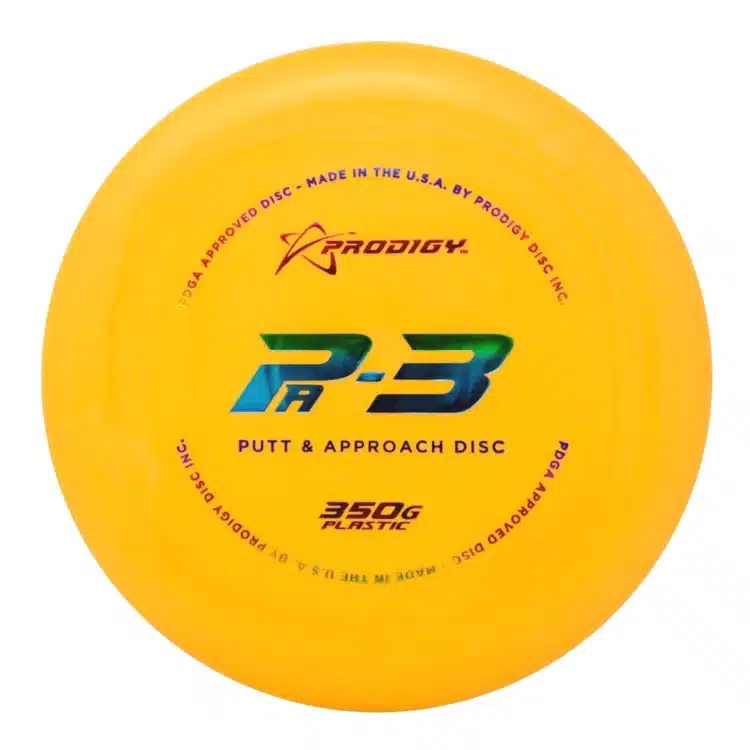
The PA-3 is a beaded putter that flies super straight. Its straight flight and mellow fade make a great combination for tactical approaches. It comes in a variety of plastics, so you can get the exact feel that you need to give you the confidence to attack the basket.
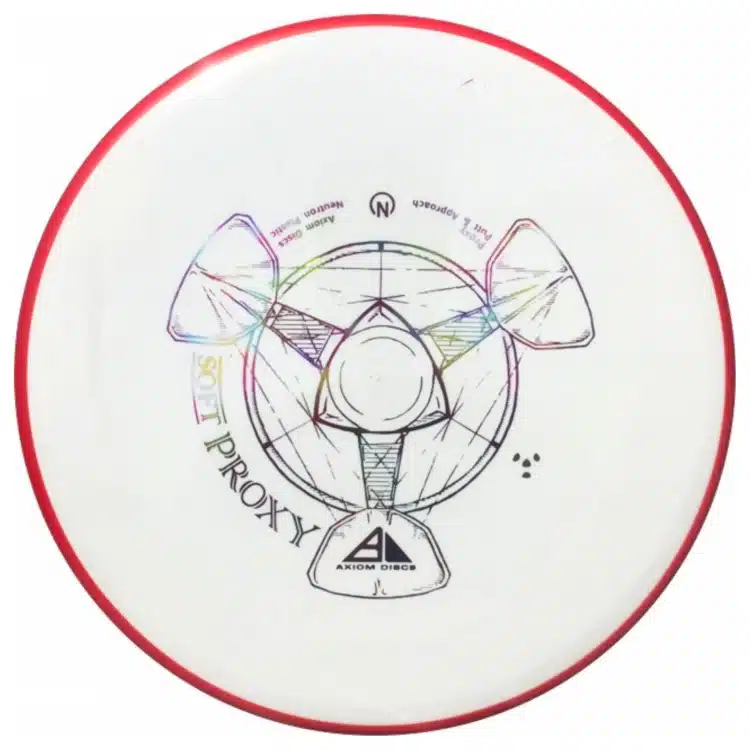
A favorite of Simon Lizotte, the Proxy is another straight disc that can handle some torque. It has the same core as the Envy. The Proxy can serve you well as a putting putter, drives off the tee, or accurate approach shots.
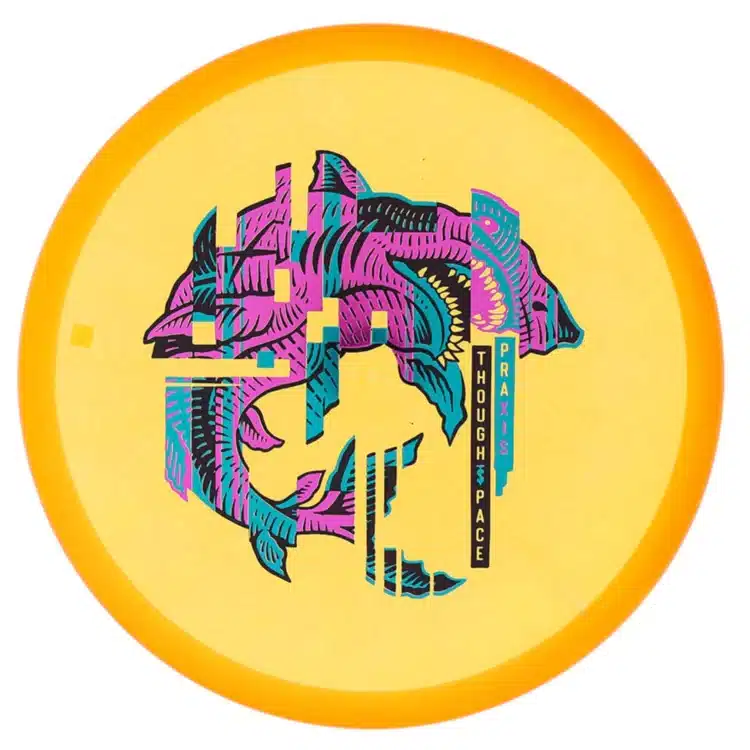
This straight-flying disc can handle forehand and backhand shots with ease. It flies straight with minimal fade. The beadless Praxis can be used by people of all skill levels. Plus, with Thought Space Athletics, you’re sure to get a disc with some of the best stamps in the business!
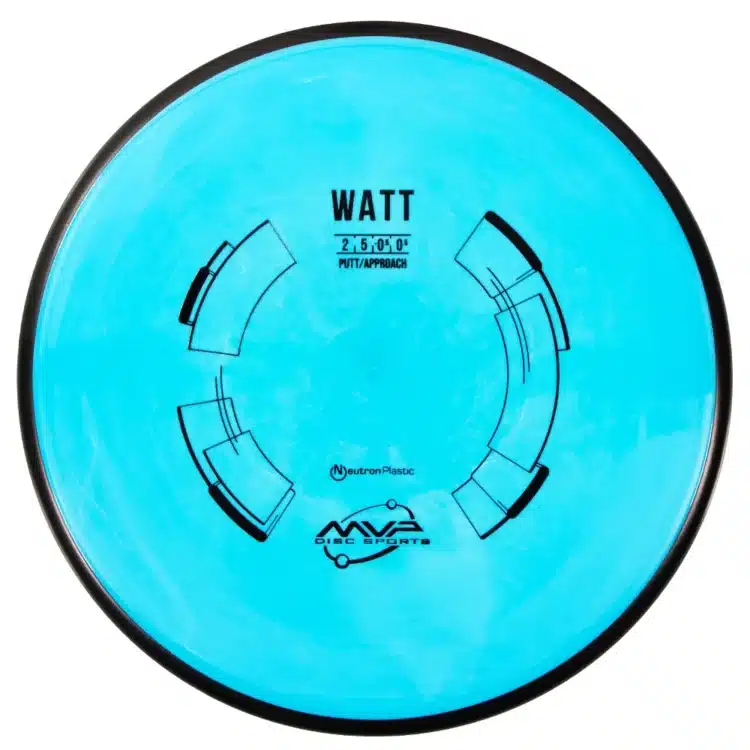
The Watt is similar to the Ohm and the Pilot. The beadless putter has a deep rim that will give you deadly-accurate straight flights. Its neutral flight numbers mean you can shape your shots and approaches with confidence.
What is Your Go-To Approach Disc?
Did your favorite make our list? Share your thoughts in the comments below. Let’s hear what disc you think is the best approach disc and why!
For more information about the discs on the list, check out the best disc golf approach putters in our store, Infinite Discs!
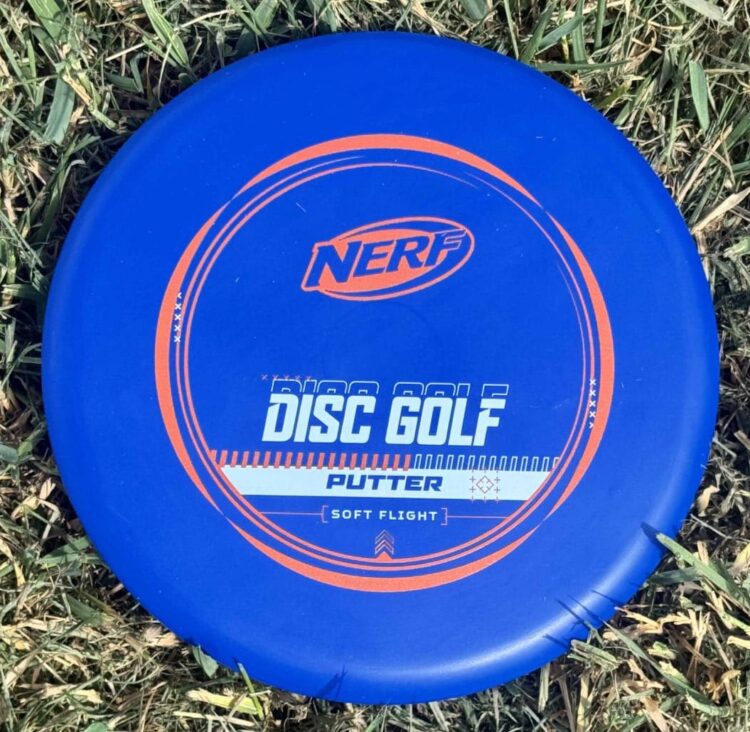
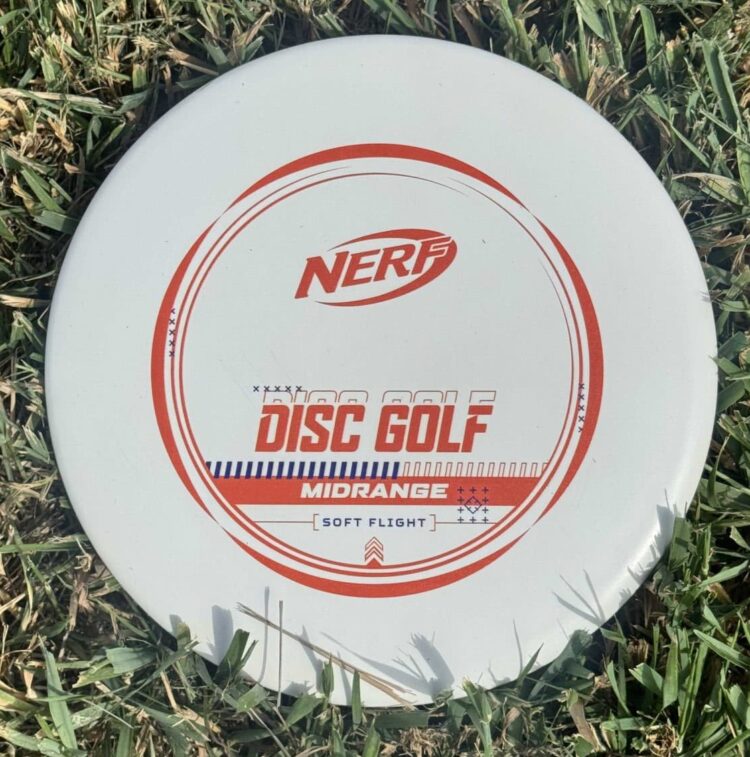
A Prodigy’s collaboration with NERF to make disc golf discs is certainly an unusual partnership. But, why not? We’ve seen a square disc recently, a six-sided disc, and even a heart-shaped disc. Why not a foam disc? After all, NERF foam is synonymous with all kinds of fun and games.
I really didn’t know what to expect from the new discs. I was picturing soft foam discs, like NERF gun ammo. That was not quite correct. It is soft, but a lot more rigid than I was expecting.
Foam Discs
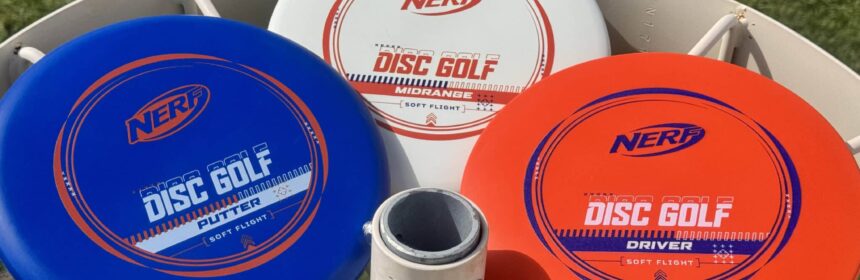
The new NERF disc golf discs are being billed as being soft, lightweight, and they float. They are not as soft as I guessed, but they are softer than regular disc golf plastics. And they are definitely light. Prodigy says the new discs are all about 100g. That is much lighter than any other disc I’ve thrown.
I tossed my starter set discs on a scale and got the following weights:
Driver: 100g
Midrange: 94g
Putter: 99
PDGA Legal
Despite their ultra light weights, the three discs are PDGA approved. I don’t know that people who attend sanctioned tournaments are in the target audience for the new molds. But, if someone wanted to use them at their next C-tier, they could.
The feel of the disc took a few throws to get used to. Part of that is because of the light weight. The bigger part is because of the material used to make the disc. It is called Soft Flight and it is grippy and squishy. It is closer to plastic than foam. More like their NERF footballs.
Who Are They Made For?
The NERF discs are perfect for kids and beginners. The light weight will help people in those demographics get more distance than a regular plastic disc. The putters and mids can also be used by people of all skill levels as catch discs or throwing to each other to warm up.
I was surprised that the flight numbers for all three discs are pretty accurate. Even the driver at 100g had some stability to its flight, true to its numbers. I assumed that a disc that light would be nothing but flippy. It really does fade pretty good.
The midrange disc does have some flip to it. It can easily thrown as a flip to flat shot for maximum distance. In a headwind, the understability would be challenging to control for a stronger player.
I like the flight of the putter. It flew straight off the tee as well as inside the circle. The putter feels good in my hand and is very comfortable to putt with. When the disc hits the chains it has a much softer sound to it than when a plastic disc hits.
The mold is officially called the Prodigy NERF Putter. It has a neutral flight, flying straight with a mild finish. You could shape shots reliably and use the putter for a variety of shots.
This is called the Prodigy NERF Midrange. It has the most flip of all the discs in the set. It is really easy to get a nice S-curve for longer throws. If you want maximum flights, put the disc on a hyzer angle and let ‘er rip.
The Prodigy NERF Driver was fun to see how it handled different angles. On anhyzer, it would hole that line for a bit, then slowly roll over into a hard fade. That is not the flight I expected. On hyzer, it will hold the angle all the way to the ground. Flat throws would get a little turn, then a solid fade.
The new NERF disc golf discs make a great option for newer players and kids. But, they are a fun choice for more experienced players. Their stability for such a light weight is impressive. Check them out at Infinite Discs, available May 28!
If the new disc is junk, however, we’ll quickly turn on it.
But how do we feel about Prototypes?
On one hand, it’s a chance to try something without having to fully commit.
On the other hand, if it doesn’t get the requisite levels of approval, that mold could go collect dust in a storage house, never to be seen again.
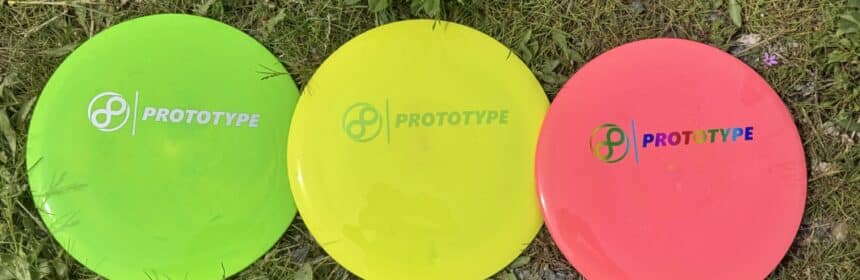
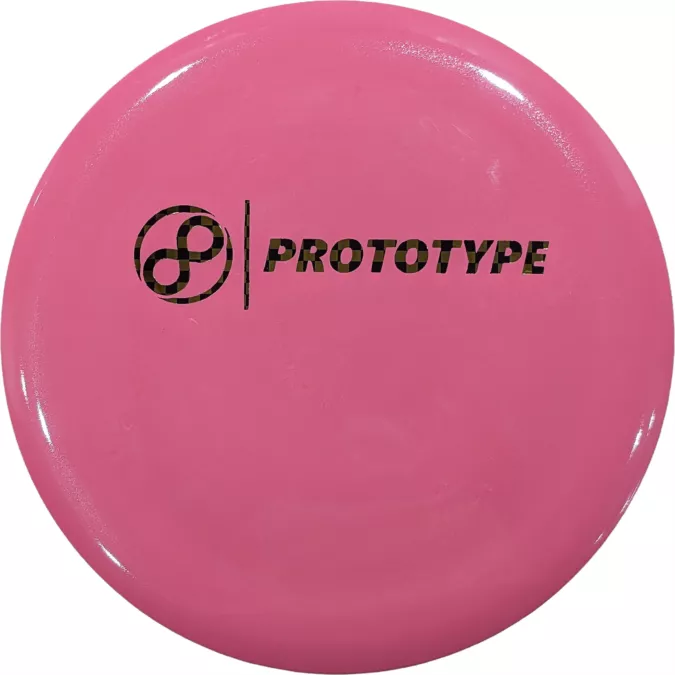
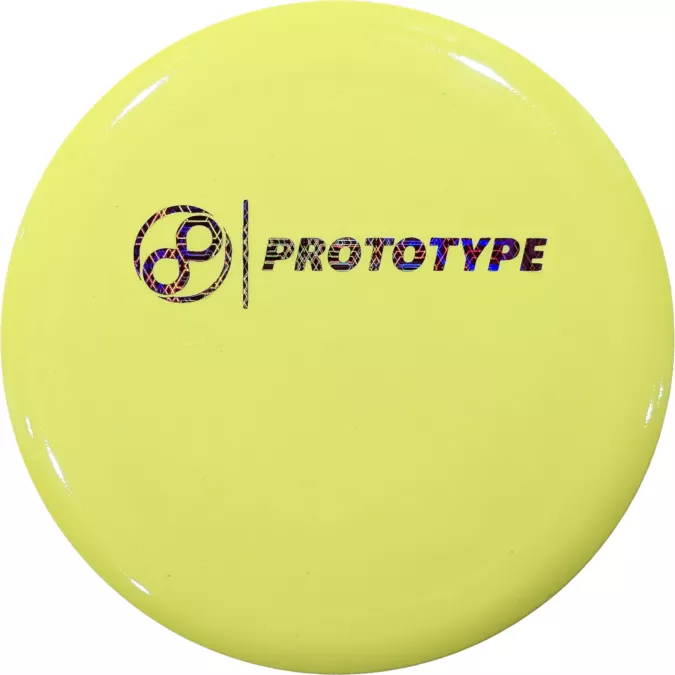
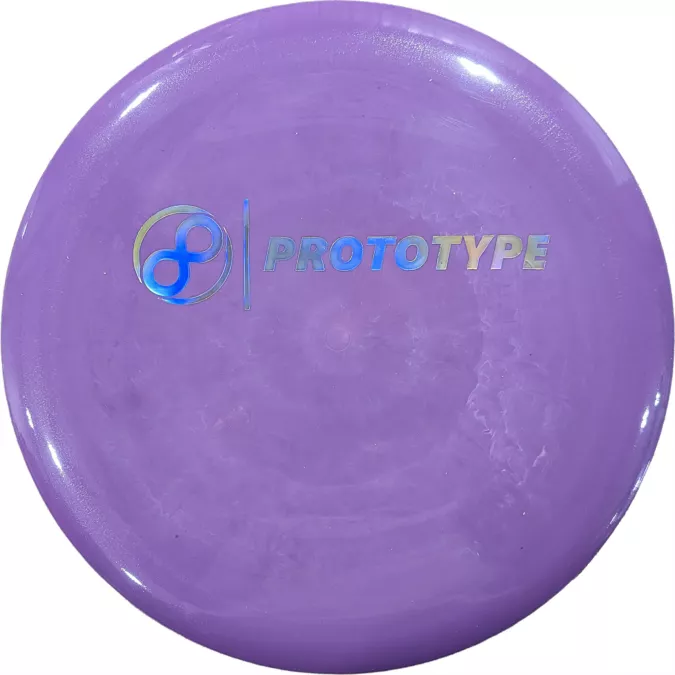
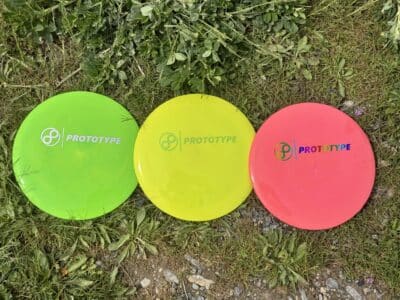
So, in a way, there’s a lot riding on these 3 New Infinite Prototypes in I-Blend plastic.
If they past muster, we get a new Infinite mold. If they don’t, it’s like it never existed.
Having tried all three, I think Infinite will have a tough decision on their hands.
I suppose they could go with all three, but that doesn’t seem to be a likely outcome. I did exchange emails with Alan (Infinite’s owner), but I don’t have any insider intel here.
Alan gave me insight into the process of how Infinite gets its discs in the first place (which I’ll share), and hinted at a possible leader in the clubhouse for at least one of the prototypes (also to be shared), but after that, he just lets the process play out.
So let’s take a closer look at these three prototypes, and see if any (or all) are a good fit for your bag. We’ll also look at Infinite’s process for new discs and which, if any, look like they might make the lineup.
How Does Infinite’s Process Work for New Discs?
As many people know, Infinite works in close collaboration with Innova Discs. That’s why, at the bottom of most of your beloved Infinite molds, you’ll find a raised “Innova Discs” molded right in.
And also in the “You probably know this” category is that many of Infinite’s molds involve mixing and matching the top of an Innova mold with a different bottom of a different Innova mold.
But what was new to me was that Innova sends Infinite different specific combinations that they can elect to try. In this case, Innova gave Infinite 10 different combination options and they chose 3 of them.
Those 3 are obviously our three new prototypes. Let’s take a look at each.
Prototype I
With tentative flight numbers of 12, 6, -2, 2, this distance driver Prototype I is currently slotting between The Maya and The Emperor in terms of its willingness to turn over before fading out.
This disc is very workable with the both backhand and the forehand. It gives a full S-flight with a reliable fade that very rarely burns over. If the Emperor is just a bit too stable for your liking, one would think Prototype I would do the trick.
Giving the sweeping nature of its flight, Prototype I is probably not the disc you’d reach for when you have to hit tight lines.
The last noteworthy piece for Prototype I is the glide. The glide is real! When you connect on that big full flight and watch it soar, the glide 6 rating will feel just right.
But will this fun, glidey, workable driver called Prototype I make the cut, get its dynastic name, and get made in other plastics?
Only time will tell, but one thing is for sure with all of these prototypes; Your input matters! If you have a take on any of these Prototypes, be sure to comment below and leave a review!
Prototype II
The tentative flight numbers for Prototype II are 8, 6, 0, 1.
If I had to guess, despite that this disc’s flight numbers closely resemble others in Infinite’s Fairway Driver lineup, this disc is going to make the cut.
Because it’s a very reliable, high-glide, distance gobbling, backhand/forehand friendly gem of a disc, and those discs tend to stick around.
It’s also a mostly straight flyer which people usually appreciate as well. Then, when you throw in that it’s probably compatible for many different skill levels, it’s hard to see this disc getting ousted.
But that’s just one person’s opinion and time will tell. In the meantime, I don’t think you’ll regret grabbing a Prototype II for your bag.
Prototype III
If Prototype II, in my humble opinion, is the most likely to get a name, Prototype III with its tentative flight numbers of 10, 5, -.5, 2 is the least likely, to me, of the the three.
It’s a nice, reliable stable, straight-flying disc, and I’d have no problem recommending it.
But, in the end, it probably too closely resembles other discs in Infinite’s lineup and I didn’t see any big advantage in distance or lines, to make me reach for it over an Exodus, Dynasty or a Roman.
Really, my thinking comes down to redundancy over anything else. And maybe the fact that I think it’s unlikely to make the cut makes Prototype III all the more attractive to you. Maybe it’s the last time you can even get your hands on one and that makes you want it all the more?
To each their own.
All told, it’s a nice disc, but I have my doubts it’ll get a name (And if it does you can bet I’m going to come back and edit this section).
Watching The Prototypes Fly!
If you want to watch them fly before you make a decision, that seems like a sensible idea.
Luckily, Infinite agrees and threw each Prototype, forehand and backhand, in a nice, compact video for you to check out below.
Give it a look and see if one or more prototypes speak to you!
1, 2, or 3. Which Prototype Will it Be?
1, 2, or 3? Which Prototype Will it be?
If Infinite only takes one of these, which do you think they should go with?
There’s no wrong answer here.
It’s hard to dispute someone opting for a gliding, s-turning, 11-speed like Prototype I.
And how could anyone dispute a distance-chewing, high-glide 8-speed that is very workable both forehand and backhand like Prototype II?
Finally, who would really argue with a reliable, straight-line, stable, forehand-friendly 10-speed like Prototype III?
My personal opinion is that it will be Prototype II given its combination of stability, reliability, distance and glide. These, to me, add up to give it the best chance.
But I’ve been wrong plenty times before.
All have value and I wouldn’t be shocked by any decision.
Collectively, as fans of Infinite, we all have a say in this.
So what say you?
Let us know below. If you’ve only read up on them and have an opinion, then we want to hear it. If you’ve thrown one or all, let us know.
Unless you park a drive or throw in a long shot from the fairway, you will be putting on nearly every hole. Sometimes those putts are simple drop ins from a few feet away. Other times you need to get the disc into the basket from much farther out. In this blog we will explore the most common disc golf putting techniques and stances that players use to get the disc into the chains.
Although there are many different techniques used throughout the disc golf world, this blog focuses on two of the most common stances and two primary putting styles, along with other, more unusual methods that players use when the situation demands it. These techniques cover the majority of putts you will see on the course and can help you build a more versatile short game.
Putting Stances
STRADDLE
The straddle stance is used by many players either as needed or as their primary putting stance. Pros like Nate Sexton and Kevin Jones rely on it regularly. By facing the basket with your feet parallel and spread apart, you are more stable and can easily putt around obstacles.
The straddle stance goes well with a push putt, although spin putts also work. You can generate extra power by using a jump putt from this stance, or stay on the ground and rely on your legs and arms for momentum.
STAGGER
The stagger stance is the most common stance in disc golf. It is a position that allows you to generate power from your legs, hips, shoulders, arms, and wrist. You place one foot in front of the other with your forward foot the same as your dominant hand. Most of your weight begins on your back foot and shifts forward as you release.
Your back leg often lifts into the air to counterbalance your body, which adds distance and stability. This stance uses a lot of muscle groups, but when mastered it produces powerful and consistent putts. Jennifer Allen is known for having one of the highest back leg kicks in the sport.
Types of Putts
SPIN
The spin putt emphasizes creating heavy rotation on the disc. You bring the disc close to your body and snap it toward the basket using your elbow and wrist. This motion produces a fast, spinning putt that can cut through wind and reach longer distances.
The downside is that more moving parts mean more chances for inconsistency. However, the spin putt works well in both straddle and stagger stances and is especially useful in windy conditions.
PUSH
The push putt focuses on lofting the disc with minimal spin. The disc slowly floats toward the basket, which reduces the chance of having to make a long comeback putt. The higher arc can help you clear obstacles and the softer impact with the chains reduces spit outs.
The tradeoff is reduced distance and more influence from the wind. Push putts require consistency and proper technique in order to be effective.
Disc Golf Putting Techniques
TURBO PUTT
The turbo putt, often called a pizza putt, is performed by holding the disc flat with your thumb underneath the putter and your fingers wrapped around the outer rim. You push the disc forward and add heavy spin by snapping your wrist. When executed well, this motion creates enough rotation to reach longer putts with surprising accuracy.
Although the turbo putt can generate impressive spin, it is most commonly used for short putts on elevated baskets or when you need to get over obstacles such as bushes. It is entertaining to watch a skilled turbo putter, but it is a little more rare to see.
BASKETBALL PUTT
The basketball putt mimics the motion of shooting a basketball. You hold the disc upside down at an angle and flick your wrist upward, putting the disc in a flipping arc toward the basket. While this putt is rarely seen in competition, a few pros such as Ricky Wysocki have used it on video.
A variation of this technique involves flipping the disc so it rotates slowly without much spin, allowing it to drop into the chains on the flight plate or bottom. Jennifer Allen has used this method for short putts, especially on elevated targets.
SCOOBER
The scoober, popularized in Ultimate Frisbee and seen in disc golf videos featuring Brodie Smith, is thrown with the disc upside down at an angle. It uses a short elbow motion and a quick wrist flick in a reverse forehand style. The disc floats and then drops sharply, which reduces the chance of a long comeback putt if you miss.
Although the scoober can help you navigate obstacles or tight angles, it requires skill and practice. Players with Ultimate experience may find it easier to throw successfully, but most disc golfers will have better success with more traditional putting techniques.
KNEELING
A kneeling putt is typically used when obstacles force you into a wide stance or when you need to get under a low ceiling. Dropping to one knee can give you more lateral reach than a standard straddle and may offer better stability. Many players carry a foam mini to cushion the knee during these shots.
This technique is especially useful when you need maximum stretch around an obstacle or when bending down for a low ceiling putt would compromise your balance. Practicing kneeling putts helps you understand how the disc needs to be released to achieve the correct angle and distance.
STEP PUTT
The step putt is a common technique used to generate extra power from outside the 10 meter circle. Because stepping when you putt inside the circle is a foot fault, this technique is only legal from longer distances. To use a step putt, you begin stepping toward the basket and release the disc before your foot touches the ground.
Timing is critical because releasing too late results in a foot fault and releasing too early reduces power. Although the step putt can add distance, it introduces more movement and requires consistent mechanics to be effective. If you want the ability to use is properly, you should practice the technique to make sure your timing is right.
JUMP PUTT
The jump putt is the more powerful sibling of the step putt. Instead of stepping forward, you jump toward the basket with both feet and release the disc just before you leave the ground. This motion transfers more energy into the putt and can significantly increase your distance.
Like the step putt, the jump putt must be used outside the 10 meter circle. It requires precise timing but can come in handy if you have a long putt.
Summary
No matter which putting technique you prefer, the key to success is practice. Repetition is the key to confident and successful putts. Once you develop a reliable form, you can adapt to different situations and use different techniques when needed. Spend a few minutes each session practicing new methods so you are prepared for anything the course throws at you.
Regardless of the putting style you use, to get the best prices and the largest selection of putters on earth, visit Infinite Discs.