How to Get Sponsored in Disc Golf: A Complete Guide
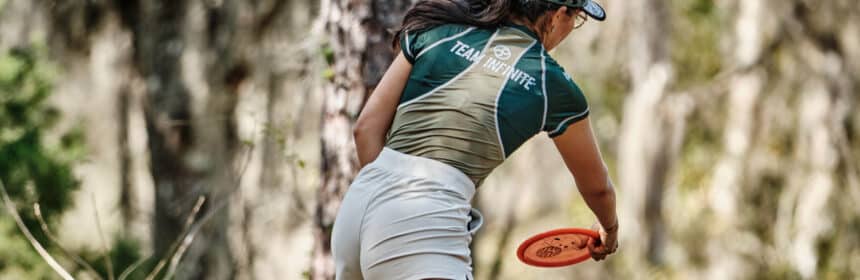
Team Infinite disc golf player

Why Sponsorship Matters in Disc Golf

Sponsorship in disc golf is no longer reserved for elite touring professionals. With the sport’s rapid growth, companies are increasingly open to supporting local ambassadors, content creators, and rising competitors. Whether you’re chasing a full-time tour or simply want help covering tournament fees and gear, the path to sponsorship begins with intentional effort and a clear understanding of what brands are looking for. This blog will help you learn how to get sponsored in disc golf.

Build a Strong Social Media Presence

Sponsors want visibility, and your online platforms are the most direct way to offer it. Start by choosing one or two channels to focus on, such as Instagram, YouTube, or TikTok. Post consistently with interesting content. Share tournament recaps, practice sessions, disc reviews, and community events. Use high-quality photos and videos, and write captions that reflect your personality and passion for the sport.

Engagement matters more than follower count. Respond to comments, tag brands when you use their products, and interact with other disc golfers. This builds credibility and shows sponsors that you’re active and approachable.

Be Active in Growing the Sport

Sponsorship is not just about performance, it’s about impact. Volunteer at local events, help run clinics, mentor new players, and support your local club. If you’re involved in course maintenance, league organization, or youth outreach, document it. Brands love to support players who give back. Being a community builder shows that you’re invested in disc golf’s future, not just your own success.

Professional disc golfer with sponsors on shirt

Photo courtesy DGPT

Compete Regularly and Track Your Progress

You don’t need to win every event, but you should be active in your region’s tournament scene. Play in PDGA-sanctioned events, track your rating, and aim for consistent improvement. Sponsors look for players who are committed to growth and who represent their brand with professionalism on and off the course.

If you’re placing well or showing strong sportsmanship, mention it in your sponsorship pitch. Even if you’re not a top-tier player, your dedication and visibility can be valuable.

Find the Right Company to Approach

Start with brands you already use and believe in. If you throw discs from a specific manufacturer, wear gear from a certain apparel company, or use a particular bag, those are natural fits. Research their current team and sponsorship structure. Some companies offer tiered sponsorships, ranging from grassroots ambassadors to elite pros. Others may support players through product discounts, tournament reimbursements, or content collaborations.

Look for brands that align with your values and style. If you’re focused on growing the sport locally, a regional retailer or startup brand might be a better fit than a global manufacturer.

Craft a Professional Sponsorship Pitch

Introduce yourself, explain your disc golf journey, and highlight your achievements and community involvement. Include links to your social media, tournament results, and any relevant content. Be clear about what you’re offering, such as visibility, engagement, and event presence, and what kind of support you’re seeking.

Keep it concise and respectful. Sponsorship is a partnership, not a handout. Show that you understand the brand’s goals and how you can help them reach a wider audience. Find out if the company has a formal team application you need to submit, then fill out every section completely.

Follow Up and Stay Persistent

Not every pitch will result in a deal, but each interaction helps you refine your approach. If a company says no, ask what you can improve or whether they might consider you in the future. Keep building your brand, competing, and contributing to the sport. Sponsorships often come when you least expect them, especially if you’re consistently visible and valuable in the disc golf community.

Live Up to Your Commitment

If you do get a sponsorship from a company, make sure you follow through with everything you are required to do, and committed to do. Keep up on your social media posts, stay active in disc golf, live up to your promises. That will show show the company that you are serious about promoting their brand, and will lay the foundation for additional sponsorships.

Conclusion

Getting sponsored in disc golf requires more than just throwing far or winning tournaments. It’s about building a personal brand, engaging with the community, competing with integrity, and approaching companies with professionalism and purpose. By focusing on these areas, you’ll not only increase your chances of sponsorship but also deepen your connection to the sport and its growing culture.

If you’re ready to take the next step, start by evaluating your social media presence. Are you posting regularly? Are you showcasing your personality and passion? Then look at your local disc golf scene. Are you volunteering, mentoring, or helping grow the game? Finally, assess your competition record and identify brands that align with your style and goals. With persistence and purpose, sponsorship is within reach.

How to Throw a Hyzer Flip in Disc Golf

Someone throwing a hyzer flip disc golf shot

If you’re new to disc golf, you’ve probably heard some interesting new terms tossed around, like “hyzer flip.” Some lingo comes straight from ball golf, but others are unique to our sport. The hyzer flip is one of those disc golf-specific shots that can be a game-changer once you get the hang of it.

So… What Exactly Is a Hyzer Flip?

Let’s start with the basics. A hyzer throw means you’re releasing the disc with the opposite edge (the one you’re not gripping) tilted slightly toward the ground. This angle helps the disc stay on a controlled path, whether you’re threading a tunnel or avoiding an obstacle.

a disc held on a hyzer angle

Now, a hyzer flip takes that concept and adds a twist. You throw an understable disc on a hyzer angle with enough power that it flips up to flat mid-flight. That flip lets the disc glide straight down the fairway, often with minimal fade. It’s a slick move that uses the disc’s natural turn to your advantage.

In short: hyzer angle + understable disc + good power = long, straight flight. Pretty cool, right?

When Should You Use a Hyzer Flip?

Hyzer flips shine on wooded courses where tight gaps demand precision shots. Instead of fading into the trees, your disc stays straight and sneaks through those narrow lanes. They’re also great in open fields when you want a straight shot without drifting into rough terrain.

Another great time to use a hyzer flip is when you’re dealing with low ceilings. Since the disc flips up and flies flat, it tends to stay lower than other shot types that might rise and fade out. That makes it ideal for tunnel shots or fairways with branches overhead. It’s also a great option for tailwind conditions, where the wind can help stabilize the disc and keep it on a straight line.

Once you get comfortable with the mechanics, you’ll find that hyzer flips are incredibly versatile. They can be used for long drives, controlled approaches, and even technical tee shots. It’s a shot that rewards finesse and timing more than brute strength.

Tips for Throwing a Hyzer Flip

There are a few key things to keep in mind if you want to nail this shot:

1. Pick the Right Disc

Look at the disc’s turn rating. It usually ranges from +1 to -5. For hyzer flips, you want something in the -1 to -3 range. The closer to -5, the more understable it is. But be careful, too understable and you might end up with a roller instead of a long air shot. Avoid discs with a zero or +1 turn rating for this shot.

Some popular understable discs for hyzer flips include the Innova Leopard, Discraft Heat, and Latitude 64 Fuse. These discs are known for their easy turn and smooth glide, making them great choices for learning the shot.

2. Start Slow

Just like when you first learned to throw, begin with slower discs. Try a putter or midrange before moving on to fairway drivers and distance drivers. The goal is to master the technique before adding speed.

Slower discs are more forgiving and easier to control. They let you focus on your form and release angle without worrying about overpowering the disc. Once you’re confident, you can step up to faster molds and see how they respond to your throw.

3. Focus on Angle and Power

Three things matter most: disc choice, release angle, and throwing speed. Everyone’s throw is a little different, so you’ll need to experiment. Some players need more hyzer angle, others need more power. The sweet spot is when your disc flips to flat and glides straight.

If your disc turns too far right, you might be overpowering it or using too little hyzer. Dial it back or adjust your angle. With a RHBH throw, the disc spins clockwise and tends to follow that spin direction, so keep that in mind when choosing your disc and release angle.

Also, pay attention to your grip and wrist angle. A clean release with consistent spin will help the disc behave predictably. If your wrist is too loose or your grip is off, the disc might wobble and lose its intended flight path.

disc golfer throwing a disc golf disc

Photo courtesy DGPT

Wrapping It Up

Learning to throw a hyzer flip takes time, but it’s totally worth it. Once you dial in the right disc and release, you’ll have a powerful tool for navigating tight fairways and even long open shots. It’s one of those techniques that separates casual players from confident shot-shapers.

So grab an understable disc, hit the course, and start hyzer-flipping. With a little practice and a lot of field work, you’ll be carving lines and hitting gaps like a pro.


Fairway Driver vs. Midrange

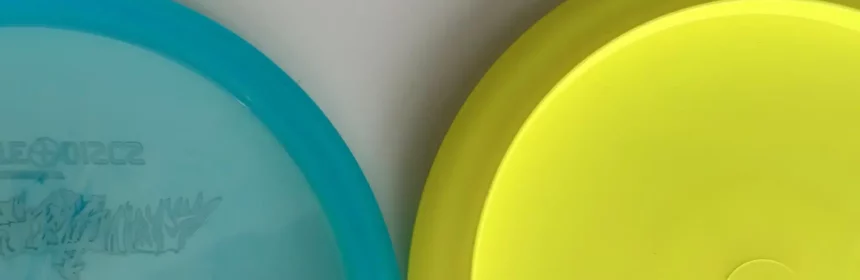
fairway driver and midrange disc golf discs

Fairway Driver vs. Midrange: What’s the Difference in Disc Golf?

If you’ve been playing disc golf for a while, you’ve probably noticed there’s a wide variety of discs, each with its own purpose, flight path, and feel. Among the most common are fairway drivers and midrange discs. Both are essential tools in your bag, but they serve different roles on the course. Understanding when, and why, to use each one can make a huge difference in your scores and consistency.

What Is a Fairway Driver?

A fairway driver is designed to bridge the gap between midrange discs and distance drivers. These discs have thinner rims and sharper edges than mids, allowing them to cut through the air more efficiently and fly farther. However, they’re not quite as demanding to throw as full-blown distance drivers.

Fairway drivers typically have a speed rating between 6 and 9. That means they require a bit more arm speed than a midrange, but most players, beginners included, can throw them effectively. They’re great for controlled distance shots, tunnel shots, and accurate drives where precision matters more than raw power.

When you need something that will fly farther than your midrange but still land accurately, reach for your fairway driver.

What Is a Midrange Disc?

Midrange discs are the workhorses of disc golf. They’re designed for shorter, more controlled throws, usually in the 200–300 foot range for most players. With a speed rating between 4 and 6, they don’t require as much arm speed to fly straight. Their rounded rims and wider profiles make them easier to grip and more predictable at lower speeds.

Midrange discs are perfect for approach shots, shorter drives, or when you need to hit a tight line through trees. They tend to have a flatter glide and slower fade than drivers, giving you more control and accuracy, especially on technical fairways.

If you’re facing a shot where distance isn’t the priority but control is, your midrange is your best friend.

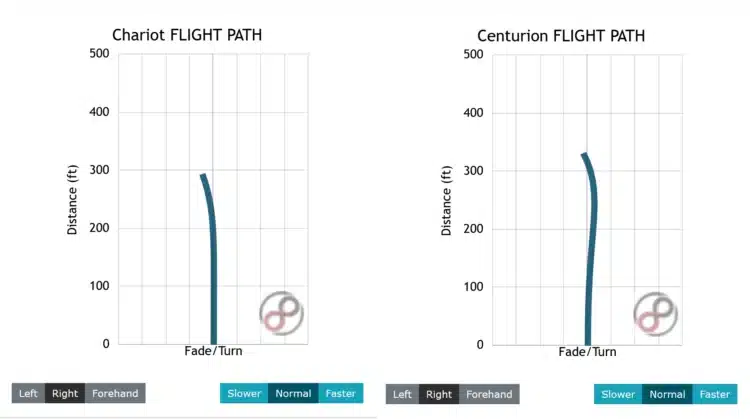
flight chart for a fairway driver and a midrange

Key Differences Between Fairway Drivers and Midranges

On paper, the difference between a fairway driver and a midrange might not seem huge—just a couple of numbers in the flight ratings. But in practice, those small changes make a big difference. Let’s break down what really sets them apart:

1. Rim Width and Shape

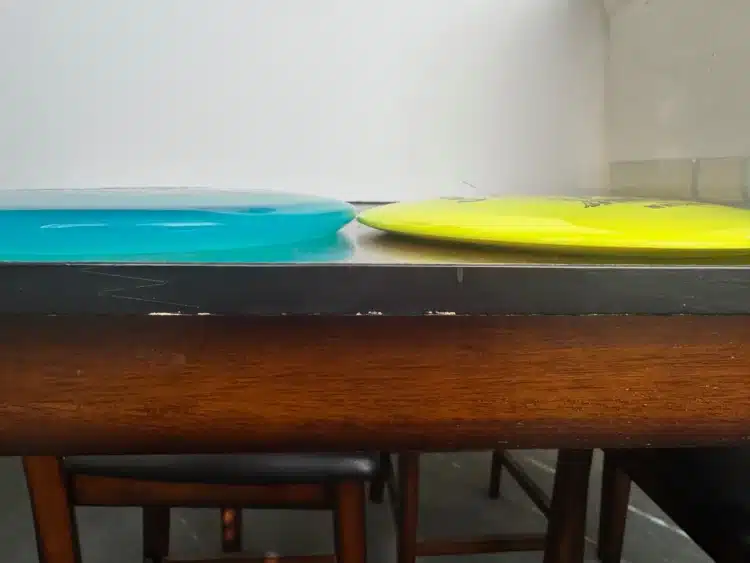
One of the most obvious differences is the rim. Fairway drivers have thinner, sharper rims designed to reduce drag and increase speed. Midranges have wider, more rounded rims, giving them a comfortable grip and more consistent release at lower speeds.

This rim design affects how the disc cuts through the air. The sharp edge of a fairway driver helps it maintain velocity and penetrate headwinds better, while the blunt edge of a midrange provides more lift and stability for slower throws.

profile of a midrange and fairway driver disc golf discs

2. Speed and Distance Potential

Fairway drivers simply fly farther. They’re meant for tee shots and long fairway drives where you want more carry and glide. Midranges, on the other hand, are built for accuracy and control rather than max distance.

For example, if your midrange tops out around 250 feet, a fairway driver might easily push that to 300–330 feet with similar effort. That extra distance can make a big difference when approaching longer holes.

3. Accuracy and Forgiveness

Midrange discs are generally more forgiving of form flaws. Because they fly slower and have more stable flight patterns, they don’t exaggerate your mistakes as much as faster discs do. A slightly off-angle release won’t punish you nearly as hard as it might with a fairway driver.

Fairway drivers are still relatively forgiving compared to distance drivers, but they demand a cleaner release. If your angle control or wrist timing is off, you’ll notice more turn or fade than you expected.

4. Shot Types and Situations

Fairway drivers shine on longer holes or when you need a disc that can hold a specific line for an extended flight. They’re excellent for hyzer flips, S-curves, and controlled drives. You’ll often see advanced players using fairways off the tee when accuracy is more important than distance.

Midranges excel on approach shots, touch throws, and technical courses with tight fairways. They’re ideal when you want your disc to fly straight with minimal fade, or when you need to land softly near the basket.

5. Wind Speed

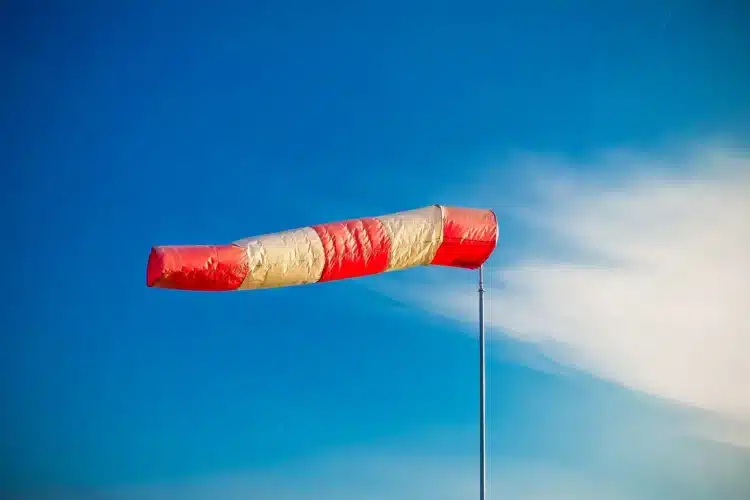
Because of their shape and speed, fairway drivers handle wind better than most midranges. If you’re throwing into a headwind, a stable or overstable fairway driver will give you more consistency and prevent the disc from flipping. Midranges tend to be more affected by wind, especially in gusty conditions.

wind sock

When to Throw Each Type

Choosing between a fairway driver and a midrange depends on distance, line, and confidence. Here are some general guidelines:

  • Throw a fairway driver when you need extra distance but still want control.
  • Throw a midrange when accuracy and placement matter more than distance.
  • Use fairways off the tee on narrow fairways or long par 3s.
  • Use mids for upshots, shorter holes, or when you need the disc to sit down quickly after landing.

As you gain experience, you’ll find overlap between the two. Many players can throw a midrange almost as far as a fairway, especially if they have good form. The key is knowing your own limits and playing to your strengths.

Popular Fairway Drivers and Midranges

There are countless great options in both categories, but here are some fan favorites:

Popular Fairway Drivers

Popular Midrange Discs

  • Innova Roc3 – A classic, stable midrange trusted by pros.
  • Discraft Buzzz – Straight, reliable, and one of the most popular discs ever made.
  • Latitude 64 Fuse – Easy to throw with a smooth, neutral flight.

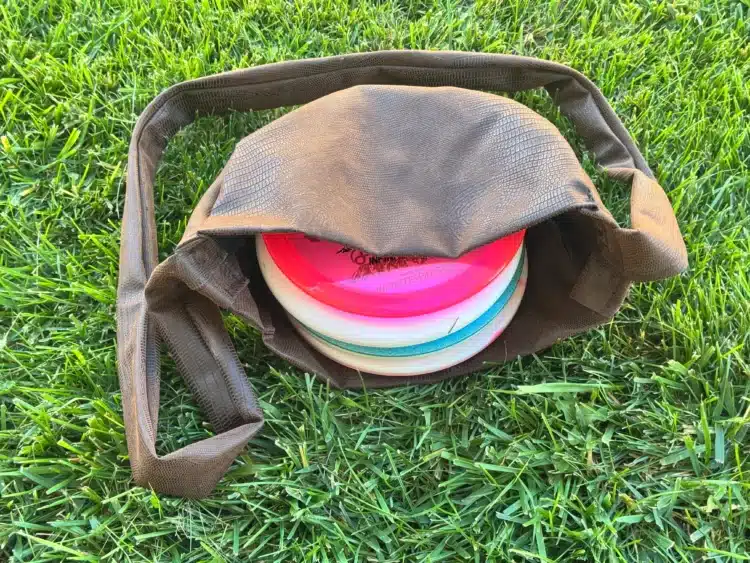
disc golf bag with discs

Final Thoughts: Building Your Bag

Both fairway drivers and midrange discs are must-haves in any disc golfer’s bag. The real difference comes down to how much control or distance you need on a given shot. Fairways are great for precision drives and longer lines, while mids shine in close-quarters play and placement shots.

For beginners, mastering a midrange is often the best first step. It teaches you form, angle control, and how discs react to different release points. Once you’ve built that foundation, adding a fairway driver will open up your distance game without sacrificing accuracy.

So next time you’re lining up a shot and wondering which disc to grab, think about your goal: Are you trying to get there, or just get close? If it’s the former, grab a fairway driver. If it’s the latter, your midrange has your back.

Either way, both discs are essential, and learning when to use each one will make you a more confident, consistent, and versatile player on the course.

GYROpalooza Mystery Boxes Available for Preorder!

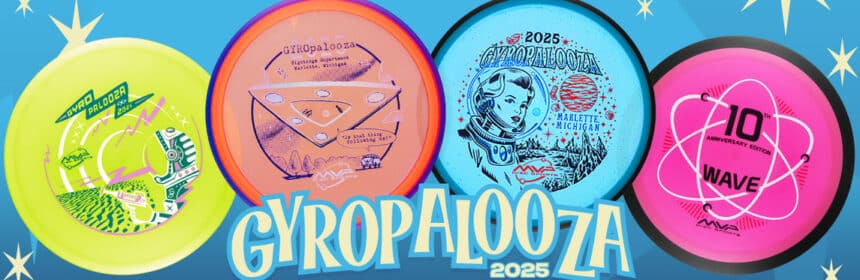
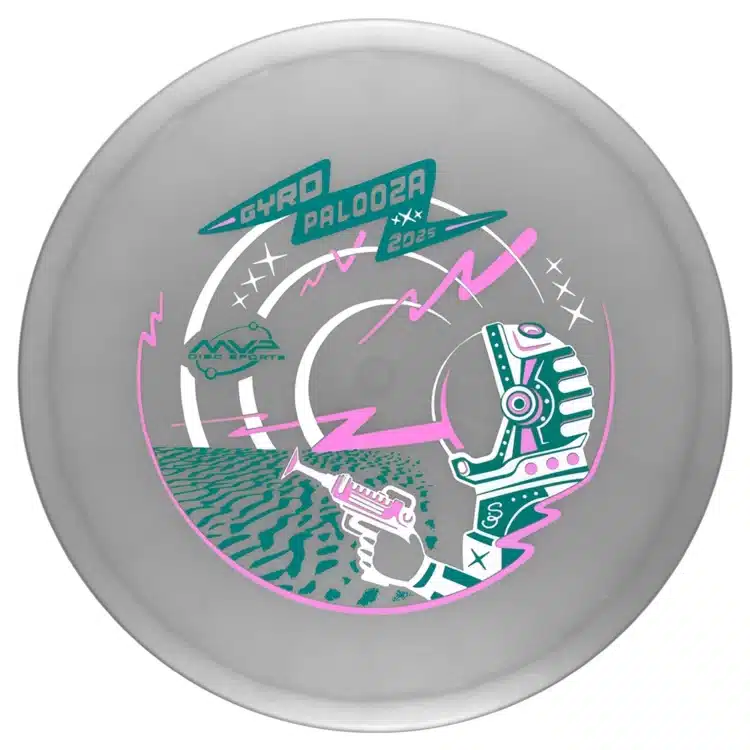
gyropalooza special edition disc golf discs

MVP’s GYROpalooza Mystery Box preorders are live at Infinite Discs!

*** Do not add additional items to your GYROpalooza preorder. Additional items won’t ship until GYROpalooza boxes ship, which will happen on Black Friday ***

The new GYROpalooza Mystery Boxes are back, and they have some amazing Special Edition discs! In addition to the four Special Edition discs, each box will also contain 2 Eco-friendly R2 Neutron throwers, and 5 Lab Seconds. That makes 11 discs in total! Let’s check out the Special Edition discs for this year’s GYROpalooza box.

Particle Glow Proton Particle

Particle Glow Proton Particle disc golf disc

Particle Glow Proton Particle

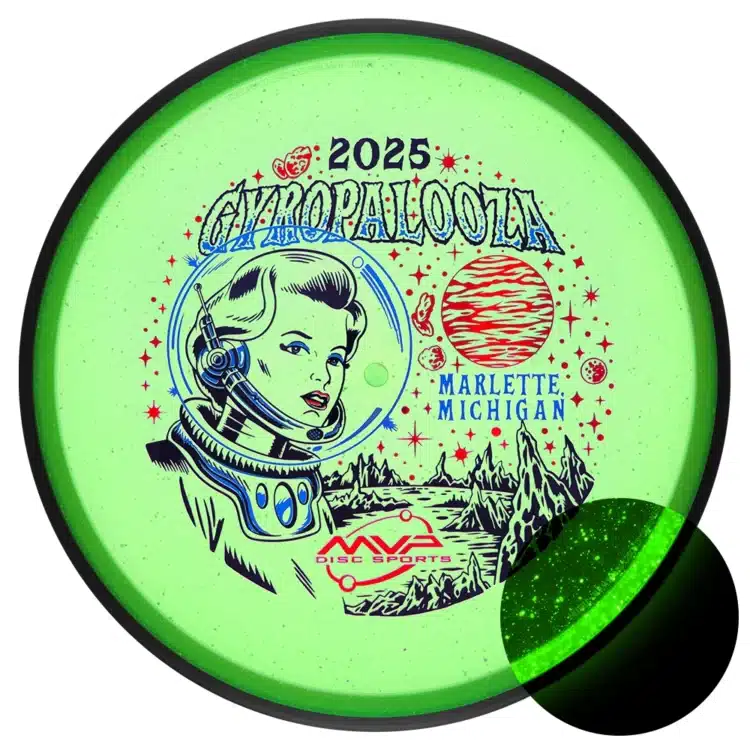
MVP is bringing back a true blast from the past, making an exclusive, limited-time return just for GYROpalooza, the Particle Glow Proton Particle! This out of production overstable putter was made for extended, straight flights that finish with a dependable 2.5 fade, landing precisely where you aim. Fittingly, this classic mold comes paired with a timeless stamp on stunning Particle Glow Proton plastic, beautifully illustrated by Brent Schoonover. Bringing back a retired mold is a rare event for MVP, so this is your perfect opportunity to experience what made this cult favorite so legendary!

Neutron Wave

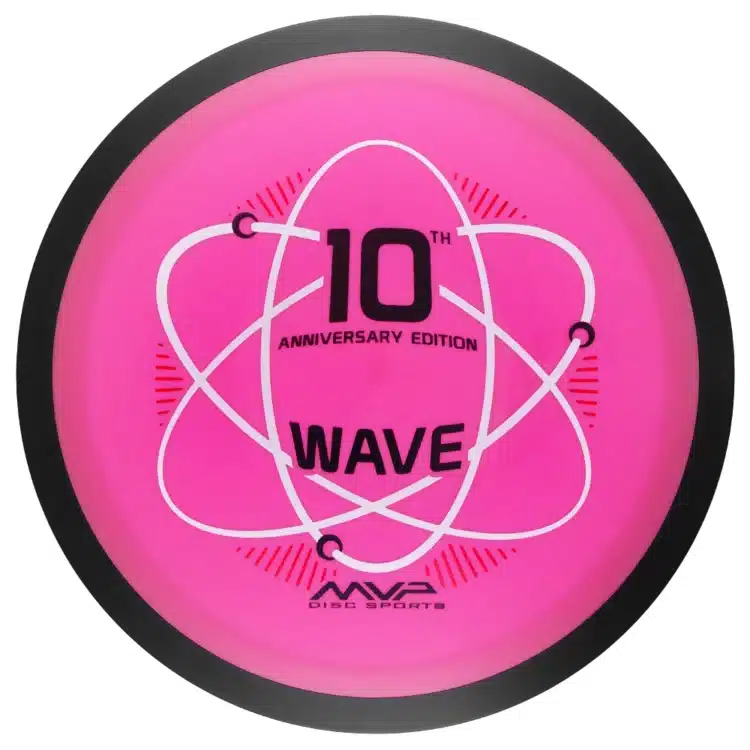
10th Anniversary Neutron Wave disc golf disc

Neutron Wave

2025 celebrates a decade of one of MVP’s most beloved molds, the Neutron Wave! To mark this milestone, the Wave features a Special Edition 10th Anniversary stamp, available exclusively in the 2025 GYROpalooza Box. Known worldwide for its perfect balance of turn and fade, the Wave delivers long, controlled flights ideal for massive drives. Don’t miss your chance to own this commemorative piece of disc golf history,  available only in the 2025 GYROpalooza Box!

Particle Glow Proton Pyro

Particle Glow Proton Pyro disc golf disc

Particle Glow Proton Pyro

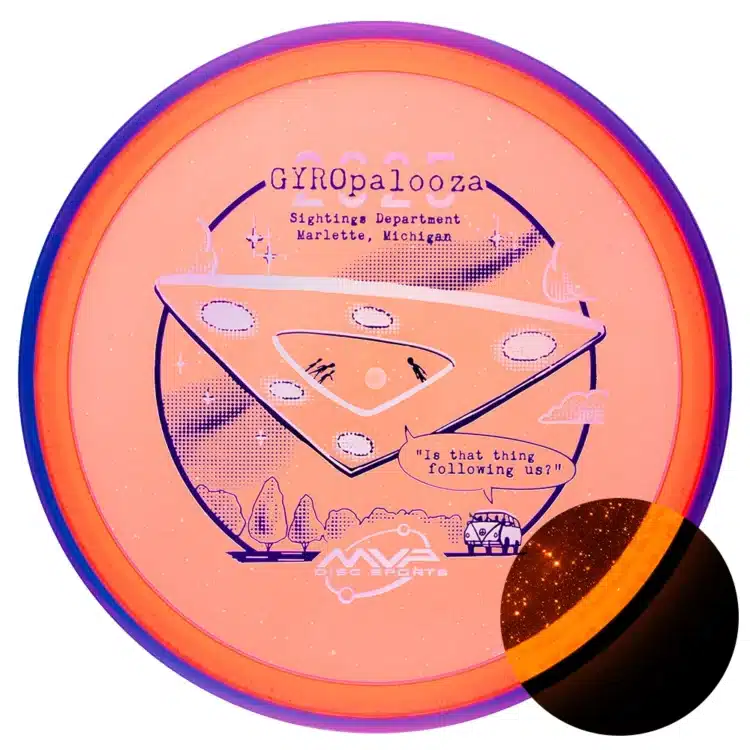
The next Special Edition disc in the 2025 GYROpalooza Box is the Particle Glow Proton Pyro! For only the second time ever, the Pyro is being released with a non-Prism rim, this time featuring a stunning Particle Glow core. Showcasing ZAM’s artwork inspired by an actual UFO sighting from the Sightings Department, this edition is truly out of this world. Celebrated for its reliably overstable yet glidey flight, the Pyro has earned its place as a go-to midrange for many players. Don’t miss your chance to add this dazzling Particle masterpiece to your collection, available exclusively in the 2025 GYROpalooza Box!

Plasma Echo

Plasma Echo disc golf disc

Plasma Echo

Rounding out this year’s lineup is the Plasma Echo. This stable-to-understable Streamline midrange, brought to life for GYROpalooza with stunning artwork by Scott Oswalt, has quietly built a devoted following thanks to its straight flights, effortless hyzer-flips, and smooth, controllable turnovers. Available for the first time ever in Plasma plastic, the Echo makes its exclusive debut in the 2025 GYROpalooza Box—and it’s easy to see why Silva swears by this mold!

There is a limited supply of 2025 GYROpalooza boxes available. They sold out last year. Preorder yours today at Infinite Discs. Click HERE to preorder. GYROpalooza boxes will ship on November 28. REMINDER: Order any additional items separately. Anything ordered the same time as the GYROpalooza boxes won’t ship until November 28.


Champion vs Star Plastic

First run Champion Leopard3 and Star Corvette disc golf discs

Champion vs. Star Plastic: Comparing Premium Disc Golf Plastics

When you are in the market for a new disc, there are several key features that you consider:
Weight – if you have a lot of power, you’re typically looking for max weight discs. If you don’t have a big arm, you’re likely looking for lighter discs.Flight numbers – Is the speed high or low enough? Does the stability meet your needs? Are replacing a disc with a certain flight?
Plastic type – The plastic you choose will affect the flight, the durability, and the feel of a disc. Although there are times when a base plastic is desirable, most of us are looking for premium plastics. Two of the most popular premium plastics are Champion and Star. In this blog we’ll look at what those two plastics have in common, and how they are different.

Champion vs. Star Plastic: A Tale of Two Premiums

When you pick up an Innova disc, one of the first things you’ll notice, besides the stamp, is the plastic. Two of Innova’s most popular blends, Champion and Star, are both considered premium plastics. They each have their own unique feel, durability, and flight characteristics.

Hand Feel

Champion plastic is known for its stiff, slick, and glassy texture. It often has a clear or translucent look and feels firm in the hand. Some players love that confidence-inspiring stiffness, especially in warm conditions, while others find it a bit slippery when wet or cold.

Star plastic, on the other hand, offers a grippier and slightly softer feel. It’s opaque, has a bit more flex, and tends to sit comfortably in the hand in almost any weather. Players who prioritize grip, especially for drives and approaches where touch matters, often lean toward Star.

Durability

When it comes to durability, Champion plastic usually takes the crown. It’s extremely resistant to dings, scrapes, and tree hits, maintaining its flight characteristics for a long time. That toughness makes it a favorite for drivers that see a lot of impact. The down side to this durability is that it takes longer to beat in Champion plastic.

Star plastic is still very durable, but it’s a touch softer, so it can beat in slightly faster than Champion. That’s not necessarily a bad thing. Some players prefer how Star plastic seasons over time, giving discs a bit more glide and turn as they wear in.

Softness and Flexibility

Star plastic feels softer and more flexible in hand compared to the rigid feel of Champion. This gives it a more forgiving flex when you’re gripping tightly or throwing in colder temperatures. Champion stays firm and consistent, which some players prefer for predictability.


Which Should You Choose?

If you want maximum durability and a firm, consistent feel, Champion plastic is hard to beat. It’s great for hot weather and discs that take a lot of abuse.

If you prefer better grip and a slightly softer touch, Star plastic delivers an excellent balance of performance and comfort. Many players find it to be the more versatile of the two, especially in changing weather conditions.

What About Other Brands?

Although each brand has its own recipe for its plastic types, the end result is close to what Innova offers. If you get a Z-line disc from Discraft, you’ll notice it is very similar to Champion plastic. Same with Opto from the Trilogy brands (Dynamic Discs, Westside, and Latitude 64), Proton from MVP, and Gateway’s Diamond plastic.

Looking for a version of Star plastic? Clash has Hardy plastic, DGA has ProLine, and Discraft has ESP. Those, along with Trilogy’s Gold Line, MVP’s Neutron, and Discmania’s S-Line, are all very similar to Star plastic.

Wrap Up

No matter which you choose, both plastics represent the top tier of disc golf plastics, offering excellent performance and long-lasting quality. It really comes down to what feels best in your hand and how you like your discs to wear in over time.


Innova GStar vs Star

A GStar disc golf disc and a Star disc

You don’t have to play disc golf very long before you realize that there are many different plastic types. Each brand has its own formulas for making plastic. The largest brand is Innova, and two of Innova’s popular plastics are Star and GStar. In this blog we will discuss those two plastics. We’ll tell you their uses, differences, and similarities. Let’s dive into Star and GStar.

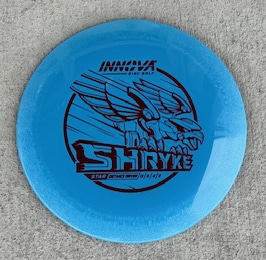
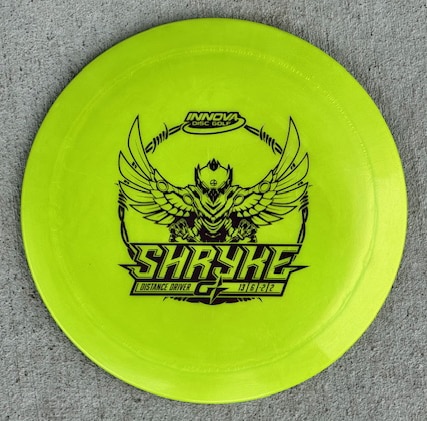
Innova Star Shryke disc golf disc

Star Plastic

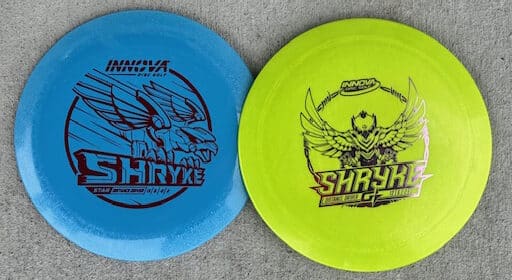
Star plastic combines the durability of Champion plastic with the softer feel of Pro plastic. Star is actually slightly less durable than Champion. It will wear a bit faster, meaning it will get ‘seasoned’ a bit faster. Like GStar, Star plastic is opaque, unlike the translucent Champion plastic.

Innova GStar Shryke disc golf disc

GStar Plastic

GStar has a slightly different formula, which makes it softer and more flexible. Its flexibility makes it a great plastic for winter play. Its flexibility makes it less likely to crack when you hit a hard object. In addition to flexibility, GStar has a pearlescent sheen, making it look really good.

Uses:

  • Although any plastic can be thrown in cold weather, GStar shines in winter because of its flexibility.

Similarities:

  • GStar and Star are both opaque, grippy, and soft.
  • They are both considered ‘premium’ plastics due to their durability.
  • Both accept dyes well, for those who like to dye their discs.

Differences:

  • GStar has a pearlescent sheen, while Star comes in flat colors.
  • GStar is slightly softer, while Star is slightly more durable.
  • GStar is more flexible, in winter or summer.
  • GStar is less expensive than Star.
  • Innova has far more molds available in Star.
  • Star is slightly more overstable than GStar

Conclusion

Although I’ve been a fan of Star plastic from the beginning, I also like the look and feel of GStar. For my personal preference, Star has a slight advantage because it is not too firm, but not too soft. Plus, all the Innova molds I throw come in GStar.

Check out all of Innova’s molds HERE

Read a description of GStar HERE

Read a description of Star HERE

Now you know a little more about two of Innova’s plastic types. Comment below and let us know which of those two you prefer. What is your favorite plastic from any brand?

Disc Golf at Night – Glow and Lighting Products

The first time I tried playing a round of disc golf in the dark, I was hooked! It was so fun to watch the glowing discs fly through the air. And the overall feeling of playing at night made me appreciate and enjoy disc golf that much more.

As we head into the fall season, as of this writing, the days get shorter and it becomes more difficult to get in a full round of disc golf while it is still light out. It’s the perfect time to get ready for “glow season!”

Glow in the Dark Discs

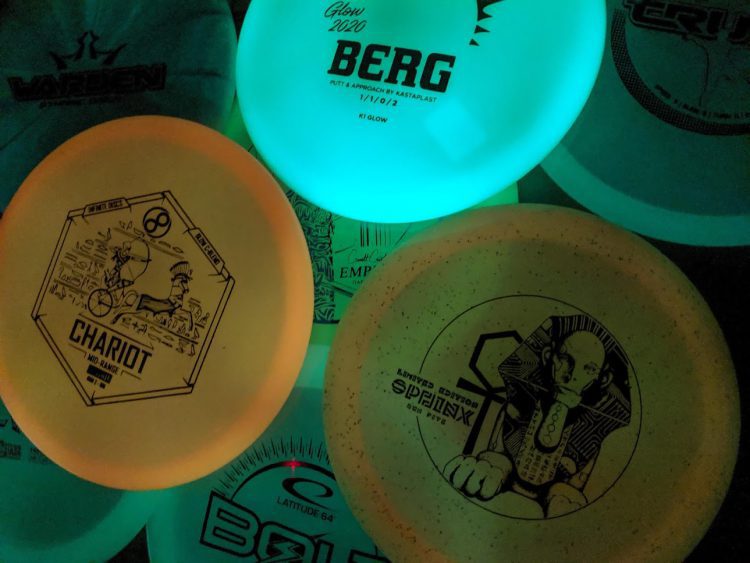
There are many different molds that are available in glow plastic. If you were familiar with night rounds of disc golf, you might think that glow plastic was just a novelty. It is actually a great option for night rounds, but not the only option.

The advantage of getting glow plastic for your go-to discs is that you can play with them at night, and already be used to how it flies. If your regular discs aren’t made with glow plastic, you can still get them to glow.

One option for getting non-glow discs to light up at night is to attach LED lights. That adds a little weight to the disc, and also makes them non-PDGA legal. For casual glow rounds that is rarely an issue.

The lights can be taped to the top or bottom of the disc (or both) and provides a great alternative to glow plastic. They are fairly inexpensive and can be used for a few rounds. Especially if you turn them on and off as needed.

You also have the option of attaching glow tape to the disc. These products glow brightly and the glow lasts a while. That comes in handy when looking for discs that you threw several minutes ago.


Glow in the Dark Disc golf DiscsWhat Disc Golf Brand GLOWS THE BEST?
Several big brands have reformulated their glow plastics and we now have some great options. Prior to these new glow plastics, Kastaplast and MVP were two of  the best brands for bright, long-lasting glow. Now we also have Innova’s Proto Glow, Discrafts, Mega Glow, and Moonshine 2.0 (Trilogy brands) that have all leveled up their glow game. Lone Star Discs and Thought Space Athletics also have premium glow plastics.

What all of that means is that you can likely find your daily thrower in a good glow plastic. If you don’t like throwing glow plastic during the day, you could also have a glow set on hand for when you get the urge to huck at night. Or, use lights or glow tape on your day-discs, as mentioned above.

Disc Golf Accessories to Make Discs Visible in Dark

Make your discs glow, and stay glowing with a UV Flashlight

Disc Golf UV Flashlight

If you have glow discs, or if you choose to use glow tape, a crucial accessory is a UV flashlight. These amazing flashlights not only supercharge your glow disc/tape, but they are a bit easier on your eyes when you use them. The same thing holds if you need to use a light to see where you’re walking. Plus, if you’re looking for a glow disc that has lot its glow, you can look for it by shining a UV light in the area you think the disc might be. If it’s there, it will light up and start glowing.

If you want to charge your disc without seeing even UV lights, check out the Halo glow disc charger. This nifty little device sits in your bag between two glow discs. When you’re ready to throw, hit a button on the remote control and the Halo will charge your disc for a preset time, then shut off. They you simply remove the fully-charged disc from your bag and you are ready to throw. It’s easier on your eyes than flashlights.

How to Make Regular Discs Glow

I since discovered that a few little night round accessories that can get you playing disc golf after dark, even without a slew of discs in glowing plastic.

One of the quick ways to jump into the glow game is to pick up Glow Tape which are designed just for disc golf discs.

Glow Tape Vinyl

These are basic sticker rings that can be peeled off and stuck onto any disc to make it into a glowing disc. You can get enough sticker action out of a sheet to light up three, four, or even five discs, depending on how many sticker rings you decide to apply to each disc. They are light enough not to mess up the weight or flight tendencies of your disc. They also charge instantly with UV light and glow brightly for several minutes.

Now, if you have glowing discs, or if you have glow tape, you can charge them with traditional light, which takes a bit longer, plus lights up your fairway, or you can pick up a UV Flashlight which makes a LOT of difference in your ability to quickly charge and throw your disc.

Flat LED Disc Lights

Flat LED Disc attachment Light

These little LED lights are easily affixed to the bottom or top of your disc with packaging tape to light them up at night. The light works better on certain colors of discs, and best on plastics that are somewhat translucent. They are inexpensive and last quite a while. They are small enough that they don’t effect the flight of your disc. You’ll have to avoid water hazards because once your LED light hits the water, it will die.

Shop for Flat LED Disc Lights

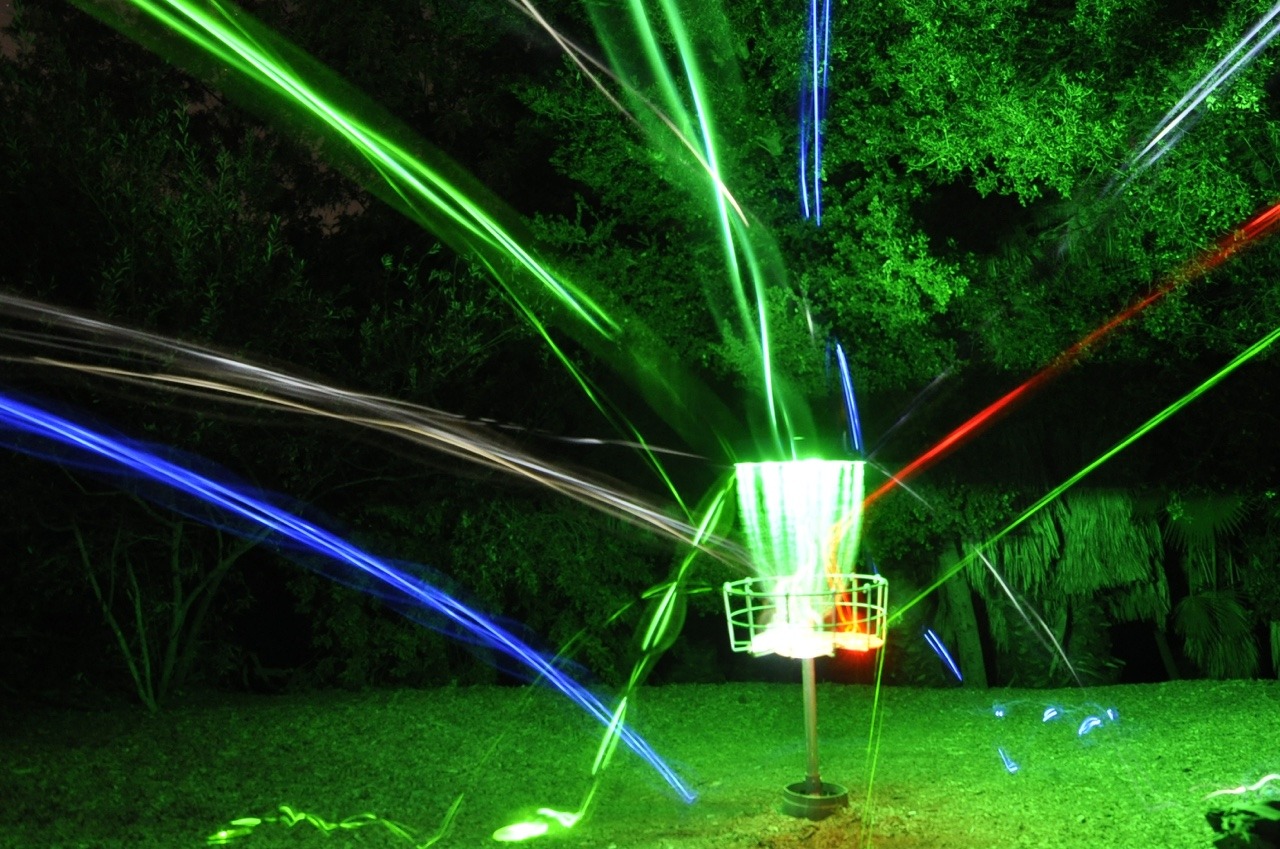
I found some photos on Tumblr.com that appear to be time exposures with LED lights on discs. Leave it to awesome artists to find a beautiful way to highlight disc golf at night.

A couple tips:

  • Although it is more fun to stay in the dark the whole round, there are many reasons why you might need some extra light. It’s good to have a regular flashlight on hand for those times. It’s also good to warn people you are going to turn on a light, so you don’t blind them.
  • Glow sticks are a nice accessory for glow rounds. You can tape them to baskets to light up the target. You can attach them to your bag, so if you walk away from it, you can find it again. Also, if there are other people playing a glow round, you can see each other better as you move around. You can pick up some cheap glowsticks at dollar stores. Including glow bracelets and necklaces that can easily be attached to a bag.
  • Park courses are the easiest to play, and not trip over roots, rocks, and gopher holes. Although, we’ve play glow rounds at wooded, hilly courses.
  • You might want to check with local governments to see if it is legal to play on a particular course after dark. Many parks and courses close at dusk.

It really doesn’t take much to get ready for a night of disc golf under the stars. Get some glow discs, lights, or glow tape, an inexpensive UV flashlight, and you’re ready to go! The flight of a disc during the day is already a wonderful sight. The flight of a glow disc at night is MAGIC!

Let us know what you recommend for night rounds in the comments. We’d love to know!


Brixton Disc Golf Collector Cards

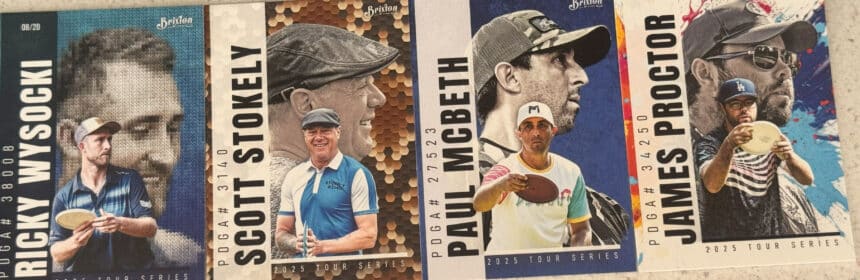
several Brixton disc golf cards

When I was younger, a couple of my buddies and I got into baseball card collecting. There is something exciting about ripping open a fresh pack of trading cards. The suspense, the hope for a rare pull, and the celebration when you finally score one all add to the fun.

Disc golf trading cards capture that same thrill. They combine the joy of collecting with the excitement of chasing cards that feature the players we cheer for. Every pack holds potential. And when it comes to disc golf trading cards, the go-to source is Brixton.

Brixton Beginnings

Brixton began in December 2022 as a small Twitter account run by a couple of disc golf card enthusiasts. At first, they simply posted card photos and eBay auctions. They liked the idea of creating their own card company, but did not know how to make it happen. Then they connected with OTB Discs.

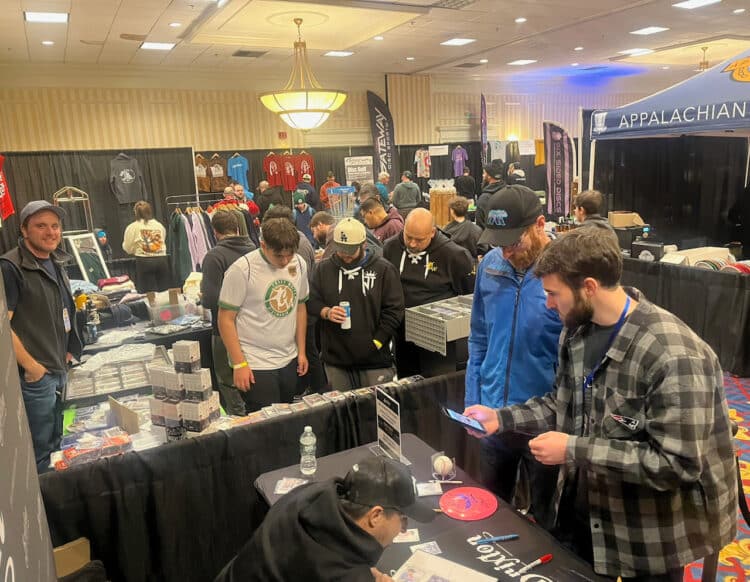
Brixton disc golf card vending

With guidance and support from OTB, or Only The Best Discs, Brixton Disc Golf Cards became a reality. Their very first release exceeded expectations and they have continued producing high quality disc golf cards every year since.

If you have never heard of disc golf trading cards, you are not alone. Brixton still hears from people every day who are surprised the product even exists. Only a handful of sports card companies have ever tried disc golf cards and only a few players have been featured. Brixton is different because they are dedicated entirely to the disc golf card experience.

Brixton with top disc golf pros

Their sets and packs highlight all of the touring pros. The Disc Golf Pro Tour has also released its own cards over the years, but Brixton’s entire focus is giving collectors high quality disc golf cards.

Collecting Disc Golf Cards

Collectors enjoy the hobby in different ways. Some try to build a complete set. Others chase every card of their favorite players. Many look for cards they can have signed in person. Whatever the goal, Brixton works hard to make sure the experience is enjoyable.

Collecting also helps the players. Brixton donates half of its profits back to the pros who appear on the cards. That means all 184 players receive a share.

Brixton’s 2025 Base Set

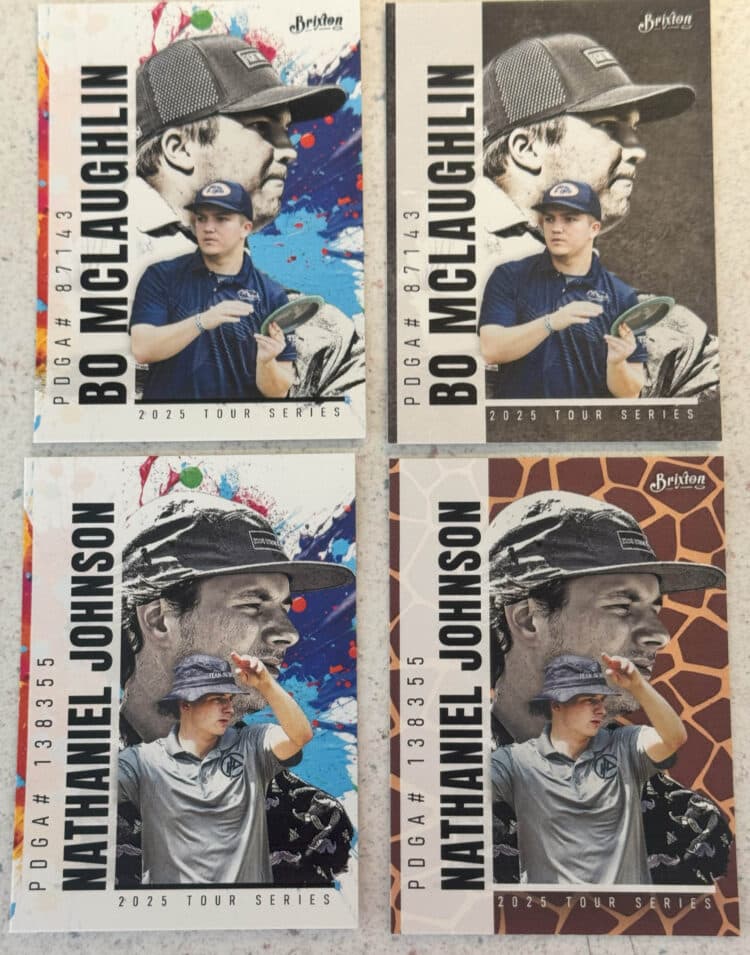
The 2025 base set includes all 184 players. Each card features a player photo with a paint splatter background. You can buy the complete set or build it pack by pack through ten card packs.

Brixton disc golf cards base set

Buying the full set comes with a bonus called The Grind set. This is a 25-card subset that showcases the best players in the sport. The only way to get The Grind is to purchase the full base set.

brixton disc golf card parallel set

For those who like to build a set pack by pack, there are also individual packs. base and parallel disc golf cardsThese 10-card packs include 5 base set cards and five Parallel Universe cards. Parallel cards are alternate versions of the base cards with different backgrounds. Some parallels are common and others are quite rare. The rarest is the Tour de Force card, which shows up only once in about 137 packs.
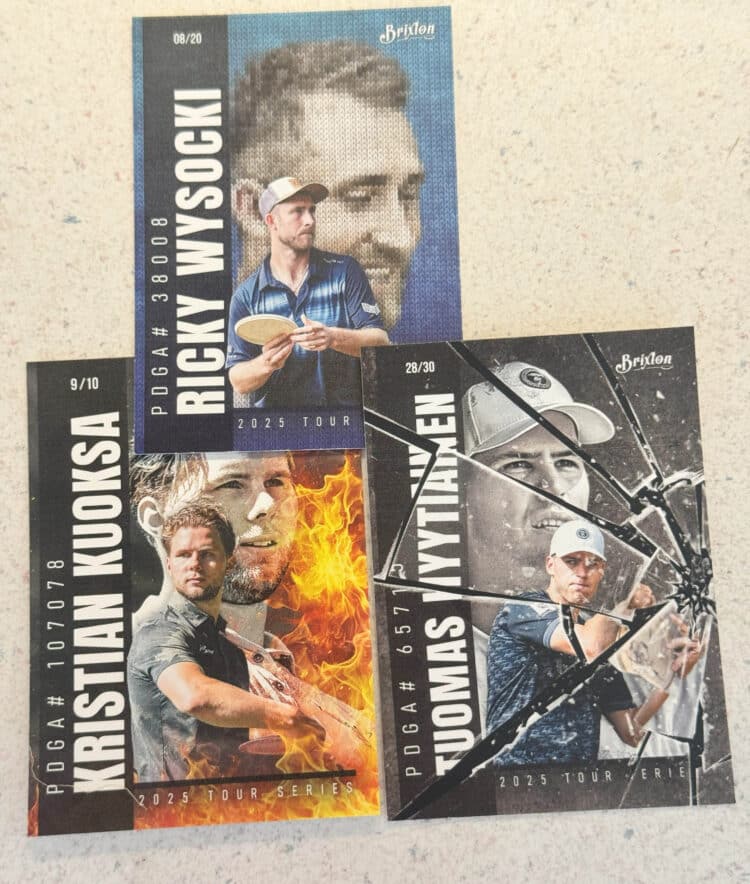
The Dejavu Set

Beyond the base set, The Grind, and the Parallels, there is also the Dejavu set. Each player receives 25 Dejavu cards to sell or give away directly. That makes them harder to track down and more personal because the only way to get one is through the players.

Picking Up Packs

You can purchase packs individually or in boxes of 20. Each pack includes five base cards and five Parallel cards. One of the Parallel cards will always have a Red background, so the odds of pulling Red are 1:1.

Other Parallels are more challenging to find. Some feature animal skin backgrounds. Some are numbered and show exactly how many were printed, with designs like Shattered Glass. Others are foil designs that stand out even more. The rarest foil, called Magma, appears in only about one out of 70 packs. And of course there is the Tour de Force card, the most difficult of all, at one in 137 packs.

rare Brixton Parallel disc golf cards

In total, you would need 19 cards to complete a master set for any one player. There is the base set card, 17 Parallel cards (including the Tour de Force, and the Dejavu card. The Tour de Force and Dejavu cards will be the hardest to acquire.

Creative Designs

A special shout out goes to Jason, one of Brixton’s founders, for his creativity in designing the cards. The artwork and variety of designs make collecting them even more fun.

Get Started Today!

Click the links below to order your Brixton cards and experience the excitement for yourself. Open some packs, chase your favorite players, and trade with friends to complete your collection.

Brixton Base Set w/The Grind subset

Brixton Individual Packs

Brixton 20-pack Box

Here is a list of odds for each card:

Lower Rarity Parallel Cards

  • RED: 1:1
  • BLUE: 1:1.2
  • PINK: 1:1.5
  • BLACK: 1:2.2

Middle Rarity Parallel Cards

  • COW: 1:2.5
  • SNAKE: 1:2.8
  • ZEBRA: 1:3.1
  • GIRAFFE: 1:3.4

Numbered Parallel Cards

  • SHATTERED GLASS: 1:4.6
  • KNITTED: 1:6.9
  • LASER EYES: 1:9.3
  • EN FUEGO: 1:14

Foiled Parallels

  • SHIMMER: 1:20
  • LUX: 1:28
  • BLOX: 1:46
  • MAGMA: 1:70

Tour De Force (One of One)

1:137

1 2 3 4 5 74