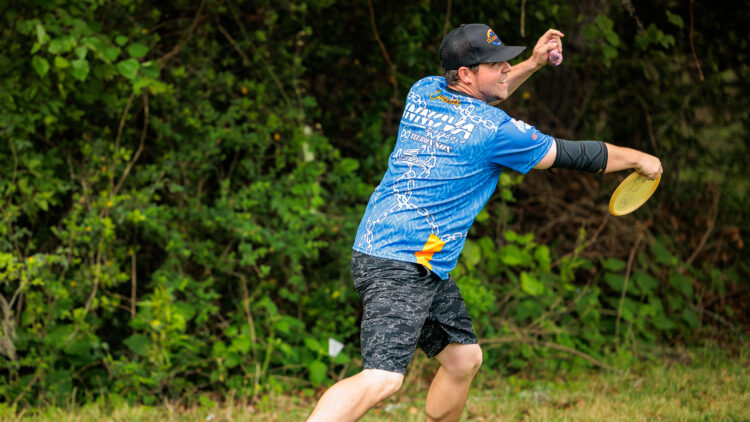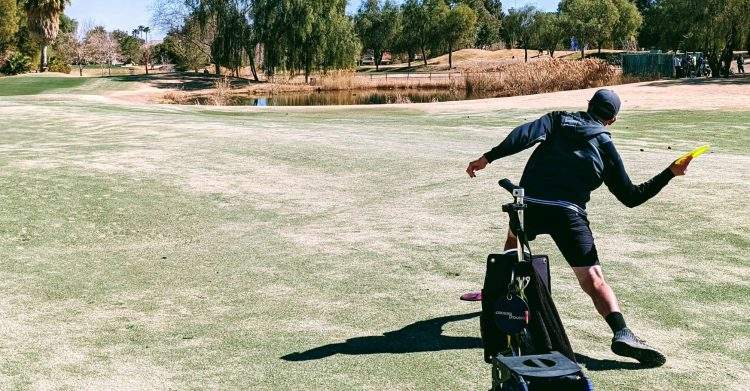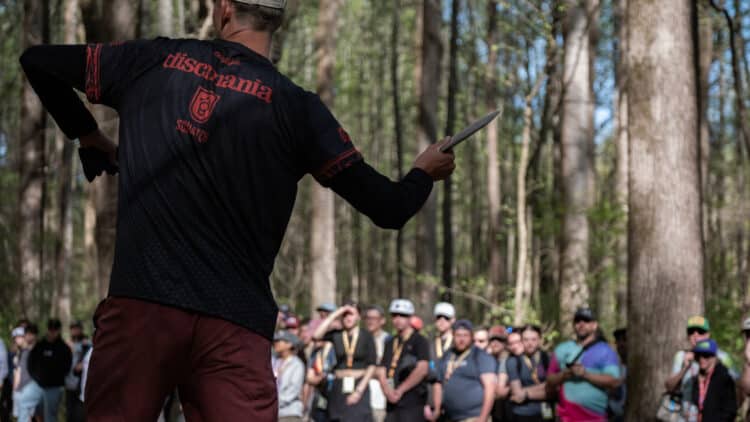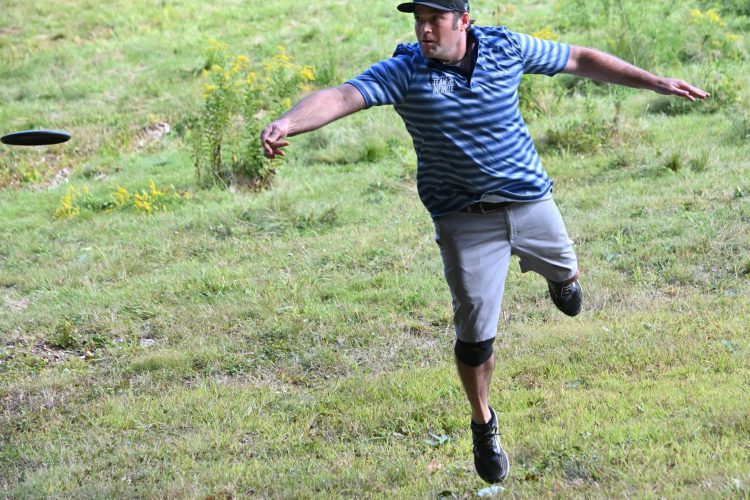
Are you looking to get better at disc golf? Here is a collection of tips we’ve learned from our sponsored professionals as well as other knowledgeable disc golfers who have something beneficial to share.
Discs and bags may get most of the attention in disc golf, but the right disc golf accessories can make your round a bit better. From improving grip in unpredictable weather to recovering discs in tough terrain, having the proper gear keeps every round smooth and enjoyable. Infinite Discs offers a wide variety of accessories to keep players prepared for any course condition.
Grip Enhancers: Stay Confident in Every Throw
Consistent grip is crucial for accurate, repeatable throws. Moisture, sweat, and humidity can affect disc control, making grip enhancers a must-have for players of all skill levels.
Infinite Discs Chalk Ball – A compact chalk ball designed to keep your hands dry and tacky for cleaner releases.
Prodigy Chalk Bag – A popular rosin-style option used by many professionals for dependable grip in humid conditions.
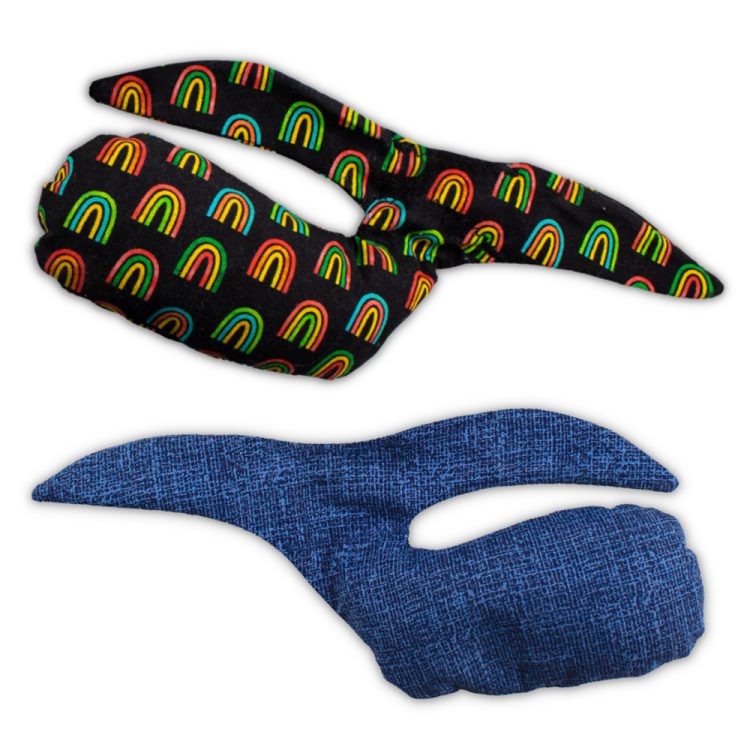
Whale Sac– Handmade grip bags filled with clay beads, offering a natural, soft feel and eco-friendly materials.
Each of these grip enhancers provides a different texture and performance feel. Experimenting with a few options helps you discover what works the best for you.
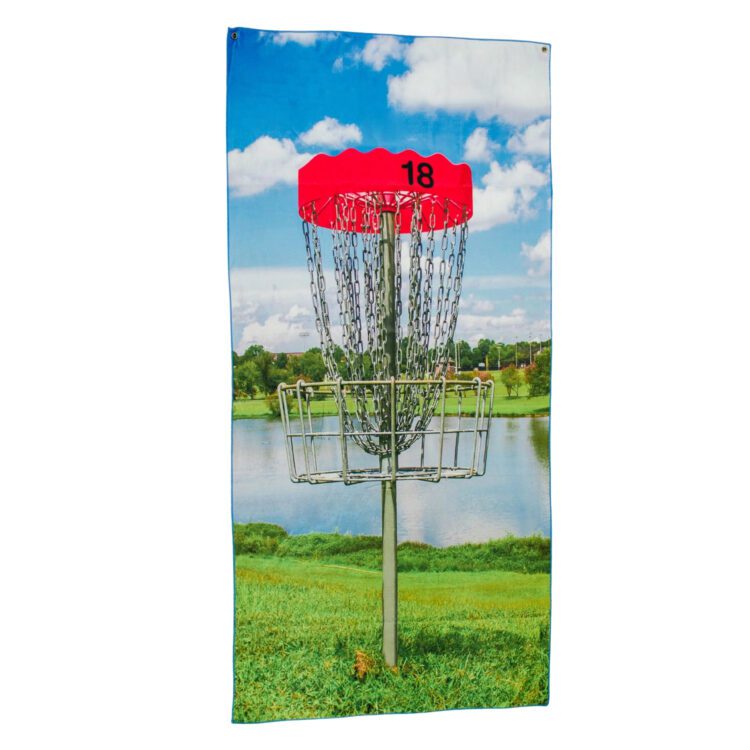
A dry disc is essential for predictable flights and reliable grip. Disc golf towels are simple yet critical tools that help maintain disc performance in all course conditions.
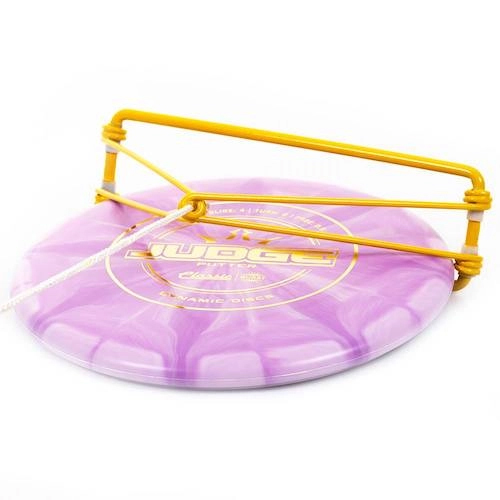
Few things are more frustrating than losing a favorite disc to water, thick brush, or trees. Disc retrievers help protect your go-to discs and reduce downtime by reaching discs that are out of reach.
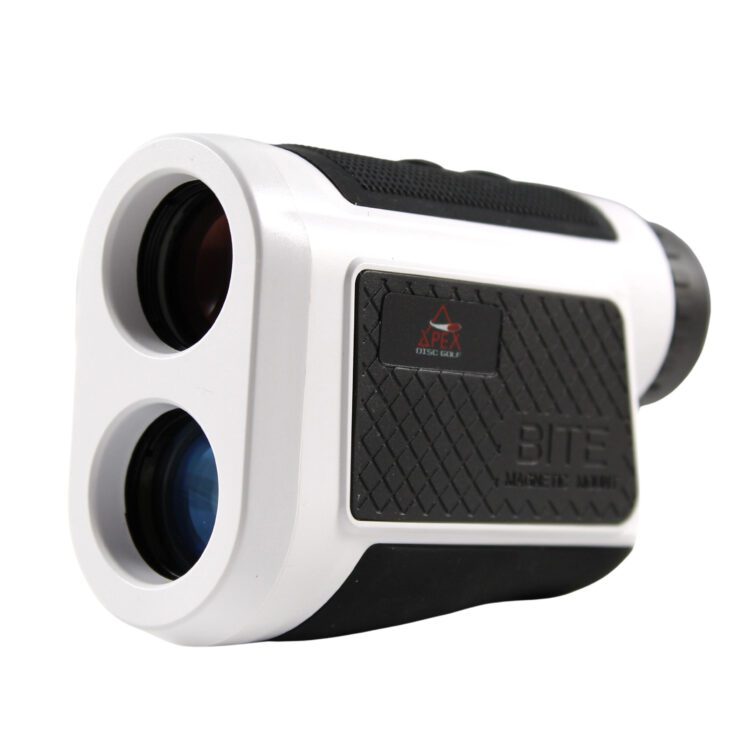
Knowing exact distances can greatly assist your disc selection and strategy. Rangefinders let you know exactly how far you need to throw, so you can narrow down your disc options.
Water Bottle – Stay hydrated while letting the world know which brands you support.
Training Products– Practice is the best way to lower your scores. These training products will help.
Building A Complete Disc Golf Bag
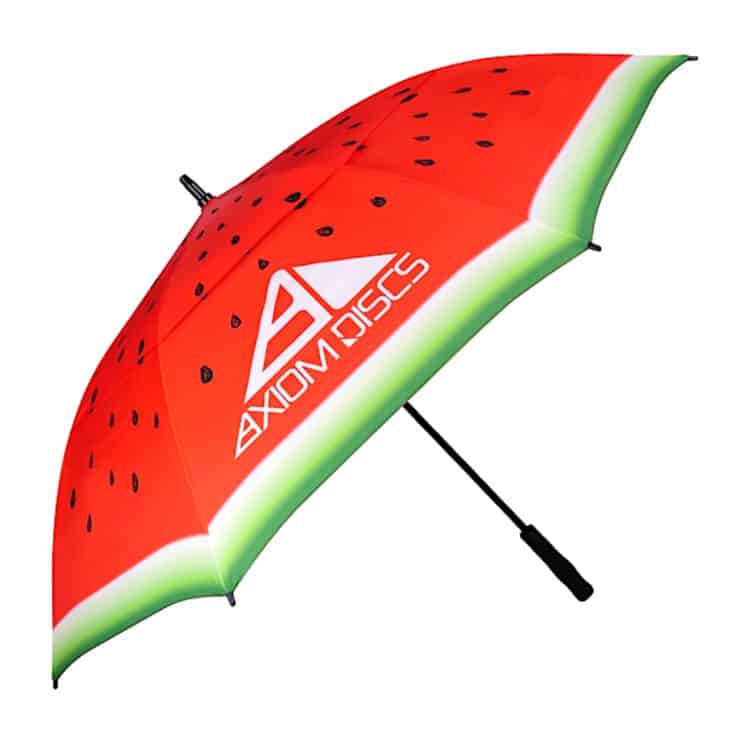
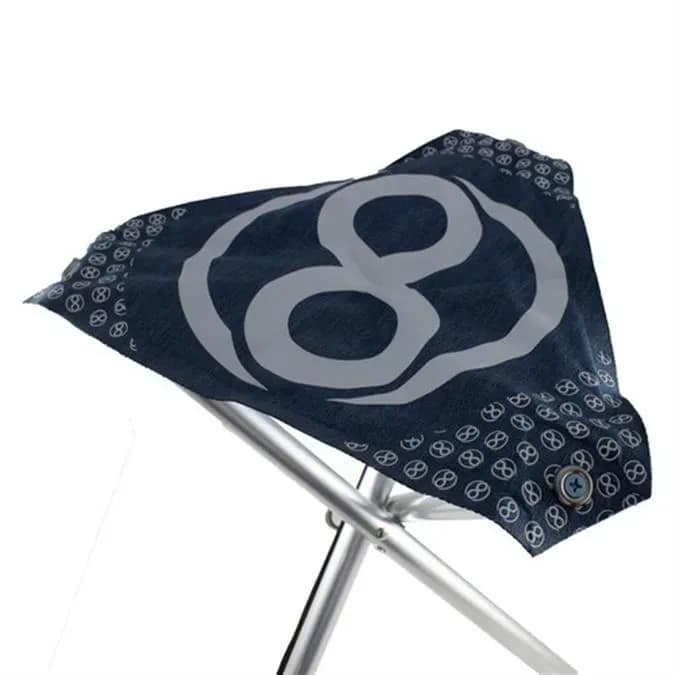
Grip enhancers, towels, retrievers, rangefinders, umbrellas, and seats, might be considered just add-ons, but they all make your rounds a little better. They keep you prepared for unpredictable conditions, protect your discs, and help you focus on your game. By adding these accessories from Infinite Discs, you’ll be ready for whatever the course throws your way.
Whether you’re upgrading your bag or starting fresh, adding these accessories from Infinite Discs can make your round a more fun!
Sponsorship in disc golf is no longer reserved for elite touring professionals. With the sport’s rapid growth, companies are increasingly open to supporting local ambassadors, content creators, and rising competitors. Whether you’re chasing a full-time tour or simply want help covering tournament fees and gear, the path to sponsorship begins with intentional effort and a clear understanding of what brands are looking for. This blog will help you learn how to get sponsored in disc golf.
Build a Strong Social Media Presence
Sponsors want visibility, and your online platforms are the most direct way to offer it. Start by choosing one or two channels to focus on, such as Instagram, YouTube, or TikTok. Post consistently with interesting content. Share tournament recaps, practice sessions, disc reviews, and community events. Use high-quality photos and videos, and write captions that reflect your personality and passion for the sport.
Engagement matters more than follower count. Respond to comments, tag brands when you use their products, and interact with other disc golfers. This builds credibility and shows sponsors that you’re active and approachable.
Be Active in Growing the Sport
Sponsorship is not just about performance, it’s about impact. Volunteer at local events, help run clinics, mentor new players, and support your local club. If you’re involved in course maintenance, league organization, or youth outreach, document it. Brands love to support players who give back. Being a community builder shows that you’re invested in disc golf’s future, not just your own success.
Photo courtesy DGPT
Compete Regularly and Track Your Progress
You don’t need to win every event, but you should be active in your region’s tournament scene. Play in PDGA-sanctioned events, track your rating, and aim for consistent improvement. Sponsors look for players who are committed to growth and who represent their brand with professionalism on and off the course.
If you’re placing well or showing strong sportsmanship, mention it in your sponsorship pitch. Even if you’re not a top-tier player, your dedication and visibility can be valuable.
Find the Right Company to Approach
Start with brands you already use and believe in. If you throw discs from a specific manufacturer, wear gear from a certain apparel company, or use a particular bag, those are natural fits. Research their current team and sponsorship structure. Some companies offer tiered sponsorships, ranging from grassroots ambassadors to elite pros. Others may support players through product discounts, tournament reimbursements, or content collaborations.
Look for brands that align with your values and style. If you’re focused on growing the sport locally, a regional retailer or startup brand might be a better fit than a global manufacturer.
Craft a Professional Sponsorship Pitch
Introduce yourself, explain your disc golf journey, and highlight your achievements and community involvement. Include links to your social media, tournament results, and any relevant content. Be clear about what you’re offering, such as visibility, engagement, and event presence, and what kind of support you’re seeking.
Keep it concise and respectful. Sponsorship is a partnership, not a handout. Show that you understand the brand’s goals and how you can help them reach a wider audience. Find out if the company has a formal team application you need to submit, then fill out every section completely.
Follow Up and Stay Persistent
Not every pitch will result in a deal, but each interaction helps you refine your approach. If a company says no, ask what you can improve or whether they might consider you in the future. Keep building your brand, competing, and contributing to the sport. Sponsorships often come when you least expect them, especially if you’re consistently visible and valuable in the disc golf community.
Live Up to Your Commitment
If you do get a sponsorship from a company, make sure you follow through with everything you are required to do, and committed to do. Keep up on your social media posts, stay active in disc golf, live up to your promises. That will show show the company that you are serious about promoting their brand, and will lay the foundation for additional sponsorships.
Conclusion
Getting sponsored in disc golf requires more than just throwing far or winning tournaments. It’s about building a personal brand, engaging with the community, competing with integrity, and approaching companies with professionalism and purpose. By focusing on these areas, you’ll not only increase your chances of sponsorship but also deepen your connection to the sport and its growing culture.
If you’re ready to take the next step, start by evaluating your social media presence. Are you posting regularly? Are you showcasing your personality and passion? Then look at your local disc golf scene. Are you volunteering, mentoring, or helping grow the game? Finally, assess your competition record and identify brands that align with your style and goals. With persistence and purpose, sponsorship is within reach.
If you’re new to disc golf, you’ve probably heard some interesting new terms tossed around, like “hyzer flip.” Some lingo comes straight from ball golf, but others are unique to our sport. The hyzer flip is one of those disc golf-specific shots that can be a game-changer once you get the hang of it.
So… What Exactly Is a Hyzer Flip?
Let’s start with the basics. A hyzer throw means you’re releasing the disc with the opposite edge (the one you’re not gripping) tilted slightly toward the ground. This angle helps the disc stay on a controlled path, whether you’re threading a tunnel or avoiding an obstacle.
Now, a hyzer flip takes that concept and adds a twist. You throw an understable disc on a hyzer angle with enough power that it flips up to flat mid-flight. That flip lets the disc glide straight down the fairway, often with minimal fade. It’s a slick move that uses the disc’s natural turn to your advantage.
In short: hyzer angle + understable disc + good power = long, straight flight. Pretty cool, right?
When Should You Use a Hyzer Flip?
Hyzer flips shine on wooded courses where tight gaps demand precision shots. Instead of fading into the trees, your disc stays straight and sneaks through those narrow lanes. They’re also great in open fields when you want a straight shot without drifting into rough terrain.
Another great time to use a hyzer flip is when you’re dealing with low ceilings. Since the disc flips up and flies flat, it tends to stay lower than other shot types that might rise and fade out. That makes it ideal for tunnel shots or fairways with branches overhead. It’s also a great option for tailwind conditions, where the wind can help stabilize the disc and keep it on a straight line.
Once you get comfortable with the mechanics, you’ll find that hyzer flips are incredibly versatile. They can be used for long drives, controlled approaches, and even technical tee shots. It’s a shot that rewards finesse and timing more than brute strength.
Tips for Throwing a Hyzer Flip
There are a few key things to keep in mind if you want to nail this shot:
1. Pick the Right Disc
Look at the disc’s turn rating. It usually ranges from +1 to -5. For hyzer flips, you want something in the -1 to -3 range. The closer to -5, the more understable it is. But be careful, too understable and you might end up with a roller instead of a long air shot. Avoid discs with a zero or +1 turn rating for this shot.
Some popular understable discs for hyzer flips include the Innova Leopard, Discraft Heat, and Latitude 64 Fuse. These discs are known for their easy turn and smooth glide, making them great choices for learning the shot.
2. Start Slow
Just like when you first learned to throw, begin with slower discs. Try a putter or midrange before moving on to fairway drivers and distance drivers. The goal is to master the technique before adding speed.
Slower discs are more forgiving and easier to control. They let you focus on your form and release angle without worrying about overpowering the disc. Once you’re confident, you can step up to faster molds and see how they respond to your throw.
3. Focus on Angle and Power
Three things matter most: disc choice, release angle, and throwing speed. Everyone’s throw is a little different, so you’ll need to experiment. Some players need more hyzer angle, others need more power. The sweet spot is when your disc flips to flat and glides straight.
If your disc turns too far right, you might be overpowering it or using too little hyzer. Dial it back or adjust your angle. With a RHBH throw, the disc spins clockwise and tends to follow that spin direction, so keep that in mind when choosing your disc and release angle.
Also, pay attention to your grip and wrist angle. A clean release with consistent spin will help the disc behave predictably. If your wrist is too loose or your grip is off, the disc might wobble and lose its intended flight path.
Photo courtesy DGPT
Wrapping It Up
Learning to throw a hyzer flip takes time, but it’s totally worth it. Once you dial in the right disc and release, you’ll have a powerful tool for navigating tight fairways and even long open shots. It’s one of those techniques that separates casual players from confident shot-shapers.
So grab an understable disc, hit the course, and start hyzer-flipping. With a little practice and a lot of field work, you’ll be carving lines and hitting gaps like a pro.
This post on disc golf power and distance, is the next post in a series designed to help you elevate your game. Watch the videos and reinforce the concepts through reading. Watch, read, practice, and improve!
Not everyone will admit it, but we all want a little more power and distance in our games.
The wise person knows that there aren’t a lot of quick fixes out there.
More realistically, we practice, make adjustments, and over time, we gradually increase our power and distance.
That same wise person will also remind us that more distance certainly doesn’t necessarily equate to better scores.
Meanwhile, approach shots, putting, accuracy and more of the other pro tips in this series (found here) will more likely improve your scores.
But sometimes, wisdom isn’t what we seek.
We just want a little power in lives, am I right?
Well, luckily, these tips for disc golf power and distance will also help you with your form.
That way you can have your cake and eat it too!
So, let’s look at some tips that will help us get some more power and distance in our lives while also improving the rest of our game as well!
Head Placement for Power
In the first video Dave Feldberg gives us a tip for what to do with our head so we don’t limit our distance.
To do this, he makes an analogy to baseball.
Baseball players that hit home runs don’t keep their head facing the pitcher for the entire swing.
Instead, they keep their head facing towards the point of contact and look up during their follow through.
In disc golf, because of the way our neck is connected to our head and shoulders, looking where you’ll throw a backhand, severely limits the range of motion you can make for a complete throw.
It also can throw off your lines quite a bit and reduce your accuracy.
Instead, keep your head down through the impact of the throw and don’t look up until your follow-through naturally brings your head up.
Then, you can watch your disc soar that extra distance!
Watch now and see Feldberg explain it as well!
Now, from the head let’s have a look at how we can position our feet to improve our disc golf power and distance!
Position Your Feet Correctly!
In this quick-hitter of a video, Joel Freeman tells us about two common mistakes he sees amateurs make that are causing them to lose a lot of power.
The first mistake is that they point their toes towards the target and the second mistake is that both of their feet are perfectly aligned with the target.
Instead, he shows us to point our toes inward and slightly away from the target.
Then, with our plant foot, it should be out in front of your other foot. If done correctly, someone behind you should be able to see the target through the “window” in your legs.
Both of these tips help engage your lower body and get a lot more power.
Give a watch and then give it a try!
Now let’s look at some grip tips for disc golf power and distance as well!
Grip It to Rip It!
In this video, Connor gives a helpful tip on how to grip so you can get max distance.
And yes, he does mix up the terms potential energy and kinetic energy. But don’t let that detract from his point.
Basically, what it boils down to is that Connor tells you to put most of your pressure (and a healthy dose of it) right between your thumb and pointer finger.
That way as you come through on your drive, the disc launches out of your hand (you are not “letting go” intentionally) creating the spin and snap you need to get the most distance out of your throw.
Watch Connor’s explanation and then give it a try yourself!
Now let’s start putting things together with some timing tips for power and distance!
Cole Redalen on Timing and Distance!
Can we all agree that Cole Redalen can throw great distances?
Because he absolutely can!
At the same time, he’ll also be the first to occasionally tell you “don’t do what I do” and “others tell me I do this wrong.”
So, with that in mind, have a look at how Cole explains his massive drives.
The major point he goes over is timing.
I’ve heard it enough in all the videos I’ve watched to know that timing is crucial.
If your throw is rushed or out of sync, it’s deadly to your distance potential.
Well, to help explain his timing, Cole give this tip.
In his “X-Step” after the back foot goes behind and lands, and as soon as he’s about to bring his front foot through is when he starts his reach back.
Then, by the time his front plant foot hits the ground his throwing arm will have reached full extension.
From there he engages his hips, pulls through with his elbow at a 90-degree angle and the disc in the power pocket (which he shows), and let’s it rip!
Other quick tips he mentions is that he’s holding the disc about waist height.
And finally, if you look at his reach back you’ll see he is reaching back with the disc at a significant anhyzer. This is something I’ve heard before elsewhere and something worth trying!
One excellent way to accumulate numerous repetitions while honing your timing is through the use of a disc golf practice net. This enables you to throw discs repeatedly without the need to retrieve them each time.
Now, watch Cole explain and see if something clicks for you!
Breaking The Drive Into 3 Steps!
In the next video Dave Feldberg gives us 3 tips that don’t require much in the way of fieldwork, but can also improve our distance.
It’s definitely worth a watch so you can see him demonstrate the logic behind each point.
Here are his tips!
Tip 1 – Drop Your Front Foot Heel Before The Disc Moves.
Feldberg shows us how, when people initiate the turn before the heel hits, it gives the disc far less runway to build up speed and severely decreases distance potential.
He calls this “cheating the turn”.
Instead, wait until the heel plants before you initiate the throw.
He also has a drill for you to check out that will help you get used to the correct form.
Tip #2 – Practice Staying on Your Toes for the Entire Run-Up!
On the course, you can adjust and have more of the foot touching the ground (with the pressure on the toes).
But to get used to this, practice doing the run up completely on your toes.
Then, for the final plant, you go to tip #1 and plant the heel then initiate the throw.
Tip #3 – Disc Golf is a 3-Part Throw!
If you can break the throw into the three key components, your throw will sync together much more smoothly and result in more distance as well.
Here are the 3 parts he goes over.
Part 1 – Get to the reach-back position. Your arm should be fully extended back as your front toe hits the ground.
Part 2 – Drop the heel then bring the arm in.
Part 3 – Twist out of the shot and follow through.
Watch at the 3-minute mark as Feldberg breaks the shot into those 3 parts visually.
The nice part, he shows, is that you can practice each of the 3 parts individually.
Dave shows you how in the video, along with some other tidbits for each, so give it a look!
Now let’s see if we can put it all together with some more general tips from Zoe Andyke
More General Distance Tips!
Having watched all of Infinites Youtube videos, I must say that I really appreciate Zoe Andyke’s teaching style.
She breaks ideas down into the key components and let’s you look at the same concept through a different lens.
And perhaps, seeing this video will help things click for you…
Here are the tips she goes over.
Tip #1 – Don’t limit your distance potential by limiting your reach back!
Essentially she reminds us to turn our head, hips and shoulders with our throw.
“It is our bodies that ultimately pull and throw our arm,” she tells us as she contorts her own body to show us (1:45).
Tip #2 – Don’t reach across your body!
This is a common mistake she sees people make.
Instead, she tells us, you want to keep a 90-degree angle between your arm and your torso.
Tip #3 – Use Your Whole Body to Pull Through
Once you have that full reach back, she tells us to “use our body to pull (legs, trunk, hips, arm at the end) [and then] follow through.”
As many have told us before, distance does not just come from the arms!
Tip #4 – Play Tug of War
This is a drill that you can try for yourself with a partner (4:00).
Have the partner hold the disc in place while your arm is extended back.
Then, use that tension to feel and lengthen your reach back. This, she repeats, is usually a key component that most of us are missing in our distance shots.
Final Tip – Bend your knees to stay springy and athletic for your shot.
She shows us that in her drive she never stands up straight to her full height through the shot. She keeps the knees bent and the leg muscles activated throughout!
Now watch for yourself and see Zoe explain it in her unique and engaging style!
In this video, you’ll see a drill that just might become your new favorite way to add speed, power, and distance to your throws. The movement forces you into the right mechanics, turning your body into a lever so that, at the release point, the disc is accelerating as far from your body as possible. That leverage is where the real power comes from.
Here’s the ironic part: the drill looks a lot like “rounding”—a term most disc golf gurus warn against. But instead of teaching bad habits, it highlights the role of keeping your elbow straighter than you’d expect. The focus is on maintaining that extension while rotating, which feels counterintuitive at first.
And here’s the catch: once you start rotating at full speed, keeping your elbow perfectly straight becomes impossible—just like how you don’t consciously “time” your release. The drill builds those mechanics naturally, without forcing you to overthink it.
The benefits go beyond distance. Keeping that straighter arm position also improves accuracy. It prevents the dreaded elbow drop and keeps you from collapsing the disc into your chest, which is a common cause of wild releases.
At the end of the day, you can trust whichever coach you want—but if your goal is to throw farther and you’re willing to put in some focused reps, this is a drill worth trying. The coach behind it has worked with hundreds of players, and the results speak for themselves.
Disc Golf Distance and Power – In Summary
There you have it folks!
From head to feet and everywhere in between, those are some tips from the pros on how to get more distance in your throw!
Luckily, those tips are also great for general throwing mechanics as well!
As always, it will take practice and patience.
But try some of those out and see if you can’t add a little (or a lot) of distance to your drives.
And, as always, if you have any must-have tips, please share with the rest of us in the comments below!
In time, we’ll have the distance we covet and the good form we need to keep dropping those scores out on the course!
Happy driving to you all, and may all of your shots soar beyond to distances your wildest dreams!
What Beginners Should Know About Choosing Disc Golf Discs
If you’re new to disc golf, the number of disc options can feel overwhelming. There are flight numbers, plastic types, and weight, all influencing how a disc performs. That’s before you even consider what colors or stamps you want. This guide will simplify those factors so you can make an informed choice.
To an outsider, all discs might look the same. But in reality, some discs are tailored for beginner-friendly learning, while others are designed for experienced players. This post focuses on molds that support beginners in developing proper form and confidence.
Understanding Disc Flight Numbers
Disc golf uses a four-number flight rating system. While imperfect, it’s the most useful benchmark we have. Here is what each digit tells you and why it matters:
Speed: Indicates how fast you must throw the disc for it to fly correctly. High-speed discs must be thrown a lot faster than slower-speed discs. Attempting to throw high-speed discs without the proper skill can encourage poor form. Beginners should stick with speeds between 1 and 5. You can get slightly faster discs if you can find them in lighter weights (under 160g)
Glide: Describes how long the disc stays in the air. Higher glide numbers help beginners maximize distance with less power.
Turn: Measures how much the disc will veer to the right (for a right-handed, backhand player) when thrown with speed. Beginners benefit from discs with turn ratings between –1 and –4. If your disc starts turning too much early in flight, consider a faster or more stable mold.
Fade: Reflects how much the disc will curve to the left at the end of its flight. Lower fade values are easier for beginners to manage, since their throws tend to lack high velocity.
What About Disc Weight
Although the flight numbers on a disc might make it good or bad for beginners, the weight of a disc can also make a big difference. Lighter disc golf discs are often better for beginners because they require less power to throw effectively, making it easier to get more distance with less effort.
Heavier discs can be harder to control for new players since they require faster arm speed to achieve a full flight, often resulting in short or inaccurate throws. A lighter disc is also more forgiving, as it tends to glide longer and stay in the air, giving beginners more time to see how their throw affects the disc’s flight. This added distance and control can help new players build confidence while developing proper form.
With those tips in mind, let’s look at the best disc golf discs for beginners.
MVP Ohm The Ohm is a straight-flying, very glidey putter from MVP. Even though is has a high glide, it can comfortably be used as a putting putter. The mold is similar to the Streamline Pilot.
Discraft Archer A former Ace Race disc, the Archer is popular among beginners for is flippy flight, and more skilled players look for a disc that will hold a turn. It has a shallow feel to the rim.
Gateway Voodoo Another straight putter, the Gateway Voodoo has an interesting feel. It is soft and very grippy. The Voodoo comes in a variety of plastic types.
Innova TL3 Considered by Innova to be, “the evolution of the TL”, the TL3 is like a straighter TeeBird. It is also a great disc for newer players who want to take the next step and get a control driver.
Viking Axe The Axe is a domey midrange disc. It has little turn and fade. It’s great for accuracy and controlled shots.
Discraft Roach Another Ace Race disc, the Roach is a popular putter from Discraft. The beadless disc makes a great approach disc, and is perfect for smashing chains.
TSA Pathfinder The Pathfinder is a straight midrange disc from Thought Space Athletics. In addition to its shapable flight, since it is Thought Space, you know the stamp will be next level and the plastic will feel amazing!
Innova Cobra The Innova Cobra has been around longer than nearly all of the beginners who would throw it. It is a midrange that has a little more turn than other mids on the list, and a little more fade. That combination will give you more options for shaping your shot.
Yikun Yan With a little more glide than most mids, the Yan is a deep-rim, straight disc that will hold any line you put it on. It is a great choice for picking up some distance with little effort.
Viking Cosmos Another great option for beginners who want a disc with a little more distance potential is the Viking Cosmos. Its flight is just what a beginner will need to expanding their game.
If you look at each of the discs listed, you’ll find they all fit the description above of what makes a great beginner disc. None of them are high-speed discs. None of them have crazy fade. They are all stable to understable discs. They are just what you should look for as you start your disc golf Journey!
Below is a link to the complete list of the best beginner discs. Check it out to see which of the molds might be on sale!
It’s spring time here in northern Utah and the snow levels on the mountains are rising with the temperatures. The warmer weather mean more opportunities for hucking discs. It also means more lost discs. Although I can’t guarantee you’ll stop losing discs in this blog, I’ll give you a couple tips to improve your odds of getting lost discs back.
Regardless of your skill level, if you play enough disc golf you will end up losing a disc (or two. Or ten) Whether the disc ends up in some bushes, a body of water, or even deep snow, many of us end up walking away from a disc on a course. What can we do to improve our chances of getting our disc back?
While there are a few disc golfers, who live by the motto, “Finders, Keepers”, there are many more who will attempt to get the disc back to its original owner. Some of those people will only make the attempt if there is contact information on the disc (as opposed to posting a picture on a local Facebook page.) That leads us to the first tip.
Write Your Contact Info on Your Discs
This simple task of writing your name or some contact information greatly improves your chances of getting your disc back if it gets lost. If you are not comfortable writing your name and/or phone number, consider using an email address. You could also get a Google Voice phone number (which is what I do) that you use exclusively for this purpose, and put that on your disc. Whatever method you use, giving people a way to contact you might make the difference between getting your disc back or not.
Check Your Penmanship
It is frustrating to me when I find a disc that has a number on it, but can’t read the digits. Is that a six, or an eight, or maybe a zero? I don’t want to text a bunch of wrong numbers in my quest to return your disc to you. If you don’t have the most legible penmanship, ask someone else to write your info on your disc. Another convenient option is to buy a rubber stamp with your info on it. Then you can quickly stamp your discs with clear information.
Refresh and Update
Even if you diligently write your contact info on your disc, it will fade over time. That phone number you wrote last year might not be visible, and lead to people having to decipher what your digits are. Take the time at the beginning of the season to check your go-to discs to see how the ink is holding up. You’ll save a disc finder from having to do detective work.
Many people change their phone number when they get a new phone. If you do, remember to update your discs with your new number. It’s a bummer for me to attempt to return a disc with a number on it, only to get the message that a number is no longer in service. Or to have someone reply that it isn’t their disc.
Bye-Bye Bag
Every year, without fail, I see a Facebook post from a disc golfer saying their entire bag got stolen out of their car. Many times, their fellow club members will offer replacement discs, which is good to see. However, avoiding the theft in the first place would be preferable.
By not storing your disc in your car, you reduce the opportunities that a thief has to take your stuff. A lot of people keep their bag in their car all the time, for convenience. If that is the case, lock it in your trunk. If it isn’t visible, it will be less of a temptation for an opportunistic bad guy. Someone could still break into a locked trunk, or even your house, but they are less likely to go to that length for a bag and some plastic.
Keep Your Discs!
After a recent local tournament and league, I found 38 discs in or around a river that runs through the course. I was able to contact the owners of 28 of the discs from the phone numbers on the discs. Those are good stats, in my opinion. And they were made possible because people took the time to write their contact info on their discs. (Another seven got claimed after I posted a picture of the discs on our club Facebook page.) Increase the odds that YOU get your disc back by writing your contact info on your discs!
If you need to replace a lost disc, I know a good place to shop for a new one!
Laws Regarding Found Property
On a side note, I’ve seen a lot of debate about whether or not people make an effort to return discs that they find. Some people, as mentioned above, believe in ‘Finders, Keepers’. Others will make an effort to locate the owners. What are the legal ramifications of keeping a disc?
In Utah and some of the surrounding states, the law requires you to either notify or surrender the disc to law enforcement or a government entity. In the entire history of disc golf, I doubt this has ever happened. (Idaho law states that the item must be over $100 in value, which excludes most discs.) It may be a requirement to surrender a found disc, but those are laws with very little teeth.
Here’s the scene: you just arrived at your favorite course and are preparing to tee off on the first hole. You grab your favorite driver and are already looking forward to that wonderful S-shaped flight. But, after you give your disc a good, solid throw, the disc something weird. Instead of a short drift to the right followed by its usual finish to the left, it just keeps drifting off to the right. Heading toward a river, a road, an OB area, or something unfavorable. What is going on here?!
In this blog we will talk about turn vs. fade, what those terms mean, how they work, and how to use them to your advantage. This knowledge will help you make better disc selections for the variety of situations you’ll face on the course.
Turn and Fade Defined
For those disc golfer new to the sport, let’s define a few terms that we will use in this blog. These are terms you will commonly hear in disc golf. If you’ve been playing a while, you can skip over this section, since you will be familiar with these terms.
Backhand throw: A popular method of throwing a disc where you implement an ‘X-step’ to twist your hips and ‘reach back’ the disc in preparation for throwing. The back of your hand will be facing the basket as you pull your disc across your body. The disc will rip out of your hand due to force created by the leverage of your arm and body.
Forehand throw: A method of throwing a disc where you are facing the direction you are throwing and motion of your body resembles a sidearm throw in baseball. Your palm will generally be facing the basket as the disc rips out of your hand.
Turn: When throwing a disc with your right hand with a backhand throw, ‘turn’ is when the disc drifts to the right when the disc is traveling the fastest. How much turn you get on a throw depends on the speed of the throw and the flight numbers of the disc.
Fade: In a RHBH throw, as the disc slows down toward the end of the flight, ‘fade’ is the distance and amount that the disc finishes to the left as is slows down. Discs have a natural tendency to move left as they slow down, but a disc with more ‘fade’ will travel further and faster left.
Flight Numbers 101
It would be good to have a quick primer on a discs flight numbers. The sport has adopted Innova’s four-number system to indicate the flight of a particular mold. In the description we will describe the numbers as if the disc were thrown RHBH. The four numbers represent:
Speed: The relative speed that you need to throw the disc at, in order for it to fly like the rest of the numbers indicate.
Glide: A general indication of how long the disc will stay in the air.
Turn: How much the disc will veer to the right during the flight of the disc.
Fade: How hard the disc will turn to the left at the end of the flight.
How Turn vs Fade Affect Your Throws
Obviously, the design of the disc can have a great impact on its flight. Some discs are designed to have a lot of turn, while others have a lot of fade. And there are plenty of discs in between those extremes. While the design of the disc definitely affects its flight, there are many other factors that will help determine how the turn and fade are affected. Here are some examples:
Wind:
Depending on the angle of the disc, cross winds can push the disc a long way in the direction it is blowing, or it can push a disc down to the ground. Turn and fade are really affected by headwinds and tailwinds. A headwind will give a disc more turn and minimize the fade. That is likely what happened to the disc mentioned at the beginning of the blog. A tailwind will reduce the amount of turn and add to its fade. Knowing how those wind directions affect your disc can help you adjust your throw or your disc selection to compensate for the effect of the wind.
Disc Weight:
If you throw discs of different weights with the same power, the heavier discs will not fly as fast. That will give the heavier discs less turn and more fade, while the lighter discs will have more turn and less fade.
Plastic type:
Premium plastics are typically more overstable, especially plastics like Champion. That overstability reduces the turn on the disc, and adds a lot more fade. Even brand new, base plastics like DX or D-Blend will turn more than other plastics.
Disc wear:
New plastics will always be more overstable and offer less turn than plastic that have been ‘seasoned’, or broke in. A worn disc changes the effects of the rim of the disc and give the disc more turn. Sometimes discs can wear to the point that they have too much turn and are hard to handle. That might mean it’s time for a new disc.
Elevation:
Throwing uphill takes more energy and makes the disc behave as if it has more fade and less turn. Conversely, throwing downhill has the gravity assist and is easier to throw fast. That gives your disc more speed, which causes it to turn a lot more and fade less.
Choosing the Right Discs for You
Most people who are new to disc golf prefer molds that have a lot of turn.
Doomsday Apocalypse Flight Numbers: 13/1/1/6
That gives them a little more extra distance, since most don’t have the technique and arm speed to throw molds that have more fade and less turn.
Once players have more skill and arm speed, they reach for discs that can resist turn, so they can get more distance. They will be throwing discs that are: heavier, newer, more overstable plastics, have more overstable flight numbers.
Regardless of your skill level, it is nice to have molds that are a little more overstable, and a little more understable so you can compensate for those situations that affect your flight, such as wind and elevation. Do you have a tailwind for your drive? Grab your disc that is more understable so you can still get the distance you need. Downhill shot? An understable disc might give you too much turn, so that would be a good time to reach for the more overstable disc.
Practice Makes Perfect?
It is a good idea to practice on windy days so you can learn how to either adjust the angle of your disc, or choose a different disc entirely, for given situations. The same goes for throwing up or down hill. You could even practice wind and elevation changes so you would be comfortable throwing in nearly any situation you may encounter. With a little experience you will have solutions for those times you are faced with adverse or unusual throwing conditions.
Learn the Flight
Disc golf is a fun challenging sport that is actually enhanced by the variety terrain and conditions we face when we play. By knowing our discs and how they fly for us, we will find more success in our disc selections, regardless of the situation. That confidence translates to lower scores and the satisfaction of knowing turn vs fade in a disc can be used to our advantage.
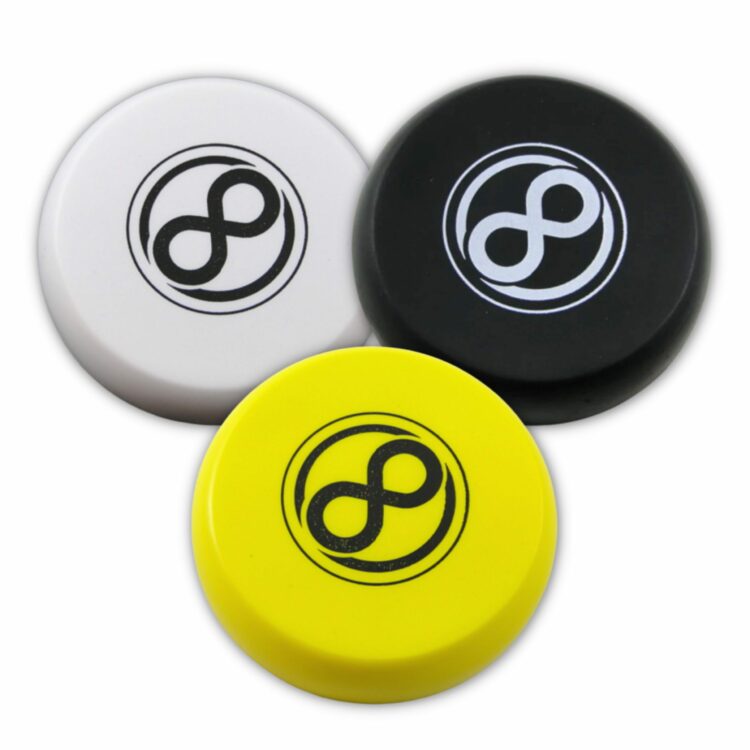
Disc golf involves more than just throwing discs toward a basket. Players must familiarize themselves with rules, gameplay strategies, techniques, equipment, terminology, and even flight ratings. For beginners, understanding the variety of discs, flight numbers, and plastic options can feel overwhelming. Among these essential tools is the mini marker disc, a small but significant part of the game. Here’s everything you need to know about disc golf mini markers
What Are Mini Marker Discs Used For?
The primary role of a mini marker disc, often called a “mini,” is to indicate the position—or lie—of a thrown disc once it has landed. In disc golf, every throw changes the player’s position on the course. To continue play, the next throw must be made from the lie, which is the designated area behind where the previous disc landed.
If a player doesn’t use a mini, the lie is marked by the original disc, and the playable area is a rectangle measuring 20 cm x 30 cm directly behind it. When a mini is used, it is placed just in front of the disc (toward the basket). The disc is then removed, and the lie becomes the rectangle behind the mini. Using a mini marker effectively shifts the lie forward by about 8-9 inches, giving a slight advantage.
Are Players Required to Use a Mini Marker?
The Professional Disc Golf Association (PDGA) doesn’t require players to mark their lie with a mini in most situations. However, there are two exceptions:
Out-of-bounds discs: If a disc lands outside the boundaries, a mini must mark the new lie.
Rule-mandated adjustments: When a rule requires or allows a change in the lie’s position, the player must use a mini to mark it.
Beyond these exceptions, using a mini marker is optional. In fact, it’s possible to play an entire tournament without one. That said, mini discs are affordable, portable, and worth carrying—especially for competitive play.
Why Use a Mini Marker?
Using a mini marker has a few practical advantages:
Closer positioning: Marking your lie with a mini gives you a slightly closer position to the basket, which can be helpful in tight situations.
Consistent routine: Some players find placing a mini helps establish a rhythm before their next throw, allowing a moment to reset mentally.
Improved focus: Writing a motivational phrase or mantra on the mini can help players get into the right mindset.
Clearer visuals: A mini marker offers a smaller profile compared to a standard disc, giving players a less obstructed view of their footing.
While these benefits come down to personal preference, many players find mini markers improve their overall gameplay experience.
What Are the PDGA Rules for Mini Discs?
According to the PDGA’s technical standards, mini discs used in professional play must meet the following criteria:
Diameter: 7 to 15 cm.
Height: Less than 2 cm.
Beyond these specifications, there’s plenty of room for creativity. Mini discs can be made from a variety of materials, including plastic, wood, metal, foam, or even glass. Custom designs are also acceptable, as long as the mini complies with the size standards.
Common Questions About Mini Discs
Q: What is the purpose of a mini disc golf marker?
A: Its main function is to mark the lie, providing a clear and consistent spot from which to make the next throw.
Q: Are players required to use a mini?
A: No, except when marking out-of-bounds throws or adjusting the lie due to a rule.
Q: What are the benefits of using a mini disc?
A: Minis provide a slightly closer lie, help players maintain focus, and create a clear routine.
Q: What materials and designs are allowed for mini markers?
A: Any material is permitted, provided the mini falls within the PDGA’s size guidelines (7–15 cm in diameter and less than 2 cm in height).
Ready to Add a Mini to Your Gear?
Check out our collection of affordable, high-quality mini discs here. Whether you prefer classic designs or custom styles, you’re sure to find one that suits your game!